
With rising energy costs remaining a concern and the effects of climate change becoming increasingly visible, green electricity has become an essential energy solution for businesses. In the UK, there is a concerted effort to reduce reliance on fossil fuels because of their environmental impact, finite reserves, and exposure to volatile international energy markets.
What is green electricity, though? The simple answer is that green electricity is any electricity generated from sources with a lower environmental impact than traditional fossil fuels. However, the term is more nuanced than this simple definition suggests, particularly when comparing green electricity with renewable and low-carbon power.
In this article, we will take a closer look at green electricity, how it works, and how it can help UK businesses take greater control over their energy strategy.
What Does Green Electricity Mean?
Green electricity is any electricity generated from renewable, lower-impact sources. In many cases, these sources produce little or no direct carbon emissions during operation.
Fossil fuels such as coal, oil, and gas come from finite reserves, meaning they will eventually run out. Other non-renewable sources, including nuclear power, also depend on finite fuels such as uranium.
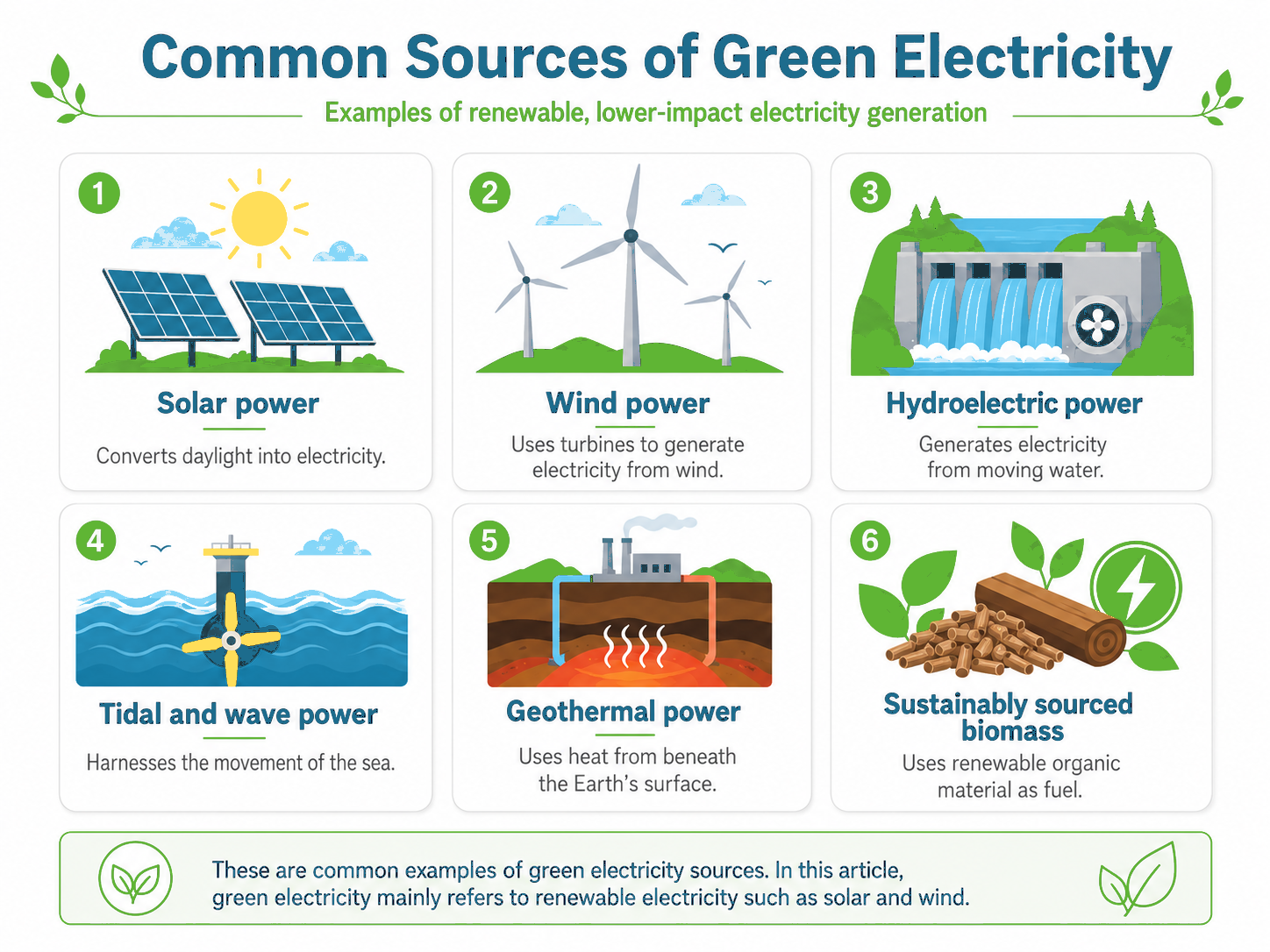
In contrast, renewable energy sources, such as sunlight and wind, are naturally replenished, allowing electricity to be generated without consuming finite fuel reserves.
Investing in green electricity is an important part of the UK’s transition towards a net-zero energy system by 2050. By reducing reliance on fossil fuels, the UK can improve its energy security, lower carbon emissions, and support a more affordable and resilient energy system over the long term.
Progress is already being made, as renewable electricity is an established part of the UK’s energy mix. In 2024, renewable sources generated 50.4% of the country’s electricity, exceeding half of annual generation for the first time.
How Is Green Electricity Supplied Through the UK Grid?
Electricity supplied through the grid is transported through transmission networks to areas where it is needed in large volumes. Distribution networks transport electricity to individual locations, such as warehouses and residential properties.
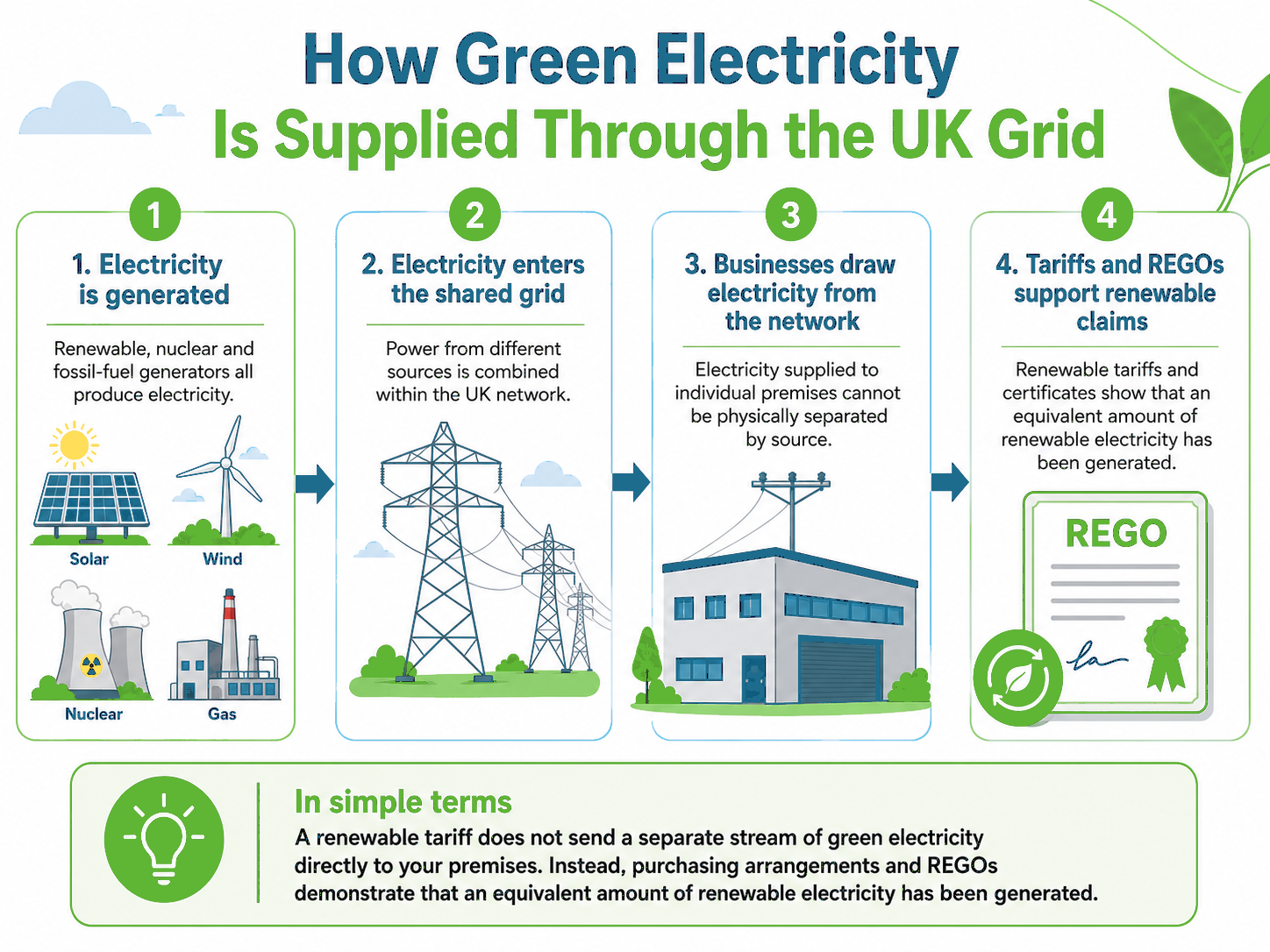
An important distinction here is that all of this electricity is combined into a shared system. That means electricity generated from gas-fired power stations, nuclear plants, and renewable generators all contribute to the overall mix of electricity found on the grid.
Once electricity from different generators enters the shared network, individual units cannot be physically separated by source. A company on a renewable electricity tariff, for example, does not receive a dedicated stream of renewable electricity from a specific solar farm or wind turbine.
How do green energy tariffs work?
Green energy tariffs therefore rely on contractual purchasing and certification. Suppliers may purchase electricity, renewable certificates, or a combination of both to demonstrate that an equivalent amount of renewable electricity has been generated and matched to customer consumption.
In essence, it is the accounting system that enables renewable energy generation to be measured and verified, even if the electricity sources are mixed on the grid.
What Are Renewable Energy Guarantees of Origin?
The UK uses Renewable Energy Guarantees of Origin (REGOs) to support claims of green electricity usage.
The UK’s energy regulator, Ofgem, issues a REGO certificate for every megawatt-hour of renewable electricity generated. These certificates act as evidence that a certain quantity of electricity has been produced from renewable sources.
For green energy suppliers, REGOs are part of their Fuel Mix Disclosure obligations. They must disclose the proportion of electricity they supply that is associated with coal, gas, nuclear, renewable, and other sources.
REGOs provide greater transparency around energy sources, but not every green tariff works in the same way. A supplier might purchase renewable electricity from generators, buy separate REGO certificates, or use a combination of different arrangements. Businesses comparing tariffs should therefore ask:
- Where does the renewable electricity come from?
- Does the supplier purchase power directly from renewable generators?
- Are its claims supported through REGOs?
- Does the tariff contribute to investment in new renewable generation?
- What proportion of the supplier’s overall fuel mix is renewable?
These questions can help businesses look beyond the tariff name and understand what is being purchased.
Is Green Electricity Carbon-Free?
Renewable energy technologies such as solar panels and wind turbines generate electricity without burning fossil fuels. As a result, they produce little to no direct carbon emissions during operation and offer a far lower-carbon alternative to electricity generated from coal or gas.
Although there are emissions associated with the wider lifecycle of renewable power infrastructure, these impacts are typically offset within only a few years of electricity generation. Moreover, these emissions are much lower than those released from fossil fuel power stations, as the table below shows:
| Electricity source | Typical lifecycle emissions |
| Coal | 820 gCO₂e/kWh |
| Natural gas | 490 gCO₂e/kWh |
| Utility-scale solar PV | 48 gCO₂e/kWh |
| Rooftop solar PV | 41 gCO₂e/kWh |
| Offshore wind energy | 12 gCO₂e/kWh |
| Onshore wind energy | 11 gCO₂e/kWh |
Source: IPCC Working Group III, Technology-specific Cost and Performance Parameters, 2014.
Businesses benefit from understanding the nuance of green electricity, as it helps to gauge its environmental value. Renewable electricity is not entirely free from lifecycle emissions, but it can deliver substantial and measurable carbon reductions compared with fossil-fuel generation.
One of the most accessible and suitable forms of green electricity for businesses in the UK is solar. This form of renewable energy has a tiny carbon footprint compared to other energy solutions. In fact, the carbon footprint of a solar array is around 50 grams (or about the same as a golf ball!).
By generating solar electricity on-site, businesses can reduce their reliance on grid-supplied power and lower their carbon emissions. This, in turn, can support sustainability and net zero goals.
Benefits of Green Electricity for Businesses
Green electricity can support a range of financial, operational, and environmental priorities. However, the benefits will depend on whether it is purchased through a tariff, secured through a power purchase agreement (PPA), or generated on-site.
Reduced carbon emissions
Switching to green electricity reduces the emissions tied to day-to-day business operations. This is especially true if you are replacing energy generated from fossil fuels. For organisations working towards net zero, green electricity provides a measurable way to:
- Support carbon reduction targets
- Strengthen sustainability reporting
- Respond to customer or supply chain requirements
Switching to green electricity can also help turn broader environmental commitments into practical, demonstrable action.
Greater energy independence
Generating electricity on-site reduces the amount a business needs to purchase from the grid, giving businesses greater energy independence. By producing at least part of their own electricity, companies gain greater control over their energy mix and limit their exposure to fluctuations in grid electricity prices.
More predictable energy costs
Commercial solar requires an upfront investment, although businesses may be able to spread the cost through asset finance, leasing, or another suitable funding arrangement.
Once operational, the system can reduce electricity purchases from the grid, helping limit exposure to future price increases, particularly where daytime consumption is high.
Stronger environmental credentials
Customers, employees, investors, and supply chain partners increasingly expect businesses to demonstrate meaningful environmental action. Purchasing renewable electricity or generating it on-site can provide clear evidence of progress, particularly when generation data, certificates, or carbon reporting support claims.
Support for future electrification
As more organisations move away from fossil fuels, the equipment they use needs to change. On-site solar can support EV charging, electric heating, and electric machinery, while battery storage may allow more generated electricity to be retained for later use.
How Can UK Businesses Access Green Electricity?
With demand for green electricity on the rise, businesses have more access than ever before to renewable energy options. There are three main routes for businesses to consider: renewable electricity tariffs, PPAs, and on-site generation. Let’s take a closer look at these options below:
Choose a renewable electricity tariff
The market for sustainable electricity tariffs has expanded significantly, giving businesses a wider range of options. In principle, the process involves choosing a contract supported by renewable generation and appropriate certification.
This allows your business to report purchased electricity differently in your carbon accounting, as long as the tariff and evidence meet applicable reporting requirements. The quality and structure of these tariffs differ, making it important to review supplier information carefully, rather than relying solely on terms like ‘green’ or ‘eco’.
Opting for a renewable electricity tariff may change how your electricity purchases are accounted for, but it doesn’t stop your business from being exposed to wider energy market conditions. Your bills will still reflect wholesale prices, network charges, supplier costs, and other non-commodity energy costs.
Enter into a Power Purchase Agreement (PPA)
A PPA is a longer-term contract between a business and a renewable electricity generator. It can give organisations greater visibility over where their electricity comes from and may provide more predictable pricing. However, these agreements can involve more complex contractual, forecasting, and credit requirements than standard energy tariffs.
As a result, PPAs are generally better suited to larger businesses with substantial and predictable electricity demand.
Generate renewable electricity on-site
Businesses with suitable land, pitched roofing, or flat roofs may be able to generate their own green electricity using commercial solar PV panels. Solar photovoltaic panels convert sunlight into electricity for use on-site.
Solar electricity can be used by the business as it is generated, reducing the amount of power imported from the grid. The grid then supplies any additional electricity needed when demand exceeds solar output.
On-site solar offers a practical advantage over relying solely on a purchased tariff: the business generates renewable electricity directly at its own premises. Your business is not just matching consumption with renewable generation elsewhere; it is producing electricity at its own premises. A well-designed commercial solar system can help your business:
- Reduce the amount of electricity purchased from the grid
- Lower exposure to future electricity price increases
- Reduce the emissions associated with purchased electricity
- Make use of otherwise unproductive roof space
- Demonstrate visible action towards sustainability commitments
- Support future technologies such as electric vehicle charging
The results will depend on factors including the size and condition of the roof, shading, local grid capacity, electricity consumption patterns, and the proposed system design.
That is why our team at Perfect Sense Energy tailors every commercial solar system to the individual site, whether we are working with organisations in manufacturing, warehousing, education, hospitality or food production.
Is Green Electricity Right for Your Business?
Green electricity can offer meaningful environmental and commercial benefits, but the right approach will depend on the organisation’s premises, consumption profile, and long-term objectives.
A renewable tariff can be relatively straightforward to introduce, while a PPA may suit larger energy users seeking stronger traceability or price certainty. On-site generation can provide greater control and more direct operational savings.
Before making a decision, it is helpful for businesses to assess a few different areas of their operations. These include:
- Current electricity consumption
- When electricity is used throughout the day
- Available roof or land space
- Building condition and structural suitability
- Budget and funding options
- Carbon reduction goals
- Future electricity demand
- Planned EV charging, heating or machinery upgrades
This helps ensure that green electricity is not treated as a simple label but as part of a practical and measurable energy strategy.
Why Generating Solar Electricity Makes Perfect Sense
For businesses, there is an important difference between purchasing renewable electricity and generating it directly on-site.
A renewable tariff can help match electricity use with renewable generation, while commercial solar panels allow organisations to produce clean electricity directly on-site, reduce grid dependence, and gain greater control over their energy supply.
At Perfect Sense Energy, we design, install, and maintain commercial solar PV systems tailored to individual buildings and energy requirements. Our team can assess your roof space, electricity use, and potential generation to help you understand whether solar is a practical investment for your business.
Use our free Solar Savings Calculator to explore how much electricity your premises could generate, or contact our team to arrange a commercial solar assessment.