
As if increasing wholesale energy prices weren’t enough, changes to non-commodity costs are further complicating the picture of business energy bills in the UK. If you are concerned about this, there are things you can do to soften the blow. Here’s everything you need to know about non-commodity cost types, how they are changing, and what it might mean for your business’s energy bills.
What are Non-Commodity Costs?
Business energy bill prices are split between two core categories – commodity costs and non-commodity costs. Commodity costs reflect charges for actual energy usage of electricity and gas. In addition to this, businesses are expected to pay mandatory third-party non-commodity charges, which account for other related expenses, like transmission and distribution costs and government taxes and levies. They are far from trivial and can really eat into your resources, accounting for 40-60% of energy bills on average.
Non-Commodity Charge Types
Within non-commodity costs, there are further subcategories that tend to relate to network and service costs or government taxes and levies. Some apply to electricity, some to gas, and some to a combination of both. We’ve broken it down as follows:
Network and system operation charges
According to Ofgem, network costs go towards maintaining, running and upgrading network infrastructure, paying for the pipes and cables that carry energy across the country into homes and businesses. They are usually a significant non-commodity cost, particularly for electricity, although the exact share will vary by location and consumption profile.
| Cost type | What it covers | Electricity | Gas |
|---|---|---|---|
| Transmission Network Use of System (TNUoS) | Use and maintenance of the high-voltage transmission network. | ✓ | |
| Distribution Use of System (DUoS) | Use of local electricity distribution networks. | ✓ | |
| Transmission and distribution losses | Electricity lost while moving through the network. | ✓ | |
| Balancing Services Use of System (BSUoS) | Cost of balancing supply and demand on the electricity system. | ✓ | |
| Elexon data service | Industry settlement and market administration costs. | ✓ | |
| National Gas Transmission (NGT) and transportation charges | Cost of using the national transmission system for gas. | ✓ | |
| Local Distribution Zone (LDZ) transportation/distribution charges | Cost of moving gas through local distribution zones. | ✓ | |
| Gas balancing operation costs | Costs associated with balancing and managing gas system flows. | ✓ | |
| Unidentified gas | Costs linked to leakage, theft, losses or allocation differences. | ✓ |
Service and supplier charges
These charges relate to the practical services and commercial costs involved in supplying energy to your business. This can include metering, billing, administration, supplier margin, and any broker or third-party intermediary commission.
| Cost type | What it covers | Electricity | Gas |
|---|---|---|---|
| Metering charges | Meter installation, maintenance, readings and data collection. | ✓ | ✓ |
| Standing charge elements | Fixed daily costs, often covering network, metering, and admin. | ✓ | ✓ |
| Supplier margin and admin costs | Supplier operating costs, risk premium, and profit margin. | ✓ | ✓ |
| Broker/third-party intermediary (TPI) commission | Commission or fees from energy brokers or TPIs, sometimes built into contract rates. | ✓ | ✓ |
Government taxes and levies
Government taxes and levies make up a meaningful share of non-commodity costs, especially on electricity bills, but the impact will vary depending on the type and quantity of energy you use, as well as whether your business qualifies for any exemptions or reliefs. Many of these charges relate to the promotion of renewable energy schemes in light of the UK’s drive for a net zero economy.
| Cost type | What it covers | Electricity | Gas |
|---|---|---|---|
| Renewables Obligation (RO) | Legacy government scheme that continues to fund existing accredited renewable electricity generation projects. | ✓ | |
| Feed-in Tariff (FiT) | Legacy government scheme supporting existing small-scale low-carbon electricity generation. | ✓ | |
| Contracts for Difference (CfD) | Government-backed scheme supporting new low-carbon electricity generation. | ✓ | |
| Capacity Market (CM) charges | Government scheme designed to help ensure enough electricity capacity is available to meet demand. | ✓ | |
| Nuclear Regulated Asset Base (Nuclear RAB) charge | Government-backed funding mechanism for new nuclear infrastructure. | ✓ | |
| Assistance for Areas with High Electricity Distribution Costs (AAHEDC) | Government support scheme to reduce electricity distribution costs in high-cost areas. | ✓ | |
| Climate Change Levy (CCL) | Environmental tax applied to industrial, commercial, agricultural, and public services organisations. | ✓ | ✓ |
| Value Added Tax (VAT) | Tax applied to business energy bills. | ✓ | ✓ |
How Non-Commodity Costs are Changing
In April 2026, a few changes took place in the way that non-commodity costs are calculated. These are not changes to the wholesale price of energy itself but to the additional network, system, and policy costs that suppliers typically pass through to consumers. They impact different businesses in different ways, depending on the size, location, and onsite energy usage of the organisation.
- BSUoS: To account for over-recovery, balancing tariffs have decreased to £13.74/MWh in April – September 2026 and will reduce further to £12.49/MWh in October 2026 – March 2027.
- TNUoS: Between April 2026 and March 2017, TNUoS costs have increased by 61%, from £3.97 bn to £6.38 bn. In practical terms, that’s an increase from £16/MWh to £31/MWh.
- Nuclear RAB: Starting in December 2025 andupdated every quarter, the nuclear RAB rate has increased from £3.6630/MWh in Q1 to £4.6830/MWh in Q2.
- DUoS: Distribution charge changes vary by region (there are 14 regions; you can identify yours here.)
How to Mitigate Non-Commodity Energy Cost Changes
For the most part, non-commodity charges are on the rise. But with some careful consideration and a few strategic changes, you can soften the financial impact on your business. You may, for example, qualify for exemptions or offset costs in other areas to make it easier to absorb the additional non-commodity expenses.
1. Increase energy efficiency
A key way to manage energy bills from non-commodity costs is to increase the energy efficiency of your business premises. You can do this by improving site insulation on your site and updating to more energy-efficient technology (commercial LED lighting, for instance). This will not only reduce the amount of energy you need to keep the space warm or cold but could also qualify your business for government funding.
2. Switch to renewable energy
Some renewable electricity supplies are exempt from the Climate Change Levy, including certain self-supplied or directly supplied renewable electricity. This can be a particularly good option for energy-intensive industries like warehouses and manufacturers, who might struggle to cut their energy consumption. Two of the most popular renewable energy options for businesses at the moment are heat pumps and solar photovoltaic (PV) systems.
3. Become energy independent
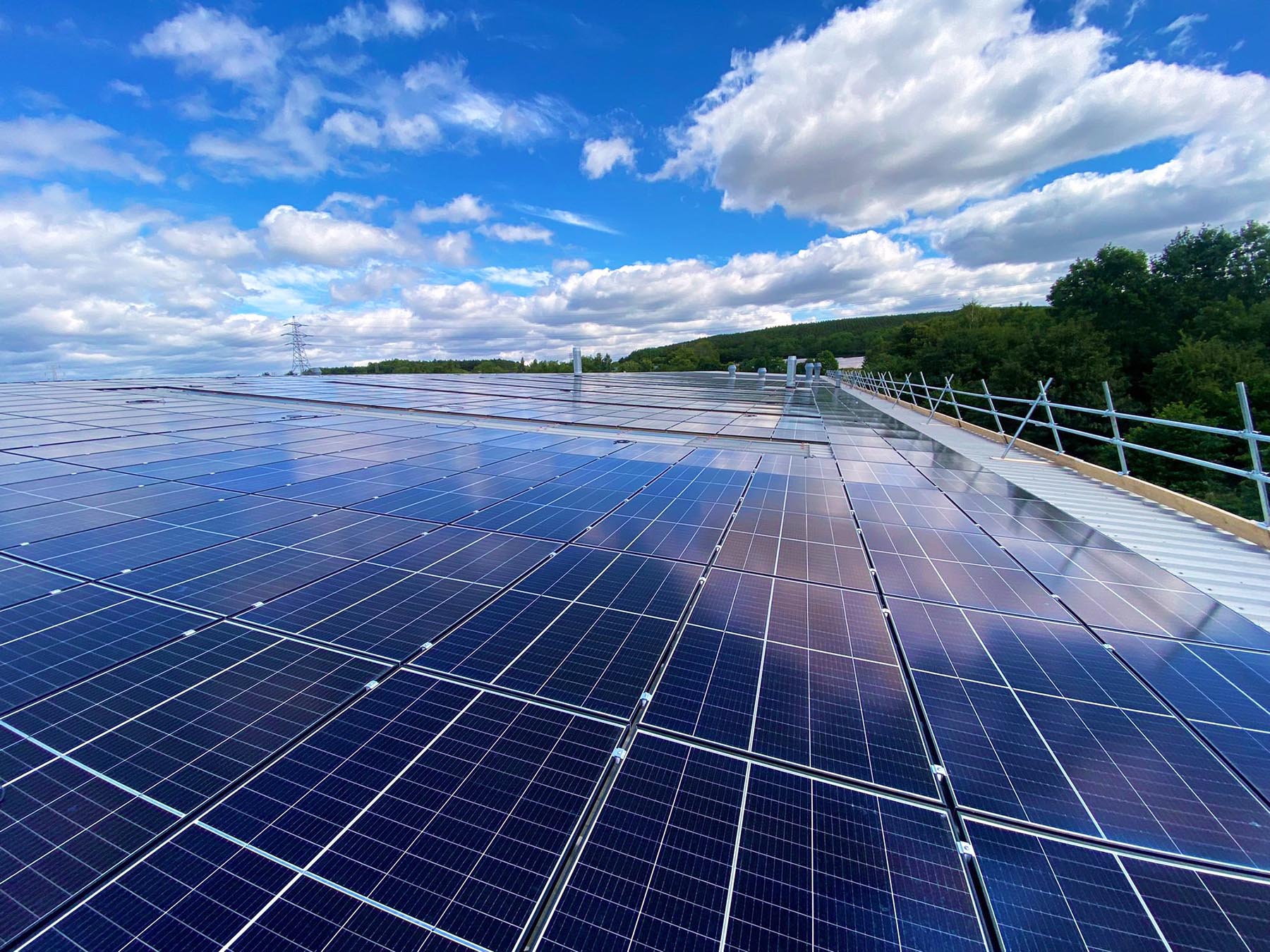
On the theme of solar PV systems, you might also want to consider reducing your business’s reliance on the national grid by introducing an independent energy supply. With independent solar energy, you sidestep certain distribution, transmission, and service costs. It’s the difference between renting a house and buying one – you can either put your money into someone else’s pocket or invest it to receive a strong ROI. For solar panels, that’s a payback period of only 3-4 years, after which your energy is essentially free.
Invest in a Commercial Solar PV System and Protect Business Electricity Bills
Between the benefits of greater energy independence and lower non-commodity costs, installing a commercial solar PV system is one of the easiest ways to mitigate price surges, especially for energy-intensive industries like warehouses and manufacturing.
Solar technology is having a golden moment and has sprung forward with advancements in longevity and quality. These days, you can expect a system to last 25+ years with the right maintenance!
Reduce your business’s vulnerability to non-commodity energy costs and book a no-cost desktop consultation today.