The commercial energy landscape has changed dramatically entering 2026. With geopolitical tensions disrupting global oil and gas flows, energy markets are experiencing profound and persistent volatility. It’s no wonder then that UK businesses are accelerating their shift toward solar power, not just for sustainability, but out of necessity.
If you are one of those businesses, you may be wondering if a solar photovoltaic (PV) system is right for you. What are the best industry use cases for solar panels, anyway? Let’s get into it, including business solar panels benefits, some commercial solar PV case studies, and how to get affordable solar panels of your own.
What is a Commercial Solar PV System?
A commercial solar photovoltaic system is a solar panel system designed to meet the energy needs of businesses by capturing solar energy with panels and converting it into electricity.
Unlike domestic installations, commercial solar PV system is typically larger in scale and engineered to handle higher energy demands, often delivering significant cost savings and long-term energy security. They also often feature advanced monitoring and energy management systems to allow businesses to track performance in real time and optimise energy use across multiple sites.
Why Solar PV is Important for 2026
Our over‑reliance on fossil fuels has never been clearer. The recent Middle East conflict has disrupted some of the world’s most important oil and gas routes, causing significant price volatility across global markets. Solar is the loophole that helps mitigate this instability, granting you the following advantages:
Energy security and independence
Geopolitical risks have pushed Europe back into gas‑driven instability similar to the 2022 Ukraine crisis. Solar provides insulation from this systemic risk.
When you generate a proportion of your own electricity, your exposure to geopolitical shocks, wholesale price surges, and supply chain disruptions drops dramatically. Businesses with battery storage can even further stabilise their operations, as they can store energy and continue to use it even during evening peak tariff windows.
Cost savings in a volatile market
Solar panels generate electricity exactly when most businesses consume the most power, during daylight hours. With fossil‑fuel‑linked tariffs rising unpredictably, generating your own free power reduces reliance on the grid at the most expensive times and allows you to save on energy costs.
A typical SME consuming 10,000 kWh/month costing £2500/month can still save on average £1000/month, depending on irradiance and tariff rates. And, with energy markets seeing unprecedented volatility, the typical 2–5 year solar ROI is increasingly attractive.
Green energy government incentives
Government support for solar remains in place, with businesses able to benefit from Smart Export Guarantee (SEG) payments on surplus electricity fed back to the grid, as well as capital allowances on qualifying energy-saving investments. These incentives directly shorten payback periods, which is a meaningful advantage at a time when grid prices remain unpredictable. Combined with the savings already on offer, they make the financial case for solar stronger than ever.
Environmental harm reduction
The environmental case for solar has never been more commercially relevant. Switching to solar can reduce a business’s carbon emissions by more than 80%, providing meaningful progress against corporate sustainability targets while supporting compliance with tightening environmental regulations.
This isn’t simply a box-ticking exercise; it forms a credible, measurable part of any serious Environmental, Social, and Governance (ESG) strategy. Customers also increasingly prefer environmentally responsible businesses, with solar strengthening eco credentials to build brand trust.
Top Use Cases for Business Solar Panels in 2026
The advantages of solar for business is clear, but at Perfect Sense Energy we have found that there are a few industries in particular that tend to benefit from making the switch. See if your business is one of them.
1. High‑energy‑demand sectors
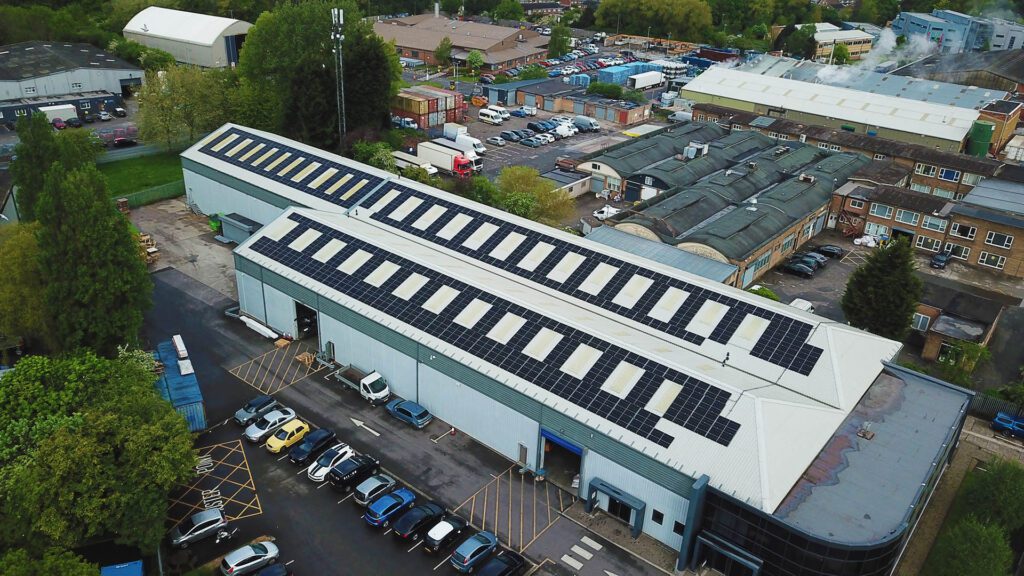
Manufacturing, data centres, cold stores, and automated logistics all fall into the category of high-energy demand businesses. Thanks to large roof areas and consistent daytime energy use, these sectors continue to see the greatest ROI.
With gas and oil markets fluctuating due to ongoing conflict in the Gulf, these energy‑intensive industries also face the highest exposure to volatile operating costs. Solar’s ability to deliver long‑term price stability is now a critical competitive advantage.
Take Snuggledown, a busy manufacturing site in Wigan, that installed a 580.5 kWp rooftop solar PV system projected to generate 521,922 kWh in year one, meet over 15% of baseload demand, in the process saving more than £161,000 in the first year alone.

2. Businesses seeking energy price hedging
As recent events have demonstrated, fossil fuel prices are vulnerable to every geopolitical tremor, from shipping route closures to refinery disruptions. Analysts warn that ongoing hostilities in the Middle East could trigger stagflation risks and longer‑term supply constraints if energy transport routes remain impaired. A solar PV installation provides a hedge by locking in predictable, near‑zero‑marginal‑cost electricity for 25–30 years.
A strong example is UBT, whose 226 kWp investor-funded solar PV system required no upfront capital, and is forecast to deliver £900,000 in electricity cost savings during the lease term and almost £1 million over 30 years.

3. Businesses planning sustainability & ESG improvements
Each kWp installed reduces CO₂ output by around 0.5 tonnes annually, which helps companies meet Net Zero targets and strengthens their ESG profile with customers, investors, and supply‑chain partners. Solar PV systems are also great for general business sustainability, given that systems operate for 25–30 years with minimal maintenance costs, usually limited to occasional cleaning and routine annual checks.
Zen Internet was delighted with their sustainable new 250 kWp system that was designed primarily to reduce environmental impact. Along with an expected first-year generation of 188,500 kWh, they expect average carbon savings of 66 tonnes per year over 25 years.

Navigate 2026’s Energy Reality with Solar PV
For UK businesses, geopolitical uncertainty has re‑emphasised the importance of on‑site renewable generation to protect against unpredictable energy price shocks tied to international fossil‑fuel markets. Against this backdrop, as our MD Gary Brandwood observes, “Solar PV is a long-term strategic investment. It’s definitely being seen as a strategic requirement now rather than a luxury.”
Since 2010, Perfect Sense Energy has helped UK businesses reduce costs, increase resilience and transition away from volatile fossil‑fuel‑dependent systems. Our services include:
- Commercial Solar PV design and installation
- Battery storage solutions
- Maintenance and performance monitoring
We can work with finance options to suit any circumstance, whether you have Cap-Ex or not, and even offer 10-year warranties on core technologies. Book a no-cost consultation today to see the benefits for your business.