
Corporate sustainability is becoming an increasingly important part of business strategy across the UK. However, setting environmental targets is only the beginning. Businesses need practical ways to reduce their impact, measure progress, and invest where it will make the greatest difference.
For many organisations, energy is a logical place to start. In this guide, we explain how commercial solar can support your wider corporate sustainability strategy and turn environmental commitments into measurable action.
What Is Corporate Sustainability?
Corporate sustainability considers the long-term environmental, social, and economic impact of a business. It is a form of corporate social responsibility that supports sustainable business practices in day-to-day operations.
Rather than treating sustainability as a separate initiative, you can incorporate it into everyday decision-making. This influences how you use energy, manage waste, choose suppliers, look after employees, and guide investments. Corporate sustainable practices may also include:
- Reducing greenhouse gas emissions
- Using energy and raw materials more efficiently
- Switching to renewable energy
- Improving working conditions
- Reducing waste
- Building more responsible supply chains
- Strengthening the long-term resilience of the business
The exact priorities will depend on your organisation, industry, and the environmental impact of operations. A manufacturer with energy-intensive machinery, for example, will have different requirements from a school, office, or distribution centre.
How Energy Supports Corporate Sustainability Goals
Almost every organisation relies on energy to operate, whether powering manufacturing equipment, lighting, computers, or security systems. As a result, how a business uses and sources electricity can affect its costs, carbon emissions, and long-term resilience. An effective corporate sustainability strategy should therefore consider:
- How much energy does your organisation currently use?
- When and where is the most energy consumed?
- Can energy consumption be reduced anywhere?
- Can renewable energy be generated on site?
- Will there be changes to future energy demand?
- How will energy and carbon improvements be measured?
Commercial solar panel systems can contribute to several of these priorities, particularly if your organisation has suitable roof space and significant daytime electricity demand.
How Does Commercial Solar Support Corporate Sustainability?
Commercial solar can support several parts of a corporate sustainability strategy at once. It provides you with a practical way to generate electricity from a renewable energy source, reduce operational emissions, and manage a proportion of your long-term energy costs.
Increasing energy independence
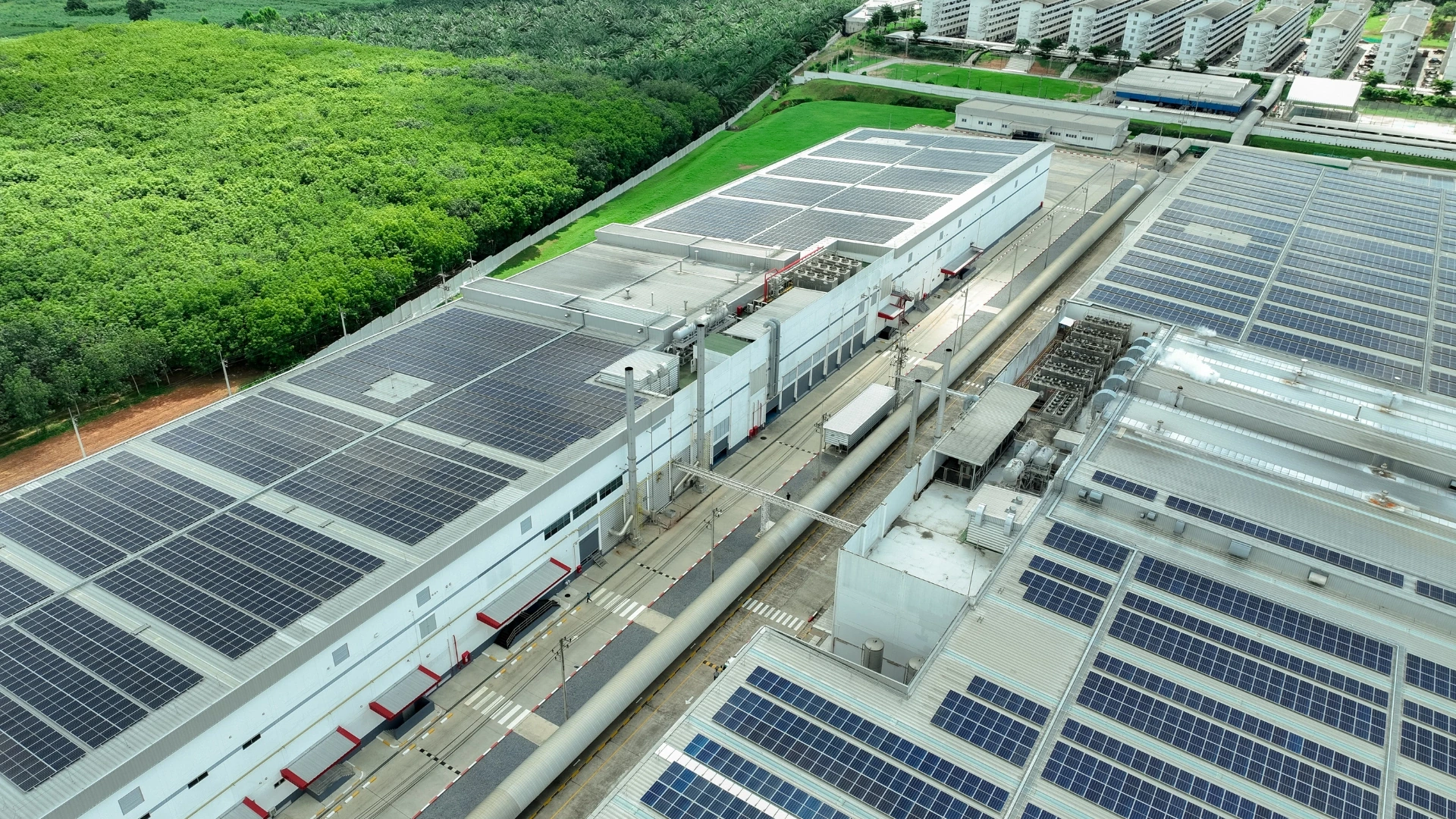
Solar panels convert daylight into electricity that can be used on-site, reducing the energy your organisation needs to purchase from the grid.
For businesses that operate during daylight hours, solar generation can align well with normal energy consumption patterns. Offices, schools, warehouses, supermarkets, factories, and car dealerships may all use substantial amounts of electricity while a solar installation is actively generating.
So, investing in commercial solar can help your business diversify its energy supply and increase energy independence.
Reducing operational carbon emissions
Generating renewable electricity on-site can help businesses reduce the carbon footprint and emissions associated with their purchased electricity. For example, the commercial solar system designed by Perfect Sense Energy for Eden Farm is forecast to meet roughly a quarter of the site’s annual energy demand and save 149 tonnes of CO₂e each year. This can support company-wide carbon reduction targets while contributing to broader sustainable goals.
Commercial solar power can also provide tangible evidence that your business is taking practical steps to reduce its environmental impact, rather than relying on sustainability commitments alone. With that said, the environmental contribution of a commercial solar installation will depend on factors such as:
- The size and expected output of your system
- The amount of generated electricity used on-site
- Your organisation’s existing electricity consumption
- The carbon intensity of the electricity being displaced
- The performance of the panels over time
These metrics should be assessed during system design so that your organisation has a realistic understanding of what the installation can achieve.
Making use of existing commercial space
Many businesses have large areas of roof space that currently provide little direct commercial value. Warehouses, manufacturing facilities, agricultural buildings, schools, supermarkets, and other commercial premises can use this space to generate electricity without sacrificing productive land or disrupting everyday operations.
A site assessment can establish whether the roof is suitable by considering its size, orientation, pitch, condition, shading, and structural capacity. By turning existing space into an energy-generating asset, your business can support its corporate sustainability objectives without necessarily changing how the site is used.
Improving long-term energy cost control
Corporate sustainability also involves building a business that can operate successfully over the long term. As energy prices can be difficult to predict, generating renewable electricity on-site gives your organisation greater control over part of its future energy supply.
The financial return from commercial solar will depend on system design, installation costs, electricity prices, and how much generated power is used on-site. Our team at Perfect Sense Energy estimates that commercial solar can deliver a potential return on investment of 20 to 45%, with systems typically paying for themselves within 2.5 to 5 years under optimal conditions. Solar panels can then continue generating electricity for more than 30 years.
Supporting corporate social responsibility
Businesses are increasingly expected to support sustainability claims with corporate sustainability reporting. Sustainable investments like commercial solar can provide measurable data that contributes to internal sustainability reports, environmental management systems, and wider environmental, social, and governance (ESG) reporting.
It also gives your business clearer evidence to share with employees, customers, investors, and supply chain partners. Solar panels do not make an entire organisation sustainable, but they can demonstrate measurable progress in an important operational area.
Supporting future electrification
Electric vehicles, heating systems, automated machinery, and other technologies can increase electricity demand as businesses move away from fossil fuels.
Commercial solar can be designed with these future requirements in mind and integrated with technologies such as battery storage and EV charging. Planning them together can create a more coordinated long-term energy strategy.
Turning Corporate Sustainability Goals Into a Solar Project
To get the most from commercial solar, your business needs to be clear about what it wants the project to achieve. The following steps can help turn wider sustainability goals into a practical solar plan.
1. Review your current energy bills
Before considering system size, try to understand how much electricity your business uses and when it uses it. Half-hourly consumption data from electricity bills can provide a clearer picture of demand throughout the day, week, and year. This can identify how closely solar generation is likely to match your organisation’s normal operations.
For example, a business that consumes most of its electricity during daylight hours may be able to use a high proportion of its generated power on-site.
2. Define the purpose of the project
Different businesses will prioritise different outcomes. Whether your business wants to reduce carbon emissions, lower energy costs, or meet supply chain expectations, defining the project’s aims makes it easier to assess whether solar is suitable.
It also helps prevent vague claims about what solar will achieve. Your business can instead set specific and tangible measures, such as reducing annual grid electricity consumption by a target amount or generating a defined percentage of its electricity on-site.
3. Assess the site
Not every commercial building has the same solar potential, which is why a technical assessment is so useful. These assessments help determine whether the site is viable for solar and what type and size of system may be appropriate. Technical assessments for solar panels typically look at:
- Available roof space
- Roof orientation and pitch
- Structural condition
- Surrounding shade
- Electrical infrastructure
- Planning requirements
- Maintenance access
- Current and future electricity demand
- Grid connection capacity
4. Model expected electricity generated
Clear performance projections help businesses understand what a commercial solar installation is expected to generate and save over time. These may include expected annual generation, carbon and financial savings, and projected performance over the system’s lifetime.
These figures should ideally be based on the specific site rather than generic assumptions. A realistic forecast will give decision-makers the information they need to assess the project against financial and corporate sustainability goals.
Perfect Sense Energy’s solar savings calculator can provide an initial indication of what commercial solar could deliver for your premises. Businesses can use it to assess their roof space and request a personalised estimate of potential generation and savings.
5. Consider future energy requirements
A professionally installed commercial solar system can operate for decades, while your organisation’s electricity needs may change significantly during that time. Planned expansion, new machinery, EV charging, or a move to electric heating should be considered during system design.
Accounting for future demand helps prevent your organisation from designing a system around today’s requirements alone.
6. Monitor long-term results
Corporate sustainability requires ongoing measurement, rather than being judged by a single installation. Once operational, regular monitoring and solar panel maintenance can identify faults or performance issues that reduce the system’s output.
It is important to compare actual results with original forecasts and incorporate the relevant figures into sustainability reporting. This creates a productive cycle of setting goals, making improvements, measuring outcomes, and identifying the next opportunity.
How Can Businesses Measure the Contribution of Solar Panels?
Organisations need to understand whether their solar panels are performing as expected and contributing to the project’s wider goals. The most relevant measures will depend on the original objectives, such as reducing carbon emissions, lowering energy costs, or increasing on-site renewable generation. Common commercial solar performance indicators include:
- Electricity generated: The total amount of renewable electricity produced by the system over a given period.
- Solar electricity used on-site: The proportion of generated electricity consumed by your business rather than exported to the grid. A higher self-consumption rate can strengthen the financial case for solar by replacing electricity that would otherwise be purchased from a supplier.
- Reduction in grid electricity use: Comparing consumption before and after installation can show how your organisation’s energy mix has changed. The comparison should account for factors such as business growth, seasonal variation, changing operating hours, or new equipment.
- Carbon savings: Estimated avoided emissions can demonstrate how the system contributes to environmental targets. The calculation method and assumptions should be recorded so the figure can be interpreted accurately.
- Financial savings: Tracking reductions in purchased electricity can help you assess the commercial performance of the installation and inform decisions about battery storage, system expansion or further efficiency measures.
- Performance against forecast: Actual generation should be compared with the projections made during system design. Consistently lower output may indicate that the system requires inspection, cleaning, maintenance or further investigation.
Turning Sustainability Goals Into Measurable Results
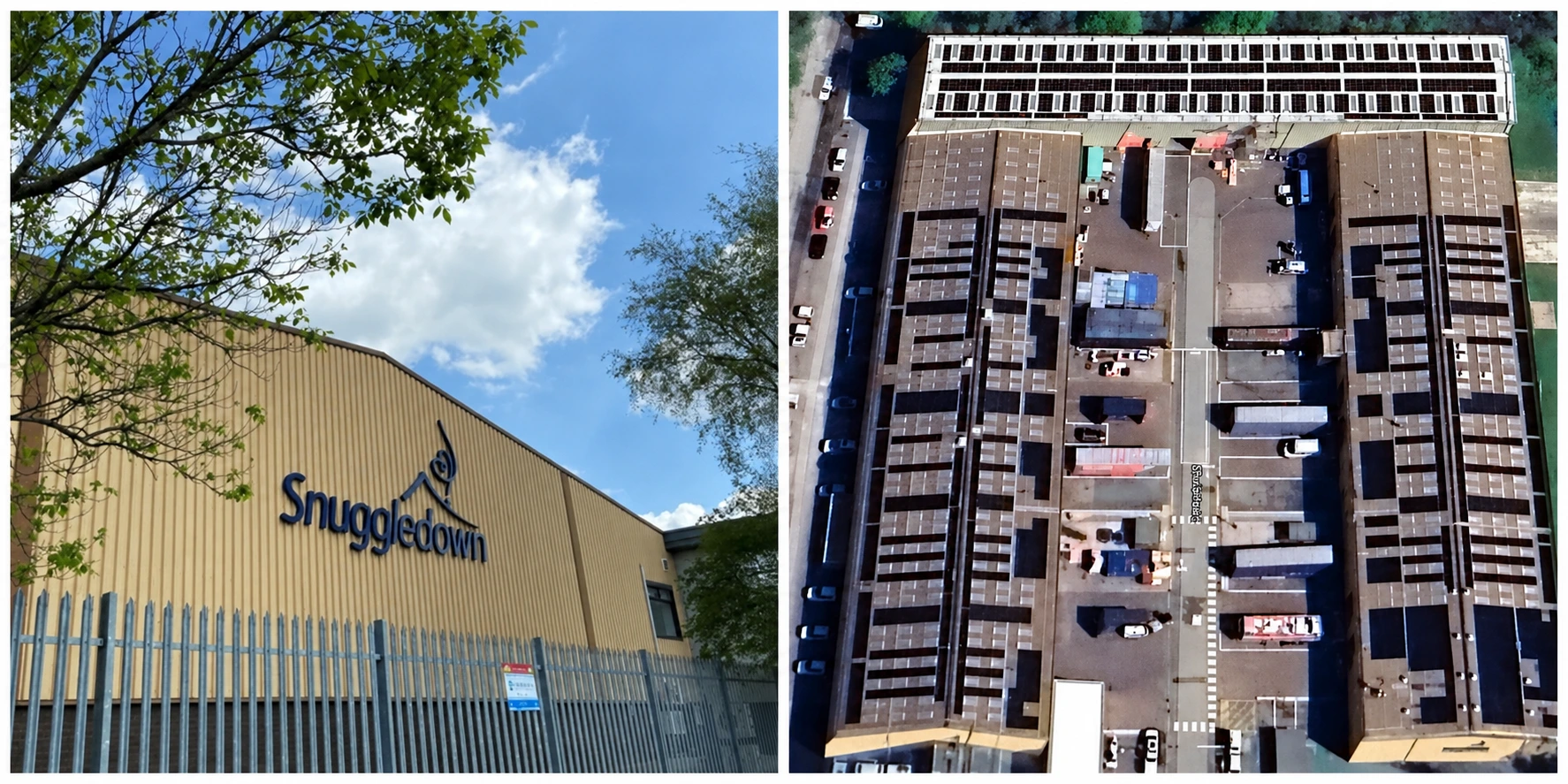
The results of a commercial solar project will depend on factors such as the site, system design and the organisation’s energy profile. Perfect Sense Energy’s work with Snuggledown is a strong example of how a well-planned installation can deliver measurable financial and environmental benefits.
The 580.5 kWp rooftop system is projected to generate 521,922 kWh of renewable electricity in its first year, meeting more than 15% of the site’s baseload demand. It is also expected to reduce carbon emissions by 108 tonnes, deliver more than £161,000 in first-year tax and energy savings, and achieve payback within four to five years.
Build Commercial Solar Into Your Corporate Sustainability Strategy
Corporate sustainability commitments are most valuable when they lead to practical, measurable action. Commercial solar can support sustainable development by helping businesses reduce operational emissions, use resources more efficiently, and strengthen long-term energy resilience.
Perfect Sense Energy designs, installs, and maintains commercial solar PV systems for businesses across the North of England and the wider UK. Our team can assess your site and energy use before providing a tailored proposal covering expected generation, potential savings, and how solar could support your sustainability goals.
Get in touch with Perfect Sense Energy today to arrange a free consultation and explore what commercial solar could deliver for your business.