
Being more eco-friendly doesn’t mean losing out on business growth but can, in fact, contribute to significant business advantages. With a green economy, companies can continue to flourish in a way that benefits local communities and the environment.
A 2024 survey indicates that 76% of people globally think that a green economy will lessen poverty and increase population health, suggesting growing momentum for sustainable policies. In this detailed guide, we’ll draw back the curtain on the core principles of a green economy, how businesses can benefit, and what you can do to implement it effectively.
What is a Green Economy?
A green economy is an economic model that prioritises environmental sustainability and social equity, alongside business development. The term was first introduced in 1989 by David Pearce in a Blueprint for a Green Economy as a response to “material progress” in the UK too often coming at the cost of nature. It is held up by five core pillars, each of which strengthens a different aim for more holistic prosperity and growth.
- The Wellbeing Principle: People are kept at the centre, which means that economic growth must be shared equitably and contribute to human benefits beyond monetary wealth, such as health, education, and community.
- The Justice Principle: A just transition ensures that the process of transitioning to a greener society continues to support individuals’ jobs and livelihoods, while championing inclusivity for marginalised communities.
- The Planetary Boundaries Principle: Acknowledgement that environmental resources, while being culturally and functionally important for society, also hold intrinsic ecological value that underpins all life and must be safeguarded accordingly.
- The Efficiency and Sufficiency Principle: A green economy must be low-carbon, resource-efficient, and socially inclusive, reducing societal consumption while adjusting financial incentives to benefit environmentally-conscious businesses.
- The Good Governance Principle: Good governance means that actions that a green economy takes are evidence-based, transparent, and serve the well-being of the general public. Decision-making is directly tied to local interests.
Green Economy vs Sustainable Development
Green economy actions and sustainable development do overlap but are not quite the same. Sustainable development is a big-picture goal: creating a world where economic growth, social well-being, and environmental protection work together, without compromising future generations. A green economy, on the other hand, is how an overarching policy reform can help our society get there. It focuses specifically on reshaping how our economy works so that it supports, rather than undermines, the way we use natural resources.
Business Benefits of a Green Economy
Adopting green economy principles isn’t just good for the planet; it’s smart business too. Success rates are stronger for businesses that approach growth with sustainability, ethics, and governance in mind, according to McKinsey & Co. From a practical standpoint, here’s how going green can drive measurable results.
Cost savings
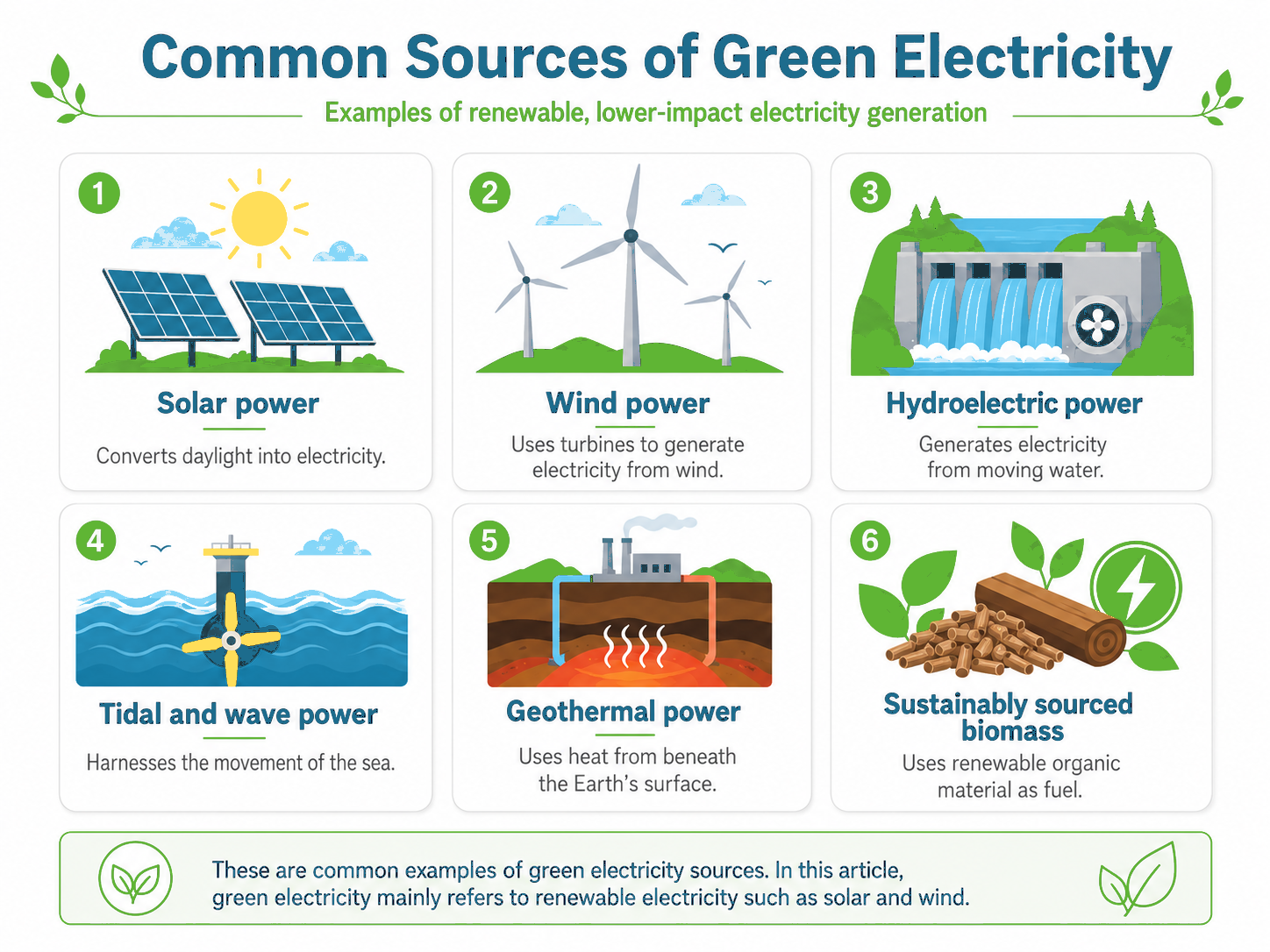
Using clean energy has the potential to cut operating costs over time. Solar energy, for example, is now known to be the most affordable energy solution, cheaper than wind power and fossil fuel alternatives. More energy-efficient building setups, smarter logistics, and waste reduction can also improve margins (while reducing environmental risks).
Financial incentives
There are now many financial incentives in the UK available to businesses that invest in low-carbon technologies like heat pumps and solar panels. The Smart Export Guarantee (SEG), for example, allows businesses to sell excess energy from on-site solar photovoltaic systems back to the national grid.
Competitive advantage
The expectation for businesses to reduce their carbon footprint isn’t just a trend. Consumers now look for sustainability as a key differentiator between competitors, with 46% saying they are choosing to buy more sustainable products. As the market moves to promote environmental responsibility, businesses that fail to change their ways risk being left behind.
Greater resilience
Companies that switch to solar panels and choose not to rely purely on the national grid for their energy provide a safety net for themselves. This creates greater business continuity and operational resilience if power cuts occur, especially when combined with solar battery storage for a reserve of energy to draw on if needed.
Reduced carbon footprint
Engaging with the green economy through switching to clean energy can also help your business to reduce its carbon footprint. Solar panels, for example, have lifetime carbon emissions of only 50g! This can contribute to your company complying with new environmental regulations and potentially even gaining environmental accreditations, such as B Corp certification.
Energy efficiency
Linking back to the efficiency and sufficiency principle, energy efficiency doesn’t just reduce consumption. It can strengthen your bottom line. Being more intentional about how resources are used (e.g., turning off unused electronic equipment) can lower utility bills and reduce exposure to volatile energy prices. In fact, the International Energy Agency reports that energy efficiency can help businesses in the industrial sector save from 10-60% in yearly costs.
Green Economy Examples
Want to see the benefits of a green economy in action? The following case studies show how businesses of all sizes and types can see economic advantages from championing environmentalism.
Circular economy

Image Courtesy of Patagonia
A circular economy business model means that products are repaired, reused, and resold to keep them out of the landfill. Outdoor brand Patagonia’s Worn Wear program is a great example of this, allowing customers to trade in old clothes in exchange for gift cards. They also have extensive care guides available on their website to help customers repair their gear to keep it going for longer.
Sustainable agriculture

Image Courtesy of Kitchen Coos and Ewes
Kitchen Coos and Ewes is a Scottish Highland cattle farm that promotes sustainable agriculture in conjunction with cattle breeding, tourism, and hospitality. By using traditional grazing techniques and developing the land to encourage wildlife, the farm is a draw for those who are passionate about nature restoration and learning local knowledge, welcoming over 8,000 visitors every year.
Renewable energy
One of the main ways that businesses are tapping into the green economy is by forgoing fossil fuels in exchange for renewable energy sources. Zen Internet, an internet service provider located in Rochdale, chose to implement a large-scale solar panel installation, which is projected to save an average of 66 tonnes of carbon per year over the next twenty-five years. In the process, they are expected to generate 188,500 kWh of clean energy, resulting in energy savings of over £24,300.
How to Support a Green Economy
There are a myriad of ways that your business can support (and benefit from!) a green economy, some of which you may have already implemented. The following list provides a helpful starting point.
1. Align with regulations
Stay up to date with UK environmental legislation such as SECR and ESOS, and build compliance into your wider business strategy. Proactively aligning with current and upcoming regulations reduces risk, avoids penalties, and positions your organisation as a responsible market leader.
2. Measure and report on impact
Reduce your company’s greenhouse gas emissions by identifying environmental risks within your organisation. You can do this by conducting a comprehensive environmental audit that measures your carbon footprint across all operations, tracks energy consumption patterns in facilities and equipment, evaluates current recycling, and assesses the climate impact of business travel.
3. Facilitate an energy transition
Reduce reliance on fossil fuels by improving energy efficiency and investing in renewable technologies such as solar panels and heat pumps. Transitioning to low-carbon energy sources can stabilise long-term energy costs while supporting the UK’s ambition to be net zero by 2050.
4. Support sustainable supply chains
Public and private investment in environmentally friendly businesses is another powerful way to boost the green economy. Work collaboratively with suppliers to reduce Scope 3 emissions and improve environmental standards across your value chain, embedding sustainability criteria into procurement decisions. This can further support relationships with increasingly eco-conscious customers.
Invest in Green Initiatives with Solar
With a continued government and society push for net zero, the green economy is here to stay; businesses that don’t hop on board today could miss out further down the line.
By improving energy efficiency, investing in renewables, and embedding sustainability into your operations, you can reduce costs, strengthen resilience, and stand out in a market that increasingly rewards responsible businesses.
Solar is one of the most accessible ways to start that transition, delivering long-term savings while cutting carbon. The good news is that businesses can capitalise on current government incentives and lower costs, but this won’t last forever. Book a free desktop consultation to see how investing in solar can power your business forward.