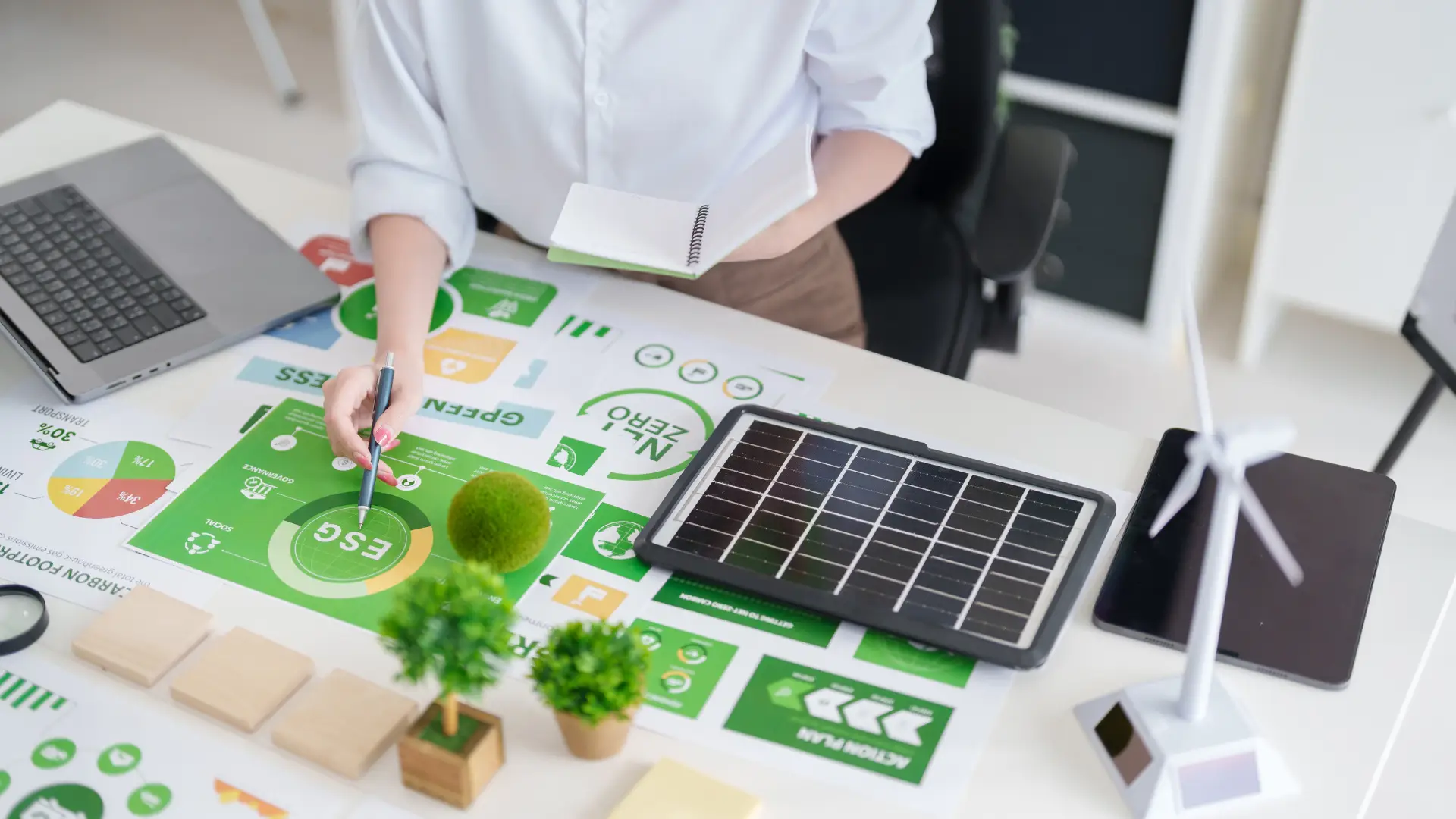

No longer can it be said that green energy isn’t an economically viable energy solution. On the contrary, a new report commissioned by the Confederation of British Industry (CBI) has concluded that not only is renewable energy economically tenable, but it is now more financially viable than fossil fuel alternatives.
UK businesses should note that this trend isn’t slowing—if you haven’t yet invested in green energy, now is the time to turn over a new leaf. But first, let’s shine a light on what net zero is and explore some of its benefits.
What Is Net Zero?
These days, it’s common for businesses to aim for an elusive “carbon neutral” status, but what about net zero? Though the terms “carbon neutral” and “net zero” are often used interchangeably, they, in fact, are different.
- Carbon neutral: Carbon emissions are offset through measures such as tree planting, carbon capture, and renewable energy investment.
- Net zero: All greenhouse gas emissions are reduced, including but not limited to CO₂, to the point where there is no negative impact on the environment. The focus is on reduction, with offsetting measures only being used if absolutely necessary.
Benefits of Net Zero Economy
What does a net zero world bring to mind? Perhaps you imagine a linen-clad commune, picking courgettes from the communal garden; there are probably solar-panelled tiny homes, and maybe a yurt or two. That’s all good and well for some, you may think. But for the buying-and-trading hustle of business-centred modernity? Out of the question.
Thankfully, you don’t need to don a robe or relinquish your sofa to engage in the net zero economy. If anything, what you will gain is far greater than anything you need to give up. Let’s unearth some of these benefits:
1. Economic Growth
Once nerds on the fringes, solar and wind are fast becoming the techie tycoons of the energy world. The net zero economy has grown by over 10% in the last year alone and has produced £83bn in gross value added (GVA), according to CBI’s report. Louise Hellem, CBI Chief Economist, comments:
“It is clear, you can’t have growth without green. At a time when the cost of doing business has squeezed appetite for capital investments and high energy prices are being cited as a drag factor across the economy, investments in clean technologies can significantly bolster competitiveness and productivity.”
Net zero economic benefits are felt by the wider UK economy, with renewable energy wealth distribution spread all the way from southwest England up to the north of Scotland.
2. Net Zero Jobs
Along with economic growth comes opportunities for employment. In Scotland, for example, net zero jobs increased by 20% in 2024. And, across the UK, net zero industries support around 951,000 full-time jobs. Not only that, a net zero job earns £43,076 on average—£5,600 more than the national standard. Net zero jobs also have 38% greater economic value than other UK jobs, meaning that they produce more for the economy than they take out.
3. Cost Savings
Green energy solutions used to be the most expensive. Now, thanks to increased energy efficiency and decreased manufacturing costs, they are the cheapest. Solar power is the most affordable of all, making it a popular choice for businesses looking to cut energy costs. If you’re ready to soak up the savings, Perfect Sense Energy is here to help.
4. Low Greenhouse Gas Emissions
Not only is green energy easier on the pocket, but it’s also less costly for the environment. Unlike oil and gas, solar panels produce very little carbon dioxide (only 50g per year!) and after a couple of years, even this will be offset. By reducing greenhouse gas emissions with solar, you can contribute to a brighter future for the planet.
How to Become a “Net Zero” Business
To stay below the 1.5°C global warming limit, all countries need to become carbon neutral by 2050, and as key contributors to greenhouse gases, businesses have a responsibility to make changes. Technically, it is nearly impossible for any business to become 100% net zero or carbon neutral, but there are steps you can take to get close.
Carry Out a Carbon Footprint Assessment
Begin by conducting a carbon footprint assessment to measure your organisation’s energy efficiency. This involves creating a breakdown of the amount of greenhouse gas emissions produced by different parts of your business including energy consumption, transportation, and waste disposal practices.
Develop an Emissions Reduction Strategy
The next stage is about setting realistic goals for how your company can reduce carbon emissions. While not exhaustive, the following ideas are a good starting point:
- Introduce recycling: 3.2% of global emissions come from landfills. Businesses can reduce emissions with responsible waste management.
- Consider local suppliers: Use local suppliers to reduce the need for long-haul logistics and transportation.
- Choose solar panels: Take the leap and invest in a renewable energy solution such as solar power. Unlike wind power, solar power is easy and affordable to install. And, as solar energy solutions are off-grid, they have the added advantage of giving your organisation energy independence.
As a net zero business, you will be contributing to economic growth, looking after the planet, and saving money in the process.
Have we convinced you that green is the new gold? Contact Perfect Sense Energy and speak to a solar panel installation expert today.