Deciding on the number of solar panels for our commercial building isn’t rocket science, but it’s not exactly picking out what tie to wear either. We’ve all heard the chatter about solar power being the bee’s knees for both the environment and our electricity bills, but when it’s time to put our money where our mouth is, how do we figure out the magic number of panels?
It’s simple maths, really. We start by looking at energy consumption—those pesky electricity bills tell us exactly how power-hungry we’ve been. With an average monthly kWh in hand, we can work out how many panels we’ll need to keep the lights on without having to draw from the grid. It’s like dieting; we need to balance the calories in with the calories out, but in this case, it’s the solar energy we generate and the energy our building gobbles up.
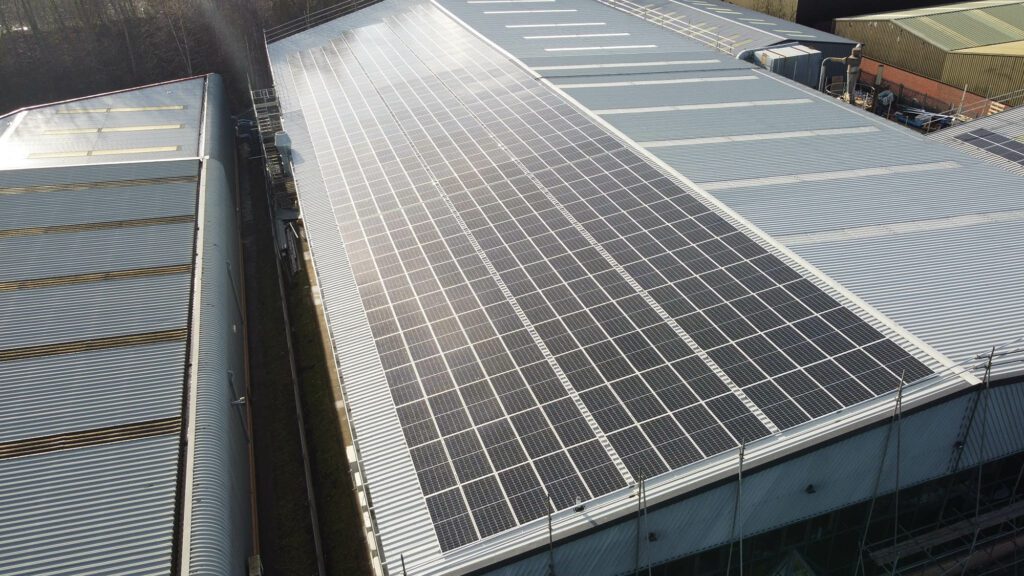
However, it’s not a one-size-fits-all gag. We must consider our rooftop’s real estate—how much space do we have and is it basking in the sun or hiding in the shade? Orientation and tilt of the panels, not to forget our lovely British weather, play a part in our solar equations too. Just because we’ve got a football pitch worth of roof doesn’t mean we can cram it full of solar panels, as tempting as that sounds. And remember, no two buildings are the same; neither are two electricity bills. So, let’s roll up our sleeves and prepare to do some number-crunching for our solar panel conundrum!
Calculating Your Building’s Solar Appetite
Before we get stuck in, remember that this isn’t a one-size-fits-all system; the energy needs of your commercial building are as unique as your Aunt Mabel’s fruitcake recipe. We’re parsing through electricity bills and doing a bit of maths to match your energy munchies with the right number of solar panels.
Solar panels are powered by light, not heat. So, even on a cloudy day, some sunlight still reaches the earth’s surface. Solar panels can still absorb this light and convert it into electricity.
Assessing Energy Consumption
First thing’s first, go and grab your utility bills! Not the most thrilling read, but these numbers are the secret sauce to understanding our energy-gobbling habits. We’re on the lookout for the kWh (kilowatt-hours) we’re chowing down annually. If you’ve got those figures, you’ve got gold. Here’s what you do with them:
Find the total from your past year’s bills.
Divide that hefty annual figure by 12.
We’ve just established our building’s energy-munching profile!
Understanding Solar Panel Output
Next, we’re sizing up how much juice a single solar panel can offer. Let’s think of it as how many pies a solar panel can bring to our perpetual energy picnic. Each panel’s output is measured in watts, typically listed as Wp (watt-peak).
Here’s a table to break it down:
| Solar Panel Size (Wp) | Estimated Annual Output (kWh) |
| 250 | 225 |
| 300 | 270 |
| 350 | 315 |
Armed with this, we calculate the number of solar panels by taking our building’s annual kWh needs and dividing them by the expected output of the chosen panel size. Got your panel count? Splendid, we’re one step closer to our solar banquet!
The Nitty-Gritty of Solar Panel Installation
Before we stick our shovels in, let’s acknowledge the brass tacks: exacting space requirements, savvy positioning, and shade dodging are pivotal in our solar escapade.
Space Matters: Rooftop Real Estate
We’re not just tossing panels up willy-nilly—no, we’re matching our solar needs with the real estate atop our commercial havens. Area metric requirements depend on our panel efficiency and energy goals, but here’s a rough guide:
- Small Buildings: 50-100 square metres for moderate energy needs.
- Medium Buildings: 100-500 square metres for heightened energy consumption.
- Large Buildings: 500+ square metres for extensive use profiles.
Every square metre counts, so we’ll measure thrice and install once!


Orientation and Tilt: Sunbathing Angles
We’re all about snagging the best tanning spots for our panels, so orientation and tilt are always our focus. Here’s the run-down:
- Optimal Orientation: South-facing is the bee’s knees, capturing maximum sunlight.
- Tilt: We angle our panels like a sunflower at a 15° to 40° pitch. No flat-lying panels on our watch!
This isn’t just a solar dance; it’s an engineered groove to catch those rays!
Shading: Dodging the Solar Eclipse
We play a mean game of hide and seek with shade. Our goal: zero shade. It’s like avoiding that one cloud at the beach–but we’re talking chimneys and neighbouring structures. Our tactical moves ensure panels remain basked in sun-kissed glory. Queue strategic spacing!
Remember, consistent solar exposure is king, and shade is the spoilsport we escort off our rooftop party.
Financial Costs and Incentives
Before we soak up the sun’s rays for profit, let’s chat about the sunny side of our investment‘s ledger sheet and those all-important incentives.
Investing in Solar: Prices to Ponder
Solar panels aren’t just nifty slabs that turn our roofs into a mini powerhouse; they’re an investment. The cost for us to get our commercial building all kitted out with solar panels can vary broadly, depending on a few variables:
- The size of our building.
- Our energy consumption habits.
- The type of solar panels we choose.
Prices typically range anywhere from £20,000 to £100,000, depending on the size of the system (measured in kilowatts, or kW). Here’s a rough breakdown:
(up to 30kW): £15,000 – £40,000.
(30-100kW): £30,000-£85,000.
(100kW and above): £85,000 – £100,000 or more.
Remember, these figures are ballpark estimates. We’d need to get a tailor-made quote for the most accurate figure, so why not contact Perfect Sense Energy for a no-cost desktop assessment?
Subsidies and Sweeteners: Fiscal Sunscreen
In the world of solar, we don’t just count on the sun to save on our bills. The government often drops in with incentives to make the cost of solar panels more palatable. Businesses can bask in various subsidies, such as:
- Feed-in Tariffs (FITs): Previously, these beauties offered payments to us for generating our own electricity.
- Smart Export Guarantee (SEG): Now, we can get paid for the surplus energy we export back to the grid – cha-ching!
- Capital Allowances: We can claim capital allowances on the solar panel expenditure, which can reduce overall tax bills.
Remember to check the latest schemes, as they can change faster than the British weather as more businesses begin to take advantage of them!
At Perfect Sense Energy, our solar specialists are committed to providing top-tier service and support, ensuring our solutions help you achieve your energy goals.
Get in touch or give us a bell on 01942 367 599 to discuss your commercial solar panel needs!