
Fluorescent lighting has been around for many years and was deemed “standard” for any environment, however, businesses should be replacing fluorescent lights. This was due to there not being any real sustainable alternatives. So, what can you replace a fluorescent light with? Unlike back in 2011 when I first became actively involved with LED Lighting, it is now a proven and recognised technology across the globe.
LED lighting has been around for many years however until recent years was never commercially viable as an alternative. With the investment in LED Lighting over the years, the cost has come down dramatically. The reliability of good quality LEDs has now proven itself, making it a viable method of replacing fluorescent tubes.
What has the RoHS Directive got to do with fluorescent light replacements?
The Restriction of the use of Hazardous Substances (RoHS) is a directive issued by the European Union (EU) in 2002, which regulates the use of certain hazardous materials in electrical and electronic equipment (EEE). The directive was put in place to protect human health and the environment from hazardous substances that may be released when EEE is disposed of. This includes halogen and fluorescent lighting, and is why it’s important to consider replacing fluorescent lights.
The End of Halogen and Fluorescent Light Replacements
In 2021, the government announced “halogen light bulbs will be banned from September 2021” including removing fluorescent light bulbs from shelves in September 2023.
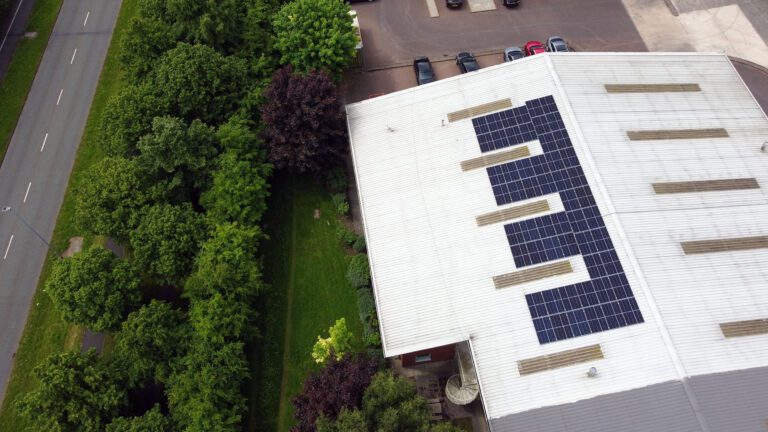
Replacing fluorescent lights is a massive and positive step forward in the UK becoming a more sustainable country and hopefully gives people the confidence to look at other energy-saving technologies. For example, Solar PV has also been around for many years and is underappreciated giving businesses more control over the energy they use, and their energy bills!
Is it worth replacing fluorescent lights with LED?
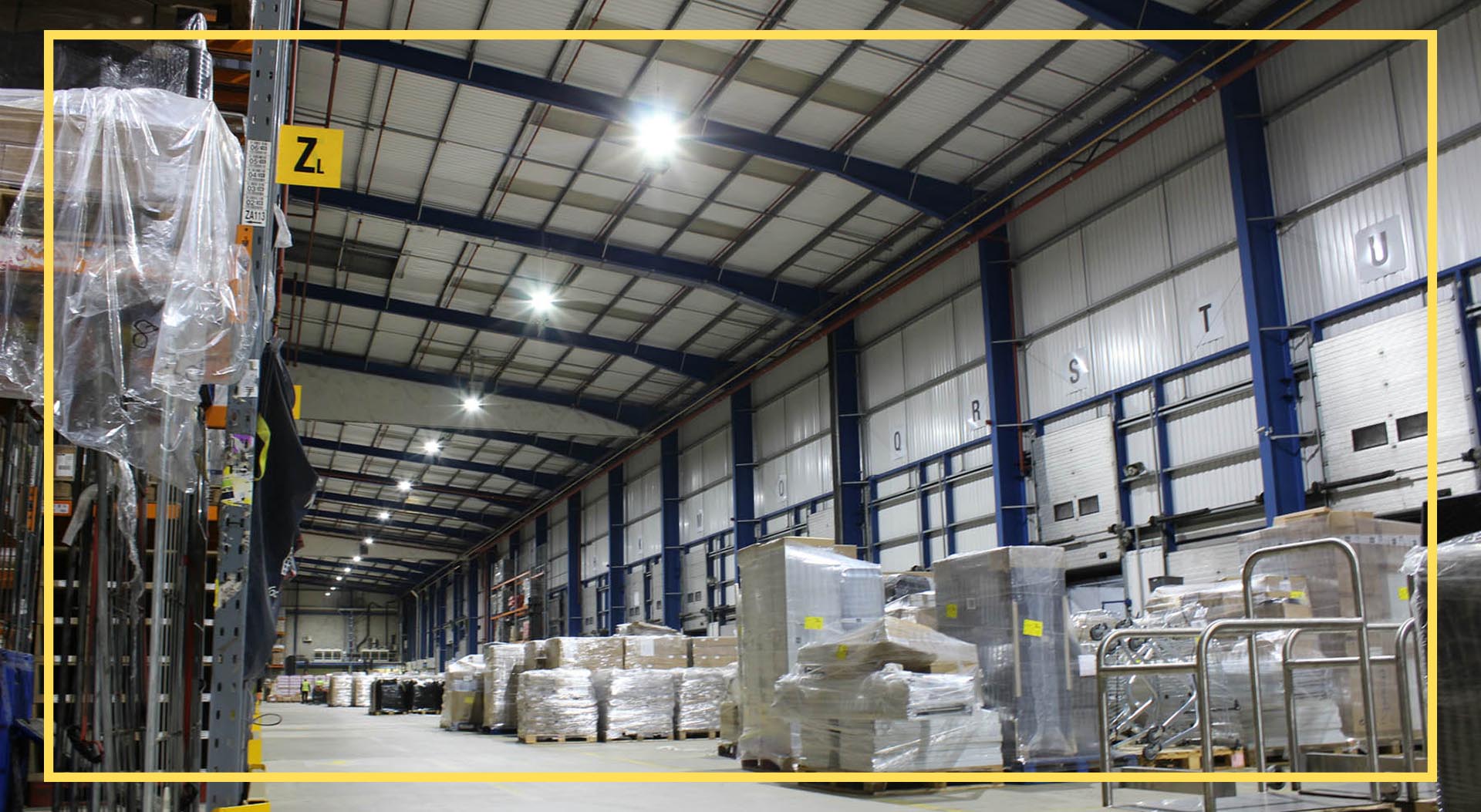
The only logical replacement you can consider when replacing fluorescent tubes is currently LED. It is a more natural light source optimised for human vision, which benefits any working environment. Just as one example, Perfect Sense Energy designed, supplied, and installed LED Lighting for Bunzl which is a nationwide supplier of retail products, they have several large-scale contracts with global companies. The site in Swinton houses a very large warehouse. The previously installed fluorescent lights used large amounts of energy and required frequent maintenance. Replacing fluorescent lights with LED is extremely energy efficient, requiring a much lower wattage and operating at a maximum of 65% output whilst still providing excellent light levels (the output level changes depending on occupancy and daylight).
Rather than giving mythical percentages that nobody believes, here is a fact. Take a 52-Watt fluorescent tube, it can be replaced with a 25-Watt good-quality LED. The savings are simple to work out, however, we haven’t included additional savings that come with LEDs. There is no ballast, great longevity, and more opportunity for lighting controls. This is why replacing fluorescent lights is a must to future-proof your business.

What are the benefits of replacing fluorescent lights with LED lighting?
- Good quality LEDs will last 10x longer than fluorescent lighting
- Replacing fluorescent lighting means cheaper running costs
- Longer life – Reduced maintenance which is sometimes a forgotten cost
- Easier for the introduction of LED Lighting Controls and additional savings
- Lower carbon emissions
- Friendlier working environment which can increase productivity

Replacing fluorescent tubes with LED: A How to Guide
Firstly, it’s going to save you money. Yes, you will have to make an initial investment when replacing fluorescent bulbs just like any other project. However, Perfect Sense Energy can give you an accurate return on investment (ROI) to plan into your budget (typically 2-3 years). This will include the correct design with the use of our professional Relux design software to make sure our specifications are optimal for your environment, delivery of the project, and installation by our in-house team. Let us help you with your fluorescent to LED conversion.
How to recycle fluorescent tubes during fluorescent light replacements
All companies that are replacing fluorescent bulbs with LEDs should do so under the WEEE directive which ensures that the old lighting is disposed of in a legal, environmentally correct manner, which when put into context with what you’re trying to achieve, makes perfect sense. Our membership in the Recolight scheme allows us to professionally recycle the harmful fluorescent tubes either on-site or back at HQ when we upgrade them.

What are the hazards of disposing used fluorescent tubes?
- Fluorescent tubes contain toxic substances such as mercury and lead.
- Mercury and Lead can be hazardous to human health and the environment if not disposed of properly.
- Incorrect disposal of used fluorescent tubes can lead to the release of mercury vapour, which can cause breathing issues, headaches, and dizziness.
- Broken fluorescent tubes can create sharp pieces of glass that can cause injury.
- The disposal of used fluorescent tubes is important in accordance with local regulations and guidelines, which may include taking them to a designated recycling center.
What to look out for when selecting an LED installer to replace your fluorescent lights
- Check the company’s experience, not just on installations but also on design, like for like (or retrofit) does not mean it is right!
- Check what LEDs and drivers are used and ask the question if they don’t know why are they recommending them?
- Check they have a WEEE registration
- Check they are qualified to install, including licenses for access gear
- Check that the ROI includes any emergency fittings, so it reflects truthfully the real cost of your investment.