

Energy is no longer just a cost — it’s an opportunity. Whether you’re running a factory, a retail site or an office block, the way your business uses and manages energy is set for a big shift. The technologies shaping that change are already here — or just around the corner.
This list shines a light on 7 emerging energy technologies gaining traction in the UK energy space. Some could save you money. Others could help you hit sustainability goals. All are worth watching.
1. Perovskite Solar Cells
What it is:
Perovskite solar cells are made from a new class of materials that can be printed onto surfaces, offering a lightweight, flexible, and potentially much cheaper alternative to traditional silicon panels.
Why it matters:
- Can achieve higher efficiency rates than silicon while using less energy to produce.
- Opens the door to solar windows, building-integrated PV, and mobile applications.
- Lightweight and flexible design expands installation options, especially in urban settings.
UK commercial potential:
UK-based companies like Oxford PV are global leaders in perovskite development. Government support and growing private investment signal strong momentum for deployment in commercial buildings and solar farms.
Worth watching:
Look out for commercial-scale manufacturing breakthroughs, durability improvements, and regulatory updates for integrating new solar materials into the built environment.
2. Green Hydrogen
What it is:
Green hydrogen is hydrogen gas produced via electrolysis powered by renewable electricity. It’s entirely carbon-free and can be used in a wide range of energy applications.
Why it matters:
- Enables the decarbonisation of heavy industry, transport, and heating where electrification isn’t practical.
- Supports energy storage and grid balancing by using surplus renewable power.
- Emits no carbon during production, aligning with Net Zero targets and sustainability goals.
UK commercial potential:
The UK government aims to deliver 10 GW of low-carbon hydrogen by 2030, with at least 5 GW from green hydrogen. Initiatives like HyNet and Tees Green Hydrogen are already laying the groundwork for future demand.
Worth watching:
Monitor the rollout of hydrogen transport infrastructure, falling electrolyser costs, and upcoming hydrogen auctions under the UK Hydrogen Allocation Round scheme.
3. Solid-State Batteries
What it is:
Solid-state batteries use a solid electrolyte rather than a liquid or gel, offering increased energy density, faster charging, and improved safety.
Why it matters:
- Delivers higher energy capacity in a smaller footprint — ideal for EVs and grid storage.
- Eliminates fire risks associated with traditional lithium-ion batteries.
- Enables more efficient long-duration storage of renewable energy.
UK commercial potential:
UK companies like Ilika and AMTE Power are involved in early-stage development. The Faraday Institution is funding significant R&D, particularly in automotive and aerospace applications.
Worth watching:
Keep an eye on scaling progress for manufacturing, improvements in lifecycle performance, and EV manufacturer adoption over the next 5–10 years.
4. Grid-Scale Flow Batteries
What it is:
Flow batteries store energy in liquid electrolyte tanks that can be scaled up for very large storage needs — a promising solution for stabilising the grid.
Why it matters:
- Offers long-duration storage for solar and wind energy, beyond the 4-hour limit of lithium-ion.
- Excellent for frequency regulation and peak shaving on the grid.
- Longer lifespan and less degradation than conventional batteries.
UK commercial potential:
Several demonstration projects are underway across the UK, supported by Innovate UK and the Department for Energy Security and Net Zero. Ideal for pairing with offshore wind and remote microgrids.
Worth watching:
Watch for advances in vanadium or zinc-bromine chemistry, lower costs, and integration with National Grid infrastructure.
5. AI-Driven Energy Management Systems
What it is:
These smart platforms use artificial intelligence and machine learning to monitor, predict, and optimise energy usage across buildings and industrial sites.
Why it matters:
- Cuts energy waste by automating heating, cooling, and equipment operation.
- Helps companies reduce energy bills and carbon footprint in real time.
- Supports demand response strategies that align with grid needs.
UK commercial potential:
Adoption is growing in smart buildings, retail, and manufacturing. Government-backed schemes encourage digitalisation, and AI-driven tech is often tied to ESG and sustainability reporting.
Worth watching:
Expect expanded integration with solar + battery systems, automated demand-side response, and AI regulation frameworks that may affect data use and compliance.
6. Floating Offshore Wind
What it is:
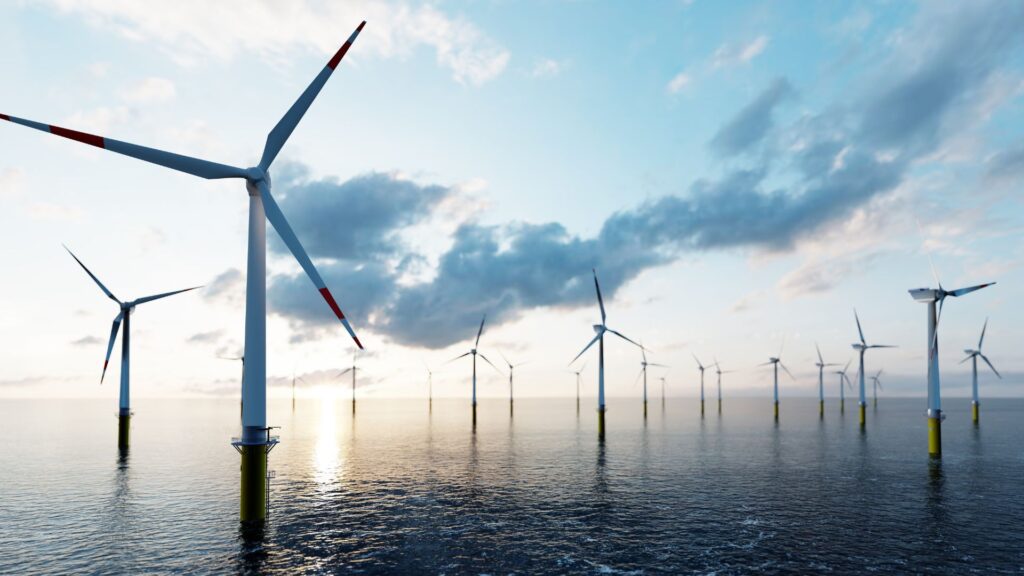
Floating offshore wind turbines are mounted on floating platforms rather than fixed to the seabed, allowing deployment in deeper waters with stronger, more consistent winds.
Why it matters:
- Accesses deeper sea areas unsuitable for fixed-bottom turbines.
- Higher wind speeds boost energy output and reliability.
- Reduces visual and environmental impact nearshore.
UK commercial potential:
The UK has a massive offshore wind pipeline, and floating wind is a priority in Scotland, Wales, and the Celtic Sea. The Government has set a target of 5 GW of floating wind by 2030.
Worth watching:
Look for lease awards in upcoming Crown Estate rounds, port upgrades for turbine assembly, and investment in UK-based floating platform manufacturers.
7. Thermal Energy Storage (e.g. molten salts, phase-change materials)
What it is:
Thermal energy storage systems capture and store heat or cold for later use — typically in industrial, commercial heating, or district energy applications.
Why it matters:
- Balances renewable energy generation by storing heat or cooling when it’s cheapest or most available.
- Enables industrial users to shift energy use away from peak grid times.
- Reduces reliance on fossil fuels for process heat and hot water.
UK commercial potential:
Growing use in commercial buildings and heat networks, especially in retrofit scenarios. Government support for low-carbon heating (e.g. Heat Network Efficiency Scheme) encourages adoption.
Worth watching:
Keep tabs on innovations in materials like molten salts or low-cost phase-change tech, and emerging business models for heat-as-a-service.
How We Came Up with the List
We didn’t just pick these technologies out of thin air. Here’s what we did:
- We looked for real momentum
These aren’t far-off ideas in a lab — each one is already being tested, trialled, or funded here in the UK. Some are even starting to roll out commercially. - We focused on usefulness for UK businesses
We chose technologies that could genuinely help British businesses cut energy bills, reduce carbon, or improve efficiency in the next few years — not just decades down the line. - We considered what’s coming next
The goal wasn’t to list what’s popular now — but what’s emerging. These are the ones to keep an eye on because they’re gaining ground fast, with support from government, industry, and investors.
The Bottom Line
These 7 technologies are more than just buzzwords — they’re shaping the future of how energy is generated, stored, and used across the UK.
If your business is exploring how to reduce energy costs, cut carbon, or invest in future-ready systems, Perfect Sense Energy is here to help.
Get in touch with our team for straightforward advice and smart solutions tailored to your site, budget, and sustainability goals.
FAQs
What are emerging energy technologies?
Emerging energy technologies are new or rapidly developing solutions that improve how we generate, store, or use energy. These include innovations like green hydrogen, AI energy management, and advanced batteries that support cleaner, more efficient energy systems.
Which new energy technologies could benefit UK businesses?
UK businesses can benefit from technologies such as AI-driven energy management, solid-state batteries, floating offshore wind, and thermal storage. These solutions help cut energy costs, reduce carbon emissions, and improve long-term energy resilience.
Why should businesses pay attention to emerging energy tech?
Staying informed about emerging energy tech helps businesses future-proof operations, unlock cost savings, and meet sustainability goals. Early adoption can also offer competitive advantages and improve ESG performance.
Is green hydrogen available in the UK?
Yes, green hydrogen is being developed in the UK, with major projects like HyNet and Tees Green Hydrogen underway. The government plans to deliver at least 5 GW of green hydrogen capacity by 2030 to support industrial decarbonisation.
How can I find the right energy technology for my business?
To choose the right energy solution, assess your site’s energy use, goals, and budget. Speaking to a trusted expert like Perfect Sense Energy can help you explore practical options and available funding tailored to your needs.