
Solar Panels for the Public Sector
The public sector spent over £7 billion on energy from 2023-24*. From schools and hospitals to government offices and libraries, solar panels lighten both energy costs and environmental load.
Take Control of Your Energy With Solar Photovoltaic (PV) for Public Sector Buildings
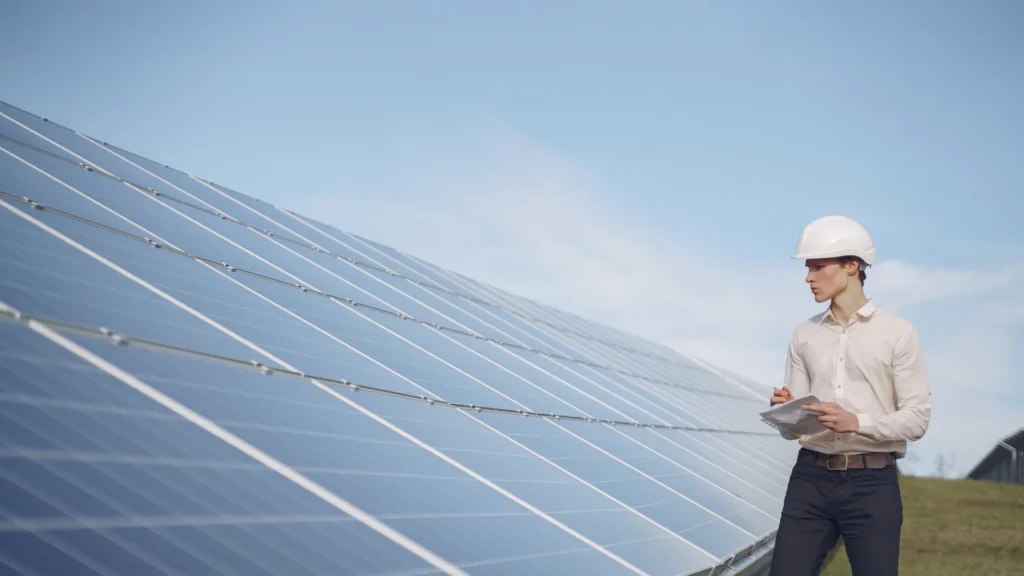
Energy prices are through the roof, so why not use roof space to your advantage? After all, solar solutions are now the most affordable renewable energy source, having dropped in price by 90% in the last ten years alone. Public sector buildings (such as hospitals, schools, and leisure centres) often have plentiful roof space, making them a prime location for commercial solar panel installation.
Installing solar PV isn’t just a money issue, though. They are part of a wider solution, helping local authorities to invest in a greener future.
Benefits of Solar Panels for Supermarkets
Sustainability

The UK government aims to become net zero by 2050, a sustainability goal that will only be achieved with decisive action. With solar photovoltaic (PV) systems, public sector organisations can switch to renewable energy and reduce carbon emissions—fast. While manufacturing solar panels does make a small carbon footprint (around 50g of CO₂, the size of a golf ball), this is offset within a couple of years. Afterwards, solar panels operate with zero emissions!
Cost Savings
Once an expensive energy source, solar power has now flipped the script on cost. Having dropped in price by 90% in the last 10 years alone, solar panels now win first place for affordability, ahead of other renewable energy solutions and fossil fuels like coal, oil, and gas. Once up and running, the return on investment (ROI) is impressive, with potential to save thousands on energy bills in the first year alone.
With the Smart Export Guarantee (SEG), you can even sell excess solar energy back to the grid, meaning that solar panels don’t only save money…they also make it!
Quick and Easy Installation
Public sector organisations operate year-round and often to tight schedules, so minimising disruption is essential. Thankfully, solar energy is quick and easy to install. While wind farms can take months (or even years!) to complete, solar PV systems take just a few days. They are also highly customisable, regardless of roof space, meaning that even small or awkwardly-shaped buildings can benefit from sunshine savings.
Energy Independence
In the modern age, public sector bodies depend upon computer technology. Without reliable electricity, these technologies fail. This can have severe consequences, which could include education disruption, hampering of government productivity, and, in the worst cases, loss of life. Blackouts are where solar panels shine. By combining a solar PV system with battery storage, public sector organisations can achieve the energy security they need to see them through energy disruptions.
Improved Reputation
Improved reputation is another sunny side effect of solar panel installation. While public sector bodies shouldn’t install solar panels just for recognition, it is undeniable that doing so can significantly enhance their public image. This can lead to increased trust and support from the public, as well as potential funding opportunities.
Funding Opportunities
Public sector organisations that choose solar power can take advantage of funding opportunities. Designed to encourage clean energy projects, these can reduce electricity bills even further. Here are the latest funding options that your organisation may be eligible for:
- Public Sector Decarbonisation Scheme (PSDS): Provides grants for energy efficiency upgrades, including solar panel installations. Since its inception in 2020, it has allocated nearly £3 billion to public sector organisations across the country.
- Great British Energy (GBE): In 2025, GBE announced a £200 million investment to install solar panels on 200 schools and 200 NHS sites, aiming to reduce energy bills and reinvest savings into essential public services.
Case Study: St Andrews Primary School
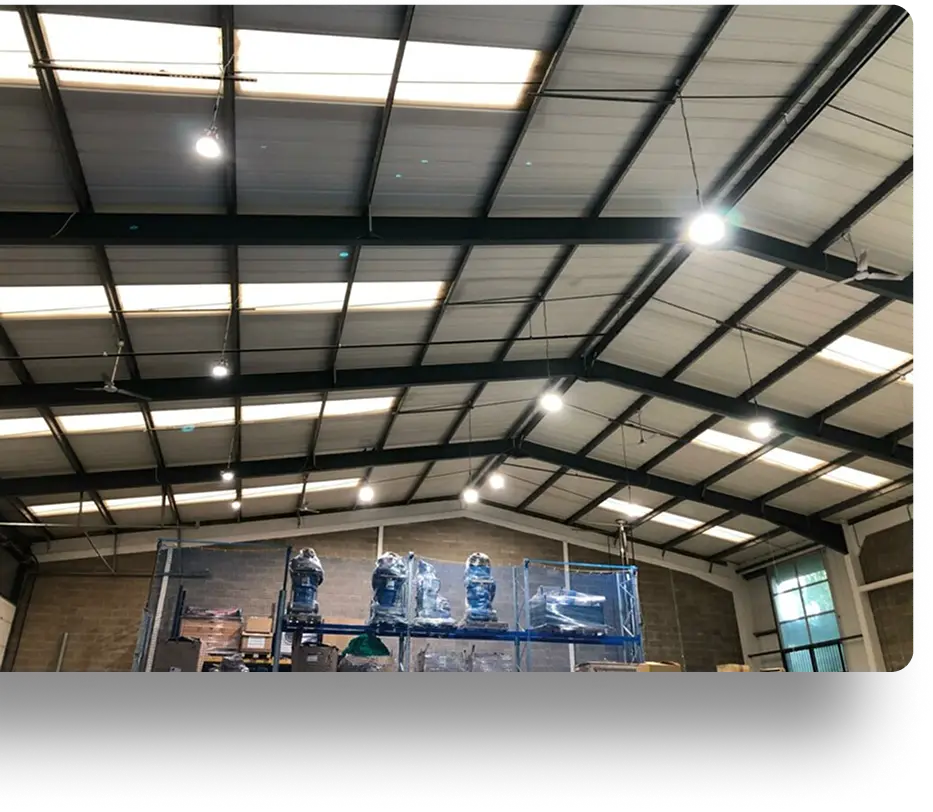
St Andrews Primary School in Manchester reduced annual costs and negative environmental impact by installing a 12.3 kWp solar PV system and LED lighting. Needless to say, solar energy is helping them balance their books.
-

St Andrews Primary School
Read Case StudySolar PV and LED Lighting were installed at St Andrews primary school.
 : St Andrews Primary School

How Commercial Solar Panel Installation Works
Site survey
To ensure optimum energy efficiency, we assess how many solar panels your organisation needs and/or has capacity for and where they should be placed.
Design and Engineering
Based on the site survey, our dedicated team creates a bespoke solar photovoltaic (PV) system tailored to your energy usage.
Permits and Approvals
We investigate and manage any permits and approvals required for installing a solar PV system at your organisation.
Installation
Our expert engineers install the solar system, adhering to strict health and safety guidelines and with minimal disruption to stakeholders and staff.
Testing and Commissioning
We ensure that your solar panel installation is successfully producing energy.
Maintenance and Monitoring
Perfect Sense Energy provides a maintenance and monitoring service to ensure that solar panels are kept clean and continue working efficiently for decades to come.
Public Sector Solar Panels FAQs
How much does public sector solar power cost?
The cost of solar panels for public sector buildings varies depending on the solar system size. Smaller 10–50 kW systems tend to cost from £10-60k. Larger (50–200 kW) systems may cost around £200-800k.
We also provide commercial solar panels solutions for schools, hospitals, and care homes.
Is there funding available for public sector solar panel installation?
Yes, some public sector organisations are eligible for funding. Potential funding includes the Public Sector Decarbonisation Scheme and the Great British Energy fund.
Will solar PV installation disrupt public services?
No, Perfect Sense Energy carefully works around operating hours, to a pre-agreed timetable, ensuring that staff and stakeholders are not disturbed by the installation process.
