
Stadiums and arenas use a lot of power — not just on match days, but every week through lighting, facilities, hospitality, and operations. With large roof and canopy areas, many venues are also sitting on one of the biggest solar opportunities available.
Solar won’t cover every peak demand moment, but it can reduce daytime grid use and support visible sustainability goals that fans, partners and local communities increasingly care about. The key is choosing panels that are built for scale, exposure, and long-term reliability.
Below are six solar panel options that are well suited to stadiums and arenas, explained in plain English.
1. Trina Vertex N (high-output, large venue-friendly)
What It Is
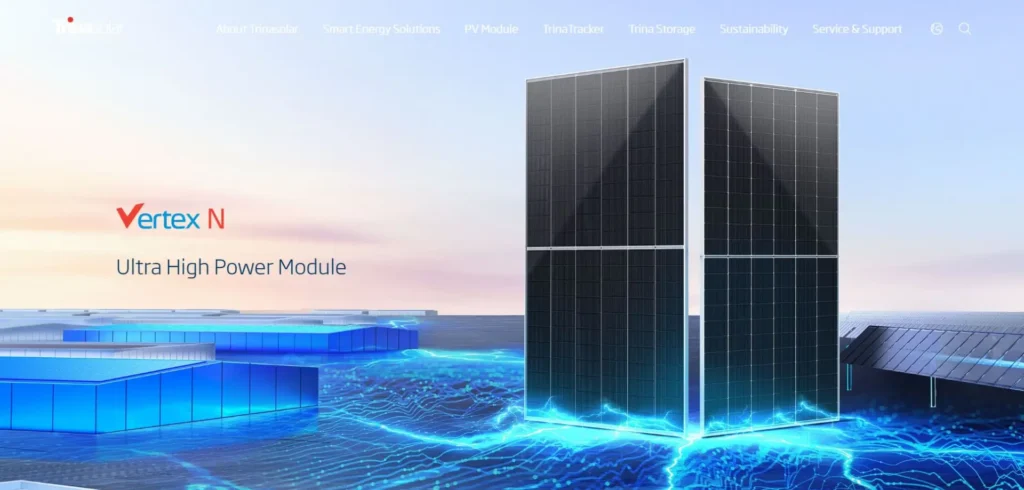
Trina Vertex N is a high-output solar panel range designed for larger commercial and utility-style installations, which makes it a strong match for stadium roofs and canopies. Its published datasheets highlight a long power warranty and performance positioning aimed at long-term output.
Who It’s For
- Stadiums and arenas with large roof or canopy areas
- Venues that want maximum generation from a big footprint
Funding/Benefit
- Datasheets reference long power warranty terms and long-life performance positioning.
Geographic Scope
Available UK-wide through commercial solar supply chains.
How to Apply
- Confirm roof/canopy condition, access routes, and event calendar constraints.
- Ask for a design based on your available surfaces (stands, concourse roofs, car park canopies).
- Confirm the exact module model, warranty documents and delivery times in the final proposal.
Pros
- Great for large-scale installs and big surfaces
- Long-term performance positioning in published materials
- Strong option when you want meaningful generation, not just optics
Cons
- Large-format panels aren’t always ideal for tight or awkward roof sections
- Final performance depends heavily on layout and installation quality
Website: trinasolar.com
2. LONGi Hi-MO 7
What It Is
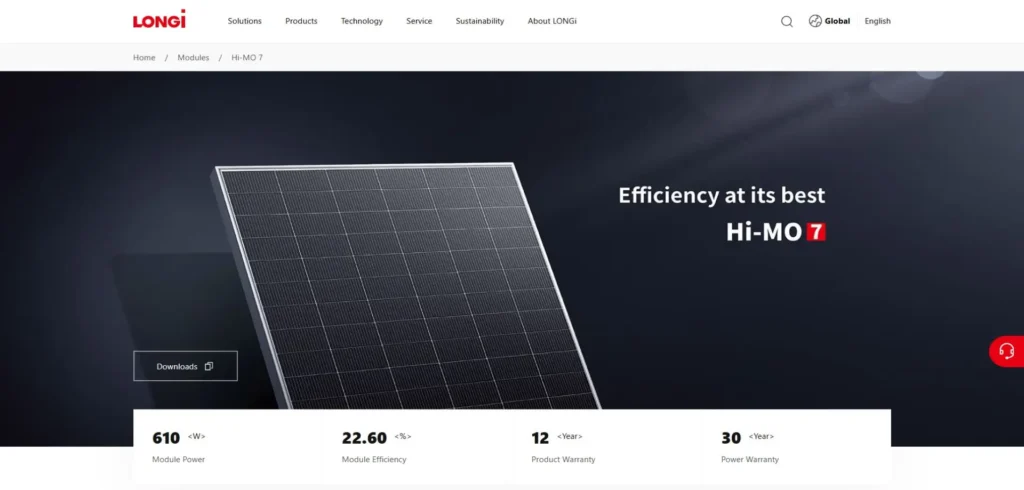
LONGi Hi-MO 7 is a utility-leaning panel family designed for high output and long-term performance, with published warranty and degradation information. LONGi’s product page highlights a long power warranty and low annual degradation positioning.
Who It’s For
- Stadiums planning a high-capacity install that needs long-term confidence
- Projects where procurement wants clear manufacturer info
Funding/Benefit
- Strong long-term performance positioning, designed for large projects.
Geographic Scope
Commonly available through UK/EU commercial supply channels.
How to Apply
- Map usable roof zones and identify areas affected by shading or roof equipment.
- Ask your installer to model expected annual generation using the exact Hi-MO 7 variant.
- Confirm warranty documentation and supply timelines before sign-off.
Pros
- Strong fit for large surfaces and big projects
- Clear published warranty/degradation positioning
- Helps build a credible long-term business case
Cons
- Too large for some small or irregular roof sections
- You must confirm the exact model — specs differ by variant
Website: longi.com
3. Jinko Tiger Neo 3.0
What It Is
Jinko Tiger Neo 3.0 is positioned as a high-performance panel range designed to hold up well in real-world conditions such as heat and lower light levels, with strong warranty messaging. Jinko’s EU product page references long warranty terms and performance claims aimed at long-term reliability.
Who It’s For
- Stadiums and arenas that want strong output plus long warranty cover
- Projects that need a credible, well-documented panel option
Funding/Benefit
- Marketed as delivering strong performance in heat and low light (useful for UK weather variability).
Geographic Scope
Available in the UK/EU market.
How to Apply
- Ask for an output model that reflects your roof orientation and shading zones.
- Confirm the specific Tiger Neo 3.0 variant being quoted (because the range includes multiple versions).
- Check the warranty terms provided match the exact product on the proposal.
Pros
- Strong real-world performance positioning (heat and low light)
- Clear downloadable resources (datasheets/warranty materials)
- Good option for large venue-scale installs
Cons
- Lots of variants — you need the exact datasheet
- Availability can change as stock moves
Website: jinkosolar.com
4. Canadian Solar HiKu7
What It Is
Canadian Solar HiKu7 is a high-power module family positioned for commercial and larger rooftops, with published warranty references. The HiKu7 product page references warranty terms and points readers to the wider Canadian Solar limited warranty statement.
Who It’s For
- Venues that want a widely recognised commercial-scale panel family
- Stadium projects aiming for strong output without overcomplicating panel choice
Funding/Benefit
- Designed for high power output suitable for larger installations.
Geographic Scope
Available through UK commercial installers and distributors.
How to Apply
- Identify which roof zones are easiest to install on (access and safety first).
- Ask your installer which HiKu7 variant fits your layout and mounting plan.
- Confirm warranty coverage and documentation for your region and use case.
Pros
- Straightforward, commercial-scale choice
- Clear warranty references for due diligence
- Typically easy to compare across installer quotes
Cons
- Warranty specifics can vary by product family and region
- Performance depends on design and install quality, not just panel brand
Website: canadiansolar.com
5. SunPower Maxeon (premium, high efficiency)
What It Is
SunPower Maxeon panels are known for their high efficiency and robust build quality, often delivering some of the strongest real-world output you can get on commercial rooftops. On large stadium and arena surfaces where every bit of generation counts — and where appearance matters — Maxeon’s pedigree and warranty positioning make it a compelling premium option.
Who It’s For
- Stadiums and arenas where efficiency per panel is a priority
- Projects that are prepared to invest a bit more upfront for long-term performance
Funding/Benefit
- Well-established manufacturer, which can support strong confidence in long-term output.
Geographic Scope
Available in the UK through commercial solar distributors and installer networks.
How to Apply
- Confirm rooftop space and whether you need all-black or standard finishes.
- Ask your installer to model the expected generation using the exact Maxeon module variant.
- Confirm warranty documentation, delivery timeline and build schedule in the quote.
Pros
- High panel efficiency means more generation per square metre.
- Very strong reputation for long-term reliability and performance.
- Excellent choice where appearance matters (e.g., concourse, visible roofs).
Cons
- Premium price — you pay for performance and brand confidence.
- Availability can be more limited than mainstream commercial panels (lead times vary).
Website: sunpower.com
6. Qcells Q.TRON (Hanwha Qcells)
What It Is
A quality-focused range backed by a major brand, with warranty documents available to support the due diligence side of commercial procurement.
Who It’s For
- Data centre buyers who want a recognisable brand with clear warranty paperwork
- Projects where internal approvals need solid documentation
Funding/Benefit
- Warranty terms and performance statements are set out in Qcells documentation
Geographic Scope
Good availability in the UK and EU. Warranty support applicable in the UK when installed through approved distributors.
How to Apply
- Match the exact Q.TRON series to your installer’s supply chain
- Read the limited warranty terms relevant to your region
- Compare total system yield and warranty strength against price
Pros
- Clear warranty documentation for procurement
- Strong brand credibility
- Suitable for commercial decision-making
Cons
- Warranty documents can be region-specific (don’t assume)
- May not be the cheapest option
Website: qcells.com
Ranking Methodology
To ensure clarity, transparency, and real-world usefulness for stadium and arena projects (where scale, reliability, and long-term performance matter just as much as price), we ranked solar panels using the following criteria:
| Criterion | Weight (%) | Description |
| Performance per Roof Area | 30% | How much power you can generate from large roof and canopy surfaces, especially where layout isn’t perfectly uniform. |
| Reliability & Warranty | 25% | Length and clarity of product and performance warranties, plus confidence in long-term support. |
| Suitability for Stadium Installations | 20% | How well the panel suits exposed, large-scale rooftops and canopies (durability, consistent output, practical deployment). |
| Availability & Support | 20% | Whether it’s realistically sourceable through UK channels with clear support and paperwork. |
The Bottom Line
Whether you’re managing a community stadium or a major arena with year-round events, there’s likely a solar solution that fits your roof space, operational needs, and sustainability ambitions. With the right approach, a large-scale installation can be a long-term win without becoming a logistical headache.
Perfect Sense Energy can help you compare panel options, plan a design that works around events and access windows, and build a solar system that performs reliably over time. Get in touch with Perfect Sense Energy today and let’s bring clean energy to your venue.
FAQs
Are solar panels worth it for stadiums and arenas?
Yes. Venues often have large roof areas and steady baseline electricity use, so solar can reduce daytime grid demand and support long-term cost savings.
What’s the best solar panel type for a stadium roof?
Usually a durable, high-output panel range designed for large-scale commercial installs, with clear warranty terms and dependable long-term performance.
Can solar work if the stadium only uses lots of power on event days?
Yes. Even when peaks are event-based, venues still use power on non-event days (operations, facilities, offices, hospitality). Solar mainly helps by cutting daytime baseline use.
Do stadium roofs need special design considerations for solar?
Often, yes. Wind exposure, roof structure, access constraints, and installation windows around events can all affect design — which is why site surveys and structural checks matter.
How do we choose the right panels for our venue?
Start with your goal (maximum generation, long warranty, best value), shortlist a few suitable panel families, and ask for a design and generation estimate based on your exact roof layout.