
Energy prices are rising, carbon taxes are getting stricter, and supply chains increasingly demand proof of sustainability. Forward-thinking businesses are acting now, cutting their exposure to volatile energy markets, staying ahead of regulations, and building resilience against grid disruptions.
The ten green energy projects below show how UK organisations have secured their future while keeping an eye firmly on the bottom line.
1. C-TEC Solar PV System | Wigan, Greater Manchester (went live in 2025)

C-TEC, a leading fire-safety electronics manufacturer, installed a custom 127.7 kWp rooftop solar system on its factory. Perfect Sense Energy designed and delivered the project after winning a competitive Green Economy tender.
Why it’s impressive – This system generates around 102,000 kWh of clean electricity every year, cutting 21 tonnes of CO₂ in the process. It offers a first-year return on investment of 42%, with a payback period of just three years.
Business wins – The installation saves over £33,000 in the first year alone, freeing up funds for other investments. It also meets 17% of the site’s energy needs, locking in low-cost power for decades.
Lesson for your company – Even a modest-sized array can make a big impact and pay for itself quickly. Match your system size to your daytime energy use for the fastest and most reliable returns.
Key partners – C-TEC, Perfect Sense Energy, Green Economy
More info – perfectsenseenergy.com
2. Eden Geothermal | Cornwall (live 2023)
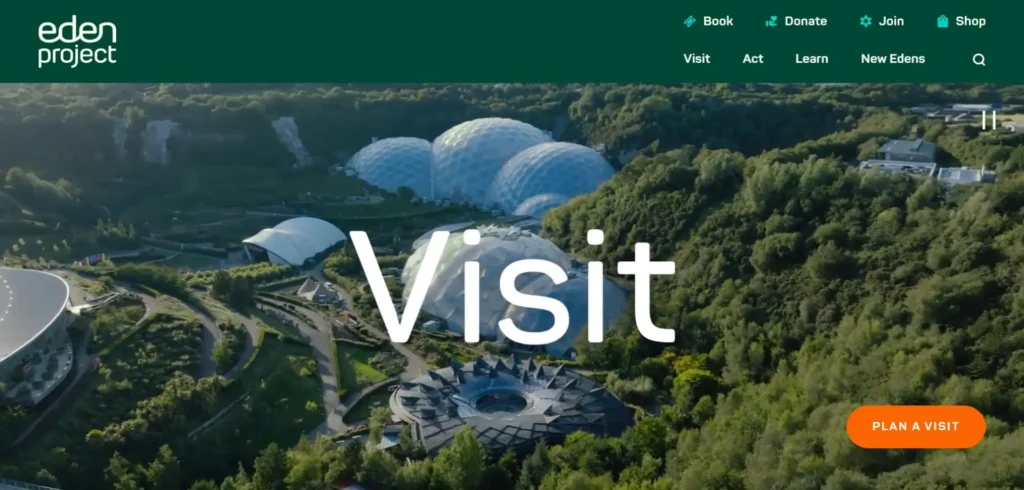
The Eden Project now heats its famous biomes using the UK’s first deep-geothermal plant since 1986. A single 4 km well taps hot granite deep underground to provide a constant heat supply.
Why it’s impressive – It proves that geothermal energy can work in the UK, even on a compact site. The project challenges the perception that this technology only thrives in volcanic countries like Iceland.
Business wins – The switch dramatically cuts Eden’s reliance on gas, helping to lower operational costs. It also shields them from the uncertainty of fossil-fuel price swings.
Lesson for your company – If you need steady heat year-round, such as for greenhouses or food production, check your local geology before investing in new boilers. You may discover an untapped resource that can be harnessed for decades.
Key partners – Eden Geothermal Ltd, Geothermal Engineering Ltd
More info – edenproject.com
3. Energy Superhub Oxford | Oxfordshire (live 2023)

This innovative site combines a large grid battery, rapid EV charging hub, and low-carbon heat pumps to support Oxford’s net-zero goals. It’s designed to deliver cleaner energy for power, transport, and heating in one place.
Why it’s impressive – It’s the first UK project to integrate electricity, transport, and heat solutions at city scale. This makes it a pioneering model for other cities aiming to decarbonise multiple sectors at once.
Business wins – The battery provides extra income by offering grid services while powering more than 40 EV chargers. This has helped cut council energy costs by around 25%.
Lesson for your company – If you have high electric demand, co-locating storage with that load can save you from costly grid upgrades. It also improves energy resilience and can generate new revenue streams.
Key partners – Pivot Power (EDF), Wärtsilä, Oxford City Council
More info – energysuperhuboxford.org
4. GRIDSERVE Electric Forecourt® | Norwich (live 2022)
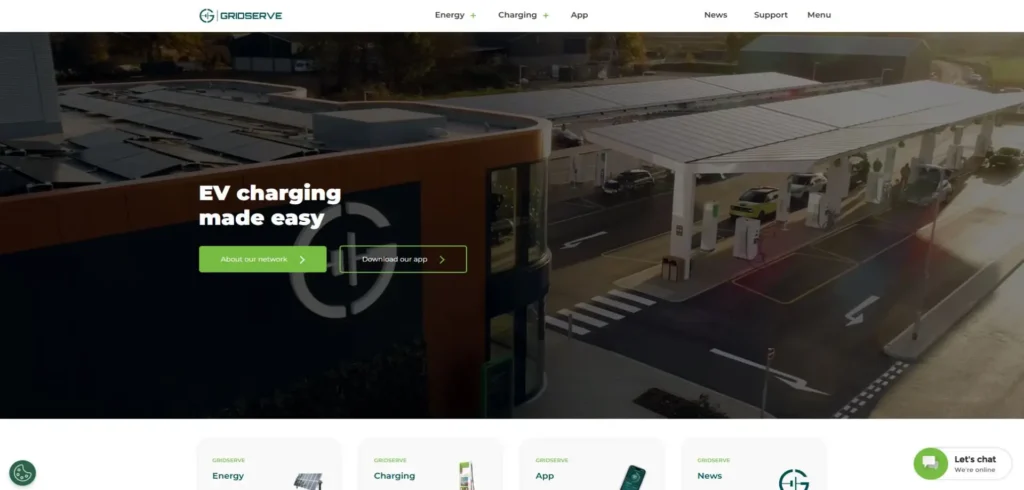
GRIDSERVE has created a solar-powered service station for EVs, offering 36 ultra-rapid chargers alongside cafés and workspaces. It’s built to make electric travel as convenient as possible.
Why it’s impressive – Drivers can add around 100 miles of range in just five minutes, making long journeys easier and faster. The site’s design encourages more people to choose electric vehicles without compromising convenience.
Business wins – Customers typically stay for half an hour while charging, which boosts retail and food sales. The added amenities create a welcoming destination, not just a charging stop.
Lesson for your company – Pairing rapid chargers with on-site solar and storage can help keep connection costs low. It can also create new opportunities for attracting and retaining customers.
Key partners – GRIDSERVE, Hitachi Capital
More info – gridserve.com
5. HyNet North West Hydrogen Cluster | Cheshire & Merseyside (Due to Begin in 2028)

HyNet is building a 100 km hydrogen network to supply local industries with low-carbon fuel. The project will also store captured CO₂ under the Irish Sea to reduce emissions.
Why it’s impressive – Once complete, it could cut regional industrial emissions by up to 10 million tonnes a year. That’s the same as taking four million cars off the road.
Business wins – High-temperature industrial users can switch from gas to cleaner hydrogen without replacing all their equipment. This keeps transition costs manageable while meeting sustainability targets.
Lesson for your company – High-temperature industrial users can switch from gas to cleaner hydrogen without replacing all their equipment. This keeps transition costs manageable while meeting sustainability targets.
Key partners – Progressive Energy, Eni UK, Essar Oil UK, Cadent
More info – ccushub.ogci.com
6. IKEA Greenwich Store | London (opened 2019)

This flagship IKEA store showcases sustainable design with a solar roof, heat pumps, and rainwater harvesting. It’s also the first big-box retailer to earn a BREEAM “Outstanding” rating.
Why it’s impressive – It uses around 60% less energy than older stores of the same size. The building also serves as a live example of how sustainability can enhance retail environments.
Business wins – Energy upgrades quickly pay for themselves, improving long-term profitability. The sustainability features also draw visitors who are curious to see what’s inside.
Lesson for your company – Make your sustainability efforts visible—customers value businesses that lead by example. Transparency builds trust and strengthens brand loyalty.
Key partners – Ingka Group, BDP Architects
More info – bregroup.com
7. Lakeside Battery | North Yorkshire (live 2024)

Located near Drax, this is the UK’s largest grid-connected battery, capable of storing surplus wind power. It has a capacity of 100 MW / 200 MWh for two-hour energy delivery.
Why it’s impressive – It’s the first two-hour battery connected directly to the National Grid’s high-voltage transmission system. This means it can deliver power where and when it’s needed most.
Business wins – The site earns income from grid-balancing services while improving local power reliability. It helps stabilise the network during peak demand and renewable fluctuations.
Lesson for your company – You don’t always have to build your own storage—leasing space in shared battery projects can be a cost-effective alternative. This approach reduces upfront costs while giving you access to the benefits of storage.
Key partners – TagEnergy, Tesla Megapack
More info – electricalreview.co.uk
8. Leeds PIPES District-Heat Network | Leeds (growing 2020-25)

This project channels waste heat from a recycling plant through 30 km of pipes to homes, offices, and hospitals. It’s already delivering lower-cost heating to thousands of users.
Why it’s impressive – Customers save up to 10% on heating bills without having to maintain their own boilers. The system makes use of heat that would otherwise be wasted, improving overall efficiency.
Business wins – Long-term fixed-price contracts protect budgets from gas price spikes. This stability helps both households and businesses plan ahead with confidence.
Lesson for your company – If a district heating scheme is available locally, connecting can be more cost-effective than replacing gas systems. It also removes the burden of maintaining on-site heating equipment.
Key partners – Leeds City Council, Vital Energi
More info – vitalenergi.co.uk
9. Sainsbury’s Net-Zero Supermarket | Hook, Hampshire (opened 2023)
This 25,000 ft² supermarket uses 50% less energy than a typical store and is powered entirely by renewable electricity. It’s a practical demonstration of all-electric retail.
Why it’s impressive – It proves that large retailers can operate without any reliance on gas today. The design also showcases how efficiency and sustainability can work hand in hand.
Business wins – Running costs are lower, freeing resources for other business priorities. The store’s sustainability credentials also resonate with eco-conscious customers and investors.
Lesson for your company – Combining heat pumps with energy-efficient refrigeration can deliver quick wins for many commercial buildings. This is a proven way to cut both energy use and operating costs.
Key partners – Sainsbury’s Property Team, Wates Construction
More info – about.sainsburys.co.uk
10. Seagreen Offshore Wind Farm | Firth of Forth (fully live 2023)
Seagreen is Scotland’s largest offshore wind farm, with turbines installed in record-breaking 59-metre-deep waters. It produces 1.1 GW of clean electricity.
Why it’s impressive – It shows that fixed foundations can be installed in much deeper waters, unlocking new areas for wind development. This could expand renewable energy capacity significantly in the coming years.
Business wins – The project supports long-term maintenance jobs, boosting the local economy. It also offers stable green energy contracts that protect against market volatility.
Lesson for your company – Deeper offshore sites open more possibilities for securing affordable, low-carbon power. Exploring these opportunities now can put you ahead of future energy shifts.
Key partners – SSE Renewables, TotalEnergies, PTTEP
More info – sserenewables.com
The Bottom Line
These projects prove that investing in clean technology isn’t a gamble—it’s a smart business move. The benefits go beyond cutting emissions: they include lower operating costs, greater energy security, and stronger connections with customers who value sustainability.
Perfect Sense Energy can help you turn inspiration into action, designing projects that fit your site, your goals, and your budget. Contact us today to start building your own green energy success story.
FAQs
What counts as a “green-energy project” for a UK business?
Any upgrade that replaces or reduces fossil-fuel use on-site—e.g. rooftop solar PV, battery storage, heat pumps, LED lighting, EV charging or waste-heat re-use—qualifies. The common thread is lower carbon emissions and measurable energy-cost savings.
How quickly can commercial solar PV pay for itself?
In today’s UK market, well-sized rooftop systems on high-use sites often reach payback in 3–5 years, thanks to falling panel prices, 100 % self-consumption during daylight hours and zero-rate VAT on installs <1 MW.
Do I need planning permission for solar panels on a business property?
Most pitched-roof arrays under 1 MW are “permitted development” in England if they sit below the roof ridge and don’t project >0.2 m. Flat-roof or ground arrays usually need a standard planning application—check local rules to be sure.
How much CO₂ can my company save by switching to renewables
Every 1 kWh of grid electricity you replace with on-site solar or wind avoids roughly 0.2 kg of CO₂ (UK grid-average factor). A 100 kWp array can therefore cut about 20 t of carbon per year while slashing bills.
What funding help is available for green-energy projects?
Options include 0 % “Green Business” loans from many councils, the UK Industrial Energy Transformation Fund for larger sites, low-interest asset finance, and power-purchase agreements that need no upfront capital.