

Improving energy efficiency is a critical strategy for meeting sustainability goals, improving resilience, and staying competitive. From factories to hospitals, some industries are taking bold steps to reduce their carbon footprint and lead the transition to a low-energy future.
To highlight who’s making the biggest impact, we’ve compiled a list of 7 industries leading the way in energy efficiency in the UK. These sectors stand out not only for their high energy usage, but also for their commitment to smarter, cleaner, and more sustainable operations.
1. Manufacturing
Manufacturing is one of the UK’s largest energy consumers, and also one of the most proactive in cutting waste.
Why they’re leading:
- Major investments in energy-efficient machinery, process automation, and LED lighting.
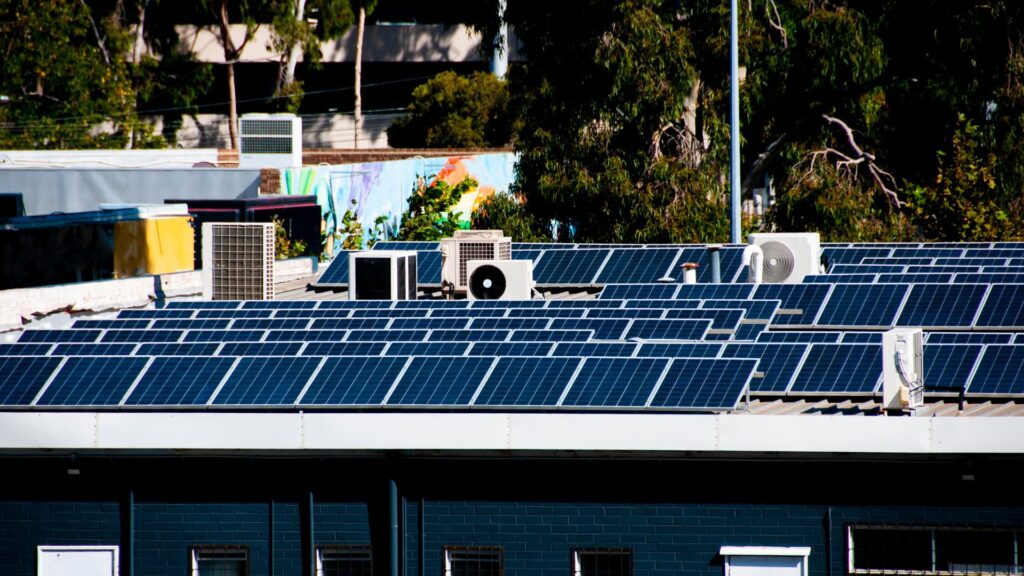
- Widespread adoption of solar PV, especially in high-roofline environments like factories.
- Use of heat recovery systems to reduce energy loss during production.
Example: Precision engineering firms are installing roof-mounted PV systems and switching to lower-energy CNC machinery to lower overheads and meet client ESG standards.
2. Commercial Offices & Real Estate
Office buildings are being reimagined for the green economy.
Why they’re leading:
- Growing adoption of smart HVAC, lighting, and building energy management systems (BEMS).
- Landlords and developers are chasing EPC upgrades and BREEAM/LEED certifications to boost asset value.
- Corporate tenants are demanding Net Zero-ready premises.
Example: Retrofits of older commercial spaces with insulation, solar, and efficient climate control are common in city centre buildings.
3. Education (Schools & Universities)
Schools and universities are embracing energy efficiency both for cost reasons and environmental leadership.
Why they’re leading:
- Funding from Salix and other government-backed schemes.
- Solar panel installations on school roofs, plus battery storage to manage peaks.
- Curriculum alignment with sustainability goals adds mission value.
Example: A university in Yorkshire recently installed 1MW of rooftop solar, supported by battery storage and a campus-wide energy dashboard.
4. Healthcare
Hospitals and healthcare facilities operate around the clock, making efficiency upgrades both impactful and essential.
Why they’re leading:
- High ROI from LED lighting, low-energy sterilisation systems, and smart heating controls.
- National initiatives driving carbon reduction across NHS estates.
- Pressure to meet NHS Net Zero goals by 2040.
Example: Trusts are retrofitting facilities with PV arrays and efficient HVAC systems, supported by government capital funding.
5. Retail & Supermarkets
With large footprints and high energy loads, retail brands are investing heavily in efficiency to lower costs and appeal to eco-conscious shoppers.
Why they’re leading:
- Heavy reliance on efficient refrigeration, LED retrofits, and storewide energy monitoring.
- Integration of solar power on large flat roofs (e.g. supermarkets and shopping centres).
- Brand differentiation through sustainability messaging.
Example: Some UK chains have outfitted distribution centres with PV systems and switched to electric delivery vehicles.
6. Agriculture
Modern farms are becoming power producers as well as consumers.
Why they’re leading:
- Widespread use of solar panels, biomass, and energy-efficient irrigation systems.
- Eligibility for renewables incentives and support schemes.
- Strong off-grid and self-sufficiency motivation.
Example: Agricultural businesses are using solar to power irrigation pumps, refrigeration units, and processing facilities.
7. Warehousing & Logistics
As e-commerce grows, so does the need for sustainable warehousing and distribution.
Why they’re leading:
- Large rooftop areas ideal for solar installations.
- High adoption of LED lighting, motion sensors, and energy-efficient conveyor systems.
- Shift to electric vehicle (EV) fleets and charging infrastructure.
Example: Warehousing giants are deploying 500kW+ PV systems and integrating BEMS to manage multiple sites under one dashboard.
How We Chose Them
We ranked industries based on five equally weighted criteria:
| Criteria | Description |
| 1. Energy Consumption | Sectors with high baseline energy usage where improvements have big payoffs. |
| 2. Innovation & Adoption | Use of new technologies like solar PV, battery storage, smart systems, and insulation. |
| 3. Regulatory Pressure | Mandates and incentives driving energy improvements (e.g. public sector standards). |
| 4. Return on Investment (ROI) | Sectors with strong financial returns from energy-saving upgrades. |
| 5. Market Signals | Visible trends, case studies, and investment activity showing sector leadership. |
The Bottom Line
These seven industries show how smart investments can slash energy bills, reduce emissions, and future-proof operations. Whether you’re a school, warehouse, retailer, or manufacturer, there’s never been a better time to act.
At Perfect Sense Energy, we’ve helped businesses across all of these sectors plan and install energy-saving systems, from commercial solar panels to smart controls. Want to find out what’s possible for your site? Get in touch today and let’s discuss your needs.
FAQs
Which industries use the most energy in the UK?
The UK’s most energy-intensive industries include manufacturing, transport, agriculture, healthcare, and commercial real estate. These sectors consume the highest levels of electricity and fuel, making them prime candidates for energy efficiency improvements.
What are the benefits of energy efficiency for businesses?
Energy efficiency helps businesses reduce utility costs, lower carbon emissions, and improve operational performance. It also enhances brand reputation, supports regulatory compliance, and increases resilience against energy price volatility.
How can commercial buildings improve energy efficiency?
Commercial buildings can improve energy efficiency by installing LED lighting, upgrading HVAC systems, using smart controls, adding insulation, and generating renewable energy through solar panels or heat pumps. Regular energy audits also help identify savings opportunities.
Why is energy efficiency important in the manufacturing sector?
Manufacturing consumes large amounts of energy for machinery, heating, and lighting. Improving efficiency reduces costs, minimises waste, and helps manufacturers meet sustainability goals and industry standards. It also boosts competitiveness in a low-carbon economy.
Which UK government schemes support energy efficiency?
UK businesses can access schemes like the Public Sector Decarbonisation Scheme, Salix Finance loans, and the Boiler Upgrade Scheme. These programmes offer funding and support for energy-efficient upgrades, particularly in public sector buildings and SMEs.