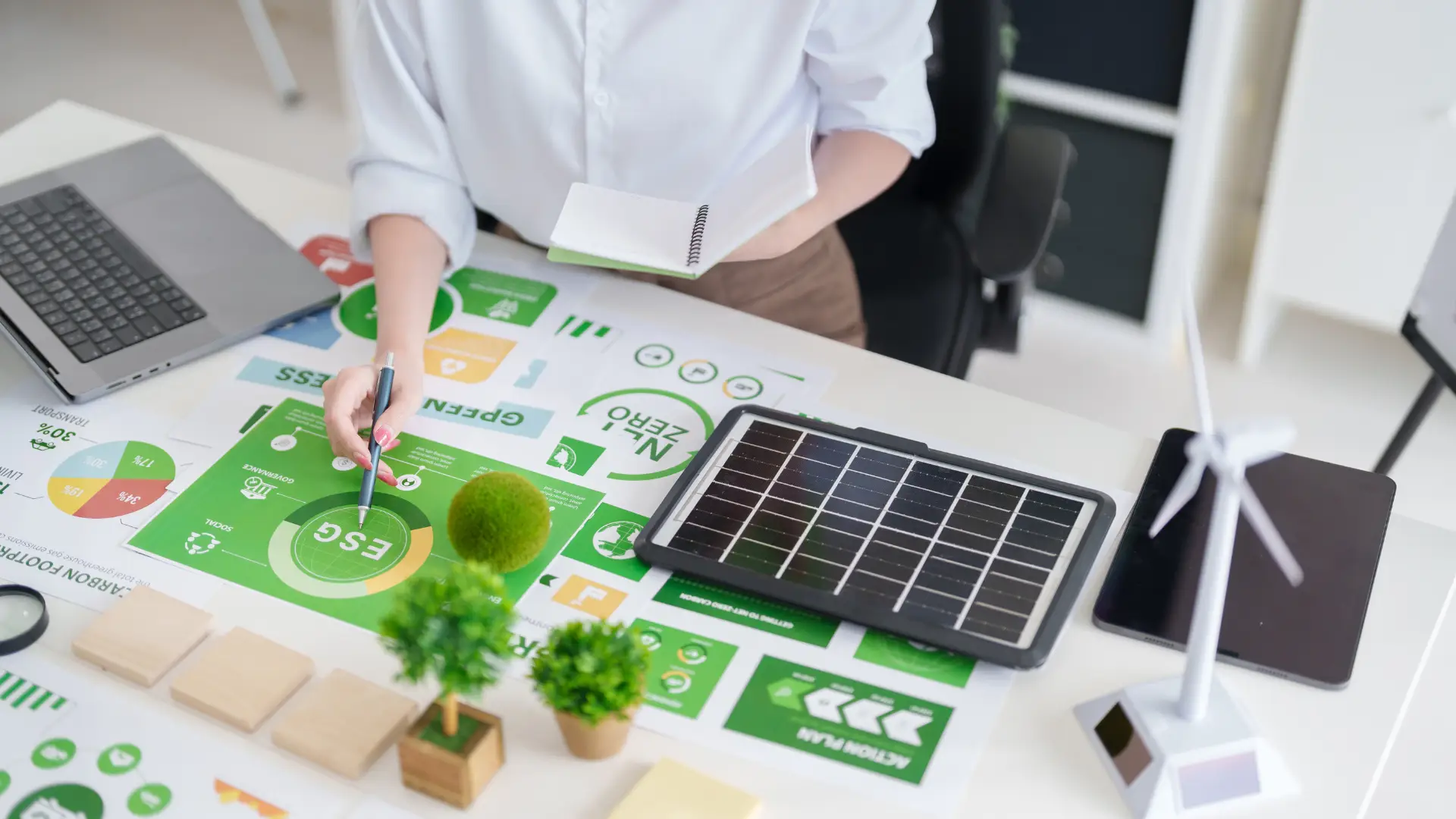


Switching to renewable energy, like solar power, is one of the most effective ways for businesses to reduce their environmental impact, cut energy costs, and boost their corporate image. Plus, it shows your customers and stakeholders that you’re serious about sustainability.
Of course, while solar panels offer long-term savings, the upfront costs can feel daunting. Thankfully, there are plenty of grants and funding schemes available in the UK to ease the financial burden.
We’ve pulled together the top 7 grants for solar panels for businesses, so you can make a smart, sustainable choice without blowing the budget.
1. Smart Export Guarantee (SEG)
The Smart Export Guarantee (SEG) is a UK government-backed initiative that allows businesses and households generating renewable electricity — including solar power — to earn money by exporting excess energy back to the National Grid. It effectively replaces the now-defunct Feed-in Tariff (FiT) and is overseen by Ofgem.
Who It’s For
- UK businesses of any size with renewable energy systems up to 5MW capacity (including solar PV).
- Systems must be installed by an MCS-certified installer.
- Must have a smart meter or export meter capable of recording half-hourly export data.
Funding/Benefit
- There is no set rate — licensed energy suppliers set their own export tariffs.
- Rates vary but typically range from 1p to 15p per kWh depending on the supplier.
- Payments are made for every kWh of electricity exported to the grid.
Geographic Scope
- Available UK-wide (England, Wales, Scotland, and Northern Ireland).
How to Apply
- Install an MCS-certified solar panel system.
- Choose a SEG-licensed energy supplier (even if different from your current energy provider).
- Submit an application directly with the supplier, along with:
- Proof of installation (MCS certificate)
- Export meter details
- Proof of identity and business address
Pros
- Generates income from unused energy.
- Encourages efficient solar use and smart energy planning.
- Easy to access with the right setup.
Cons
- Tariffs can be low or vary between suppliers.
- Doesn’t help with upfront installation costs — it’s a paybackscheme, not a grant.
- Requires a smart/export meter and formal accreditation.
Website: Ofgem SEG
2. Salix Energy Efficiency Loan Scheme (SEELS)
What It Is
SEELS offers interest-free loans to public sector organisations to finance energy efficiency projects, including solar panel installations. The loans are repaid through the savings achieved on energy bills.
Who It’s For
Public sector bodies across the UK, such as local authorities, schools, hospitals, and emergency services.
Funding/Benefit
- Interest-free loans covering 100% of the project cost.
- Repayment terms: up to 5 years (8 years for schools).
- Repayments are made using the savings from reduced energy bills.
Geographic Scope
Available across England, Scotland, and Wales.
How to Apply
- Identify eligible energy efficiency projects.
- Submit an application through Salix Finance.
- Provide necessary documentation, including energy savings calculations.
Pros
- No upfront capital required.
- Supports a wide range of energy-saving measures.
- Helps public sector bodies meet carbon reduction targets.
Cons
- Only available to public sector organisations.
- Requires detailed energy savings projections.
Website: Salix Finance
3. Scottish Government SME Loan Scheme
What It Is
This scheme provides interest-free loans to Scottish SMEs for renewable energy and energy efficiency projects, including solar panel installations. Cashback grants are also available for certain measures.
Who It’s For
Small and medium-sized enterprises (SMEs) based in Scotland.
Funding/Benefit
- Interest-free loans up to £100,000.
- Cashback grants up to £20,000 for eligible energy efficiency measures.
- Additional cashback up to £10,000 for renewable heating systems.
Geographic Scope
Scotland
How to Apply
- Contact Business Energy Scotland for an energy assessment.
- Develop a project plan based on recommendations.
- Submit an application with supporting documentation.
Pros
- Combines loans with cashback grants.
- Supports a wide range of energy-saving projects.
- Tailored advice and support available.
Cons
- Limited to Scottish SMEs.
- Cashback funds are limited and offered on a first-come, first-served basis.
4. Northern Powergrid Green Recovery Scheme
What It Is
An initiative by Northern Powergrid to invest in electricity network infrastructure, facilitating the connection of low-carbon technologies, including solar panels, for businesses and communities.
Who It’s For
Businesses, local authorities, and community groups in Northern Powergrid’s service area looking to implement low-carbon projects.
Funding/Benefit
- £53 million investment to upgrade network capacity.
- Supports faster and more cost-effective connections for renewable energy projects.
Geographic Scope
Northern England, including Yorkshire and the North East.
How to Apply
- Identify a suitable low-carbon project.
- Engage with Northern Powergrid to discuss connection requirements.
- Submit a formal application for network connection support.
Pros
- Facilitates the adoption of renewable energy technologies.
- Reduces barriers to connecting to the electricity network.
- Supports regional decarbonisation goals.
Cons
- Limited to Northern Powergrid’s service area.
- Does not provide direct financial grants for equipment installation.
5. Boiler Upgrade Scheme (BUS)
What It Is
A UK government scheme providing upfront capital grants to support the installation of low-carbon heating systems, such as heat pumps and biomass boilers, in homes and non-domestic buildings.
Who It’s For
Property owners in England and Wales, including businesses and landlords, looking to replace fossil fuel heating systems with low-carbon alternatives.
Funding/Benefit
- Grants of up to £7,500 for air source and ground source heat pumps.
- Grants of up to £5,000 for biomass boilers.
Geographic Scope
England and Wales.
How to Apply
- Engage an MCS-certified installer to assess your property.
- The installer applies for the grant on your behalf.
- The grant is deducted from the total installation cost.
Pros
- Reduces the upfront cost of low-carbon heating systems.
- Supports the transition away from fossil fuel heating.
- Available to both domestic and non-domestic properties.
Cons
- Does not cover solar PV installations.
- Limited to properties in England and Wales.
Website: GOV.UK – Boiler Upgrade Scheme
6. Energy Entrepreneurs Fund (EEF)
What It Is
A competitive funding scheme supporting the development and demonstration of innovative energy technologies and business models, including those related to solar energy.
Who It’s For
UK-based SMEs, start-ups, and entrepreneurs developing innovative energy solutions.
Funding/Benefit
- Grants typically ranging from £50,000 to £1 million.
- Supports up to 60% of eligible project costs.
Geographic Scope
United Kingdom.
How to Apply
- Monitor GOV.UK for funding rounds and application deadlines.
- Submit a detailed proposal outlining the innovation and its potential impact.
- Participate in a competitive selection process.
Pros
- Encourages innovation in the energy sector.
- Provides substantial funding for R&D projects.
- Supports commercialisation of new technologies.
Cons
- Highly competitive with limited funding rounds.
- Requires a strong business case and technical feasibility.
Webinar: GOV.UK – Energy Entrepreneurs Fund
7. UK Shared Prosperity Fund (UKSPF) – Local Grants
What It Is
The UKSPF provides funding to local authorities to support community and business projects, including energy efficiency and renewable energy initiatives like solar panel installations.
Who It’s For
SMEs, community groups, and local organisations seeking to implement energy-saving projects.
Funding/Benefit
- Grants vary by local authority; some offer up to £30,000.
- Typically cover a percentage of project costs (e.g., 50-75%).
Geographic Scope
United Kingdom, with specific schemes managed by local authorities.
How to Apply
- Check your local authority’s website for available UKSPF grants.
- Submit an application detailing your project and its benefits.
- Provide necessary documentation, such as business plans and energy assessments.
Pros
- Supports a wide range of local projects.
- Encourages community-led energy initiatives.
- Flexible funding tailored to local needs.
Cons
- Availability and funding amounts
Ranking Methodology
To ensure clarity and transparency, we ranked grants using the following criteria:
| Criterion | Weight (%) | Description |
| Financial Value | 40% | Size of the grant or financial support. |
| Eligibility & Accessibility | 25% | How easy it is for small to medium businesses to qualify. |
| Scope of Coverage | 20% | Whether it covers just solar panels, or full energy upgrades. |
| Geographic Reach | 15% | Is it UK-wide or limited to regions? |
The Bottom Line
Whether you’re running a local SME or managing a large commercial property, there’s likely a grant or scheme out there to help you unlock the benefits of solar energy. With the right support, making your business more sustainable doesn’t have to break the bank.
Perfect Sense Energy can help you navigate the options, identify the most relevant funding, and design a solar solution tailored to your needs. Get in touch with our team today and let’s bring clean energy to your business.
FAQs
What grants are available for solar panels for businesses in the UK?
Several grants and funding schemes are available in the UK to support businesses installing solar panels. These include the Smart Export Guarantee (SEG), Salix Energy Efficiency Loans (for public sector organisations), the Scottish SME Loan Scheme with cashback, the Northern Powergrid Green Recovery Scheme, and various local grants through the UK Shared Prosperity Fund. Availability depends on your location, business size, and project type.
Can UK businesses get funding for solar panel installation?
Yes, UK businesses can access funding for solar panel installation through a mix of national schemes, interest-free loans, cashback programmes, and local grants. While some schemes offer direct financial support, others reduce costs through tax incentives or guaranteed payments for exported electricity.
Is the Smart Export Guarantee a grant for solar panels?
The Smart Export Guarantee (SEG) is not a grant but a payment scheme. It pays businesses for the excess solar electricity they export back to the grid. Rates vary by energy supplier and typically range from 1p to 15p per kilowatt-hour (kWh). It helps businesses earn money from their solar energy system but does not reduce upfront installation costs.
Are solar panel grants available to small businesses in Scotland?
Yes, small businesses in Scotland can apply for the SME Loan Scheme, which offers interest-free loans and cashback of up to £20,000 for renewable energy projects like solar panels. This scheme is run by Business Energy Scotland and is one of the most accessible options for Scottish SMEs looking to go green.
How can my business apply for a solar panel grant in the UK?
To apply for a solar panel grant in the UK, first identify which schemes you’re eligible for based on your location, business type, and project size. Then, contact the relevant scheme provider (e.g. Salix, Business Energy Scotland, or your local authority) to complete an application, which typically includes an energy assessment and project details.