
As the pressure to go green continues to grow, forward-thinking organisations are already reaping the rewards. Cleaner operations, lower energy bills, and enhanced brand reputation are just the beginning. Whether your goal is reaching net-zero, reducing carbon emissions, or simply taking greater control over energy costs, investing in smart energy solutions is a step in the right direction.
We break down the top 10 energy storage technologies making an impact today, based on its practical use, performance, cost-effectiveness, and sustainability. The goal? To give you a clear overview of which technologies could work for your business!
1. Lithium-Ion Batteries
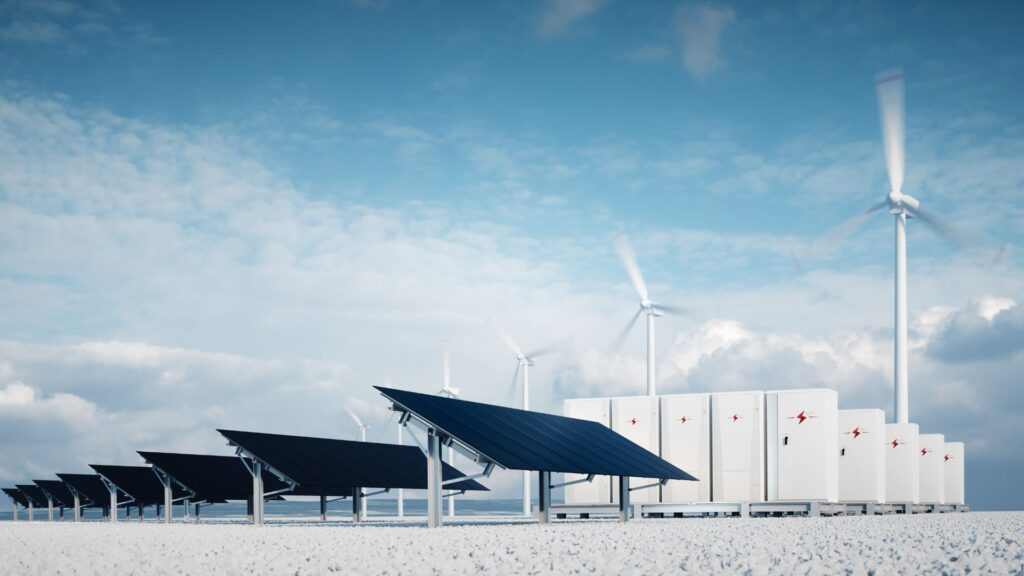
Widely used in everything from smartphones to power grids, lithium-ion batteries have become the standard in modern energy storage.
Ideal for: Homes, electric vehicles, and balancing solar and wind energy
- Pros:
- High energy density and quick charging
- Readily available and scalable
- Costs continue to decline with growing adoption
- Cons:
- Risk of overheating or fire if damaged
- Finite number of charge cycles
- Resource extraction for materials has environmental impact
2. Pumped Hydro Storage
This mature technology pumps water to a higher elevation during low demand and releases it downhill to generate power during peak times.
Ideal for: National grids and large-scale energy management
- Pros:
- High efficiency (up to 85%)
- Long lifespan (50+ years)
- Proven reliability over decades
- Cons:
- Requires specific geographic conditions
- High initial investment and long construction time
- Environmental and water usage concerns
3. Flow Batteries (e.g. Vanadium Redox)
Flow batteries store energy in liquid electrolytes held in external tanks. The system’s power and capacity can be scaled independently.
Ideal for: Long-duration storage for renewable energy sources
- Pros:
- Long cycle life with minimal degradation
- Easy to scale by adjusting tank size
- Very safe and stable
- Cons:
- Lower energy density than lithium-ion
- Large physical footprint
- Higher cost per kWh compared to lithium systems
4. Compressed Air Energy Storage (CAES)
CAES systems compress air using electricity and store it in tanks or underground. The pressurised air is later used to generate electricity.
Ideal for: Utility-scale storage in areas with suitable geology
- Pros:
- Capable of storing large amounts of energy
- Long asset life
- Uses off-peak electricity effectively
- Cons:
- Limited to locations with specific geological features
- Lower efficiency unless heat recovery is used
- Capital intensive to build at scale
5. Solid-State Batteries
Solid-state batteries replace the liquid electrolyte found in lithium-ion batteries with a solid material, improving safety and performance.
Ideal for: Electric vehicles and portable electronics
- Pros:
- Higher energy density than lithium-ion
- Improved safety and thermal stability
- Potential for faster charging
- Cons:
- High production costs
- Not yet available at commercial scale
- Performance at low temperatures still under study
6. Thermal Energy Storage (e.g. Molten Salt)
This method stores energy in the form of heat, often from concentrated solar power, for later use in generating electricity or heat.
Ideal for: Solar thermal plants and district heating networks
- Pros:
- Simple and low-cost technology
- Effective for high-temperature applications
- Long duration energy retention
- Cons:
- Energy is stored as heat, not electricity
- Heat losses can occur over time
- Requires dedicated infrastructure
7. Hydrogen Storage (via Electrolysis)
Excess electricity is used to split water into hydrogen, which is then stored and later used to generate electricity or fuel vehicles.
Ideal for: Seasonal storage and decarbonising heavy industries
- Pros:
- Long-term and high-capacity storage
- Can be used across electricity, heating, and transport
- Supports deep energy system flexibility
- Cons:
- Low round-trip efficiency
- Infrastructure for hydrogen is still limited
- Production and storage can be costly
8. Gravity-Based Storage
Gravity-based systems lift and lower heavy objects to store and release energy, offering a mechanical alternative to chemical batteries.
Ideal for: Large-scale or industrial energy storage in suitable locations
- Pros:
- Simple, robust mechanical design
- No hazardous materials involved
- Long operational life with low maintenance
- Cons:
- Requires large space and height
- Efficiency is lower than some battery types
- Technology is still being tested at scale
9. Flywheel Energy Storage
Flywheels store energy by spinning a rotor at high speed. When needed, the stored kinetic energy is converted back into electricity.
Ideal for: Grid frequency regulation and short-duration storage
- Pros:
- Very fast charge and discharge times
- Long operational lifespan
- Low maintenance and minimal wear
- Cons:
- Limited energy storage capacity
- High upfront mechanical costs
- Not suited for long-duration storage
10. Zinc-Air Batteries
Zinc-air batteries generate power using zinc and oxygen from the air. Their simplicity and low material cost make them attractive for future grid storage.
Ideal for: Grid backup and off-grid energy access
- Pros:
- Abundant, inexpensive materials
- High energy potential at low cost
- Non-toxic and safe to operate
- Cons:
- Still in early development stages
- Recharge efficiency is low
- Limited commercial availability
How We Ranked Them
We looked at each technology through the lens of:
- Maturity & reliability – Is it widely used or just a prototype?
- Scalability – Can it work for homes, businesses, and grids?
- Efficiency – How much energy is lost between storing and using it?
- Cost-effectiveness – Is it affordable over the long run?
- Sustainability – What’s the environmental footprint?
The Bottom Line
There’s no one-size-fits-all approach to energy storage. From established systems like pumped hydro to cutting-edge solutions such as solid-state and flow batteries, each technology has its strengths. The right choice for your business will depend on your energy demands, goals, and site conditions.
At Perfect Sense Energy, we work with businesses across sectors to design and install energy solutions tailored to their needs. If you’re looking to futureproof your energy setup, get in touch with our team for advice!
FAQs
What is energy storage and why is it important?
Energy storage allows surplus electricity—often from renewable sources like solar and wind—to be saved and used later when demand is higher. It improves grid stability, reduces reliance on fossil fuels, and helps businesses lower energy costs by using stored energy during peak pricing periods.
Which energy storage technology is best for businesses?
The best energy storage solution for a business depends on its energy usage, goals, and site conditions. Lithium-ion batteries are currently the most popular due to their versatility and falling costs, while flow batteries and thermal storage are ideal for long-duration or large-scale applications.
How do lithium-ion batteries compare to other storage technologies?
Lithium-ion batteries offer high energy density, fast charging, and widespread availability, making them suitable for homes, electric vehicles, and businesses. However, alternatives like flow batteries provide longer lifespan and better scalability for large projects, while hydrogen storage suits long-term needs.
Can energy storage help reduce my electricity bills?
Yes, energy storage can significantly reduce electricity bills. By storing low-cost or surplus energy and using it during peak demand times—when electricity is more expensive—businesses can cut costs and improve energy efficiency.
Is energy storage sustainable?
Many energy storage technologies are designed with sustainability in mind. Solutions like flow batteries, thermal storage, and gravity systems use abundant or recyclable materials. Advances in battery recycling and low-impact manufacturing are also making lithium-ion and solid-state options more environmentally friendly.