

As energy prices climb and sustainability becomes a business imperative, energy efficiency upgrades are no longer just “nice to have”; they’re essential. But which upgrades actually deliver quick returns on investment?
We’ve rounded up the top 10 energy efficiency improvements that offer the fastest ROI, based on cost, ease of implementation, and measurable savings.
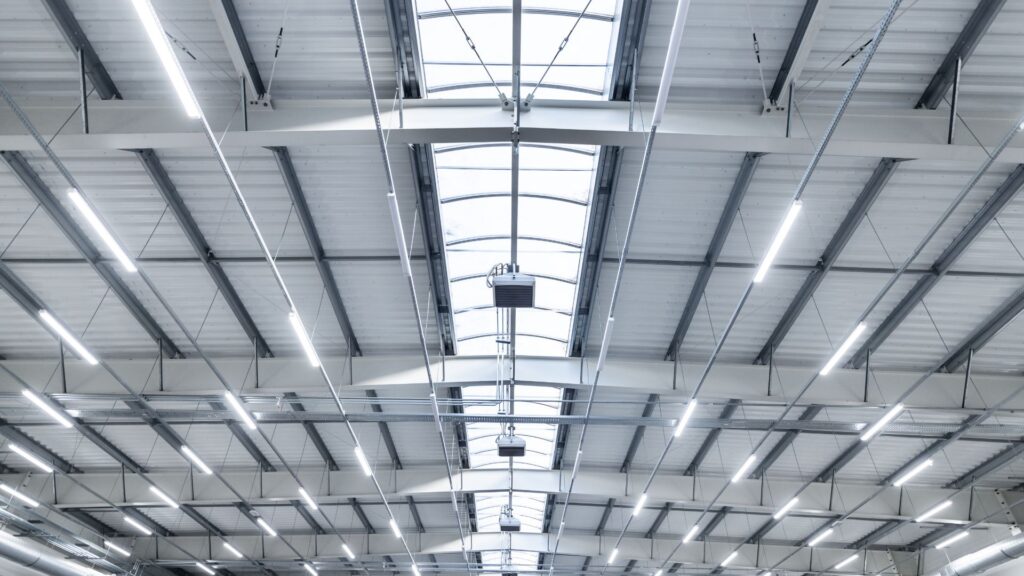
1. LED Lighting Retrofits
What It Is
Replacing traditional fluorescent, incandescent, or halogen lighting with energy-efficient LED fixtures.
Why It Matters
LEDs use up to 80% less energy and last 3–5 times longer than older lighting. That translates into lower energy bills and reduced maintenance.
Payback Period
6–18 months, depending on usage patterns.
Cost Range
£15–£40 per fixture. Lower with bulk or rebate programs.
Best For
Warehouses, offices, retail spaces, schools, and car parks.
Bonus Insight
Combine with occupancy sensors to accelerate ROI.
2. Smart Thermostats / BMS Systems
What It Is
Devices that intelligently manage heating and cooling, learning user behaviour or responding to real-time occupancy.
Why It Matters
Overheating or overcooling empty spaces is one of the biggest sources of energy waste.
Payback Period
12–24 months
Cost Range
£200–£1,500+ depending on system size and integration.
Best For
Office buildings, hospitality, educational institutions.
Bonus Insight
Upgrading older Building Management Systems (BMS) can yield even faster savings.
3. Occupancy Sensors for Lighting
What It Is
Sensors that automatically switch off lights when no one is present.
Why It Matters
Ideal for areas like bathrooms, meeting rooms, and storage, where lights are often left on unnecessarily.
Payback Period
6–12 months
Cost Range
£30–£60 per sensor
Best For
Schools, offices, public sector buildings
Bonus Insight
Many sensors now include daylight harvesting for added efficiency.
4. Pipe and Duct Insulation
What It Is
Adding insulation to hot water pipes or HVAC ducts to reduce heat loss.
Why It Matters
Retains heating/cooling energy that would otherwise be lost, improving system performance.
Payback Period
1–2 years
Cost Range
£2–£10 per linear meter
Best For
Industrial buildings, schools, healthcare settings
Bonus Insight
Uninsulated pipes can lose up to 80% of their heat output.
5. Variable Speed Drives (VSDs)
What It Is
Devices that control the speed of motors on fans, pumps, and compressors based on demand.
Why It Matters
Reduces energy waste during off-peak operation.
Payback Period
12–36 months
Cost Range
£500–£3,000+ depending on motor size
Best For
Manufacturing, HVAC-heavy buildings, commercial laundries
Bonus Insight
VSDs can reduce motor energy use by up to 50%.
6. Building Envelope Sealing (Draft Proofing)
What It Is
Sealing cracks, gaps, and leaks in walls, doors, and windows to prevent air infiltration.
Why It Matters
Keeps heated or cooled air inside, reducing HVAC demands
Payback Period
6–18 months
Cost Range
£200–£1,000 for commercial buildings
Best For
Older buildings, schools, community centres
Bonus Insight
Air leaks can account for up to 30% of a building’s energy loss.
7. Solar PV Systems with Battery Storage
What It Is
On-site solar generation combined with battery units to store excess electricity.
Why It Matters
Generates your own power and reduces reliance on grid energy, especially during peak rates.
Payback Period
3–7 years depending on subsidies and site usage
Cost Range
£10,000–£40,000+ depending on scale
Best For
Commercial buildings, manufacturing, education
Bonus Insight
Without batteries, solar ROI is still solid—just slower.
8. High-Efficiency HVAC Systems
What It Is
Replacing older boilers, chillers, or rooftop units with new high-efficiency models.
Why It Matters
HVAC can be over 50% of a building’s energy use; efficiency gains here have major impact.
Payback Period
3–5 years, sometimes faster with grants
Cost Range
£20,000–£100,000+
Best For
Large office buildings, hospitals, hotels
Bonus Insight
Couple with zoning and smart controls to maximise returns.
9. Daylight Harvesting Systems
What It Is
Lighting controls that dim artificial lighting when natural light is sufficient.
Why It Matters
Reduces energy use without compromising brightness or comfort.
Payback Period
2–4 years
Cost Range
£500–£2,500 per zone
Best For
Offices with large windows or skylights
Bonus Insight
Works best when paired with LED retrofits.
10. Energy Monitoring & Analytics Software
What It Is
Cloud-based platforms that track energy use and provide actionable insights.
Why It Matters
You can’t manage what you don’t measure. These tools help spot inefficiencies quickly.
Payback Period
1–2 years
Cost Range
£1,000–£20,000 depending on building size and features
Best For
Multi-site businesses, schools, retailers
Bonus Insight
Some utilities offer rebates or free energy audits when these are installed.
Methodology for Ranking
| Criterion | Description |
| Payback Period | The average time it takes to recoup the investment through savings |
| Upfront Cost | Whether it’s low-cost vs. capital-intensive |
| Ease of Installation | How disruptive or simple the upgrade is to implement |
| Scalability | Whether it suits both small and large facilities |
| Environmental Impact | Measured in CO₂ savings or energy use reduction |
The Bottom Line
When it comes to energy upgrades, speed of return matters. Fortunately, as we’ve shown, there are plenty of practical steps you can take that start saving money almost immediately. Whether you’re managing a school, a manufacturing site, or a retail chain, there’s an efficient, high-impact solution for you.
At Perfect Sense Energy, we help businesses across the UK cut costs and carbon with bespoke energy projects that make both environmental and financial sense. Want to know what upgrades make the most sense for your building? Get in touch for a no-obligation chat or request a free site audit. We’d be happy to help!
FAQs
What are the best energy efficiency upgrades for fast ROI?
The best energy efficiency upgrades with the fastest return on investment include LED lighting retrofits, smart thermostats, occupancy sensors, pipe insulation, and variable speed drives. These upgrades typically pay for themselves within 6–24 months and can significantly lower energy bills with minimal disruption.
How long does it take to see ROI from energy efficiency upgrades?
Most energy efficiency upgrades offer ROI within 1–3 years. Simple measures like lighting retrofits and draft proofing can deliver payback in under 12 months, while more complex upgrades like HVAC replacements or solar systems may take 3–5 years, especially when supported by grants or subsidies.
Which energy upgrade is cheapest but still effective?
Installing LED lights is one of the cheapest and most effective energy upgrades. It costs as little as £15 per fixture and can reduce lighting energy use by up to 80%, with typical payback periods of 6–18 months.
Are energy efficiency upgrades worth it for small businesses?
Yes, energy efficiency upgrades are highly worthwhile for small businesses. Even modest changes like insulating hot water pipes, using smart plugs, or sealing air leaks can lead to significant cost savings and improved energy performance, often with payback in under two years.
How do I know which upgrades will benefit my building?
Start with an energy audit to identify where your building uses (and wastes) the most energy. From there, you can prioritise upgrades based on cost, ease of installation, and ROI.