
If your business is looking to reduce energy costs, hit ESG targets, or simply take more control of long-term overheads, solar makes a compelling case. But navigating the ever-expanding range of panel options? That’s where expert guidance is essential. In this guide, we break down the 7 best commercial solar panels on the market right now, ranked against key criteria that matter most to business owners.
1. Trina Vertex N (up to 725 W)
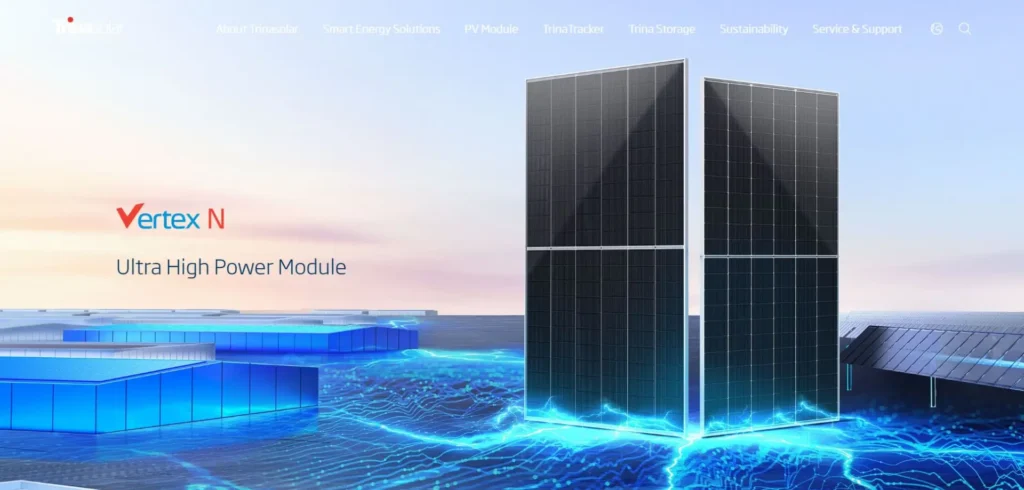
What it is: A next-generation n-type panel that squeezes 700 + watts out of a single module and still guarantees 87 % of that power after 30 years.
Best for: Roofs or ground arrays where every square metre counts—think logistics centres and city-fringe warehouses.
Pros: About 15 % more power per panel than last-generation 600 W units; Tier-1 bankability keeps lenders happy.
Cons: Big and heavy (≈38 kg), so installers need two-person lifts and beefier rails.
Typical cost: Roughly £900 – £1,100 per kW installed in a 100-250 kW commercial system.
2. LONGi Hi-MO 7 (~610 W)
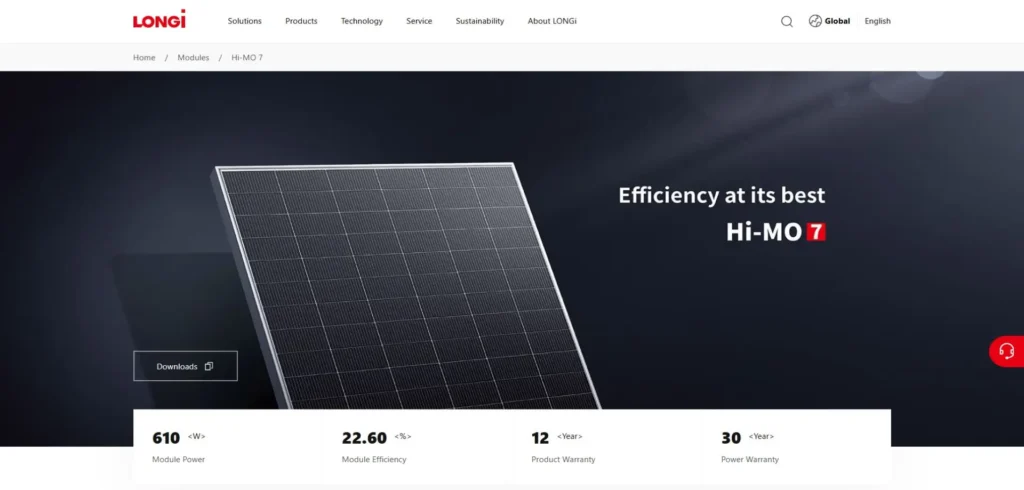
What it is: A high-efficiency TOPCon panel that delivers about 4-5 % more electricity per installed watt than mainstream silicon modules.
Best for: Businesses chasing the lowest long-term cost per kilowatt-hour—distribution sheds, retail parks, light manufacturing.
Pros: Proven BOS savings (fewer rails, cables, inverters needed); global brand with massive shipment record.
Cons: Slightly larger format can be awkward on very tight pitched roofs.
Typical cost: £850 – £1,050 per kW installed.
3. Jinko Tiger Neo 78HL4 (615-635 W)
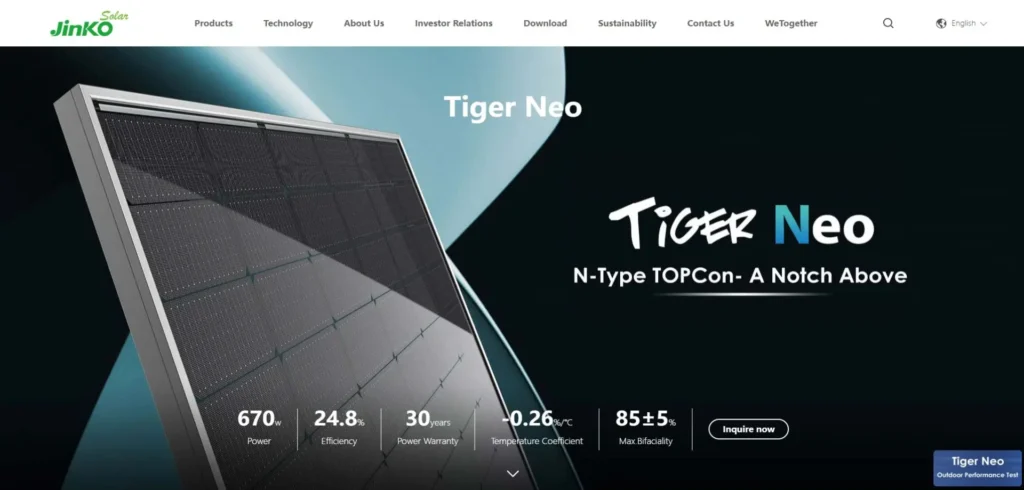
What it is: An n-type module that swept all categories in the 2024 PVEL reliability scorecard—including hail, hot-humid and thermal-cycle tests.
Best for: Sites where downtime is a no-go (food processing, cold-storage, data rooms) and fast UK delivery matters.
Pros: Top-tier durability; strong distributor network keeps lead-times short.
Cons: Slight premium over entry-level mono panels.
Typical cost: £850 – £1,050 per kW installed.
4. Canadian Solar HiKu7 (up to 665 W)
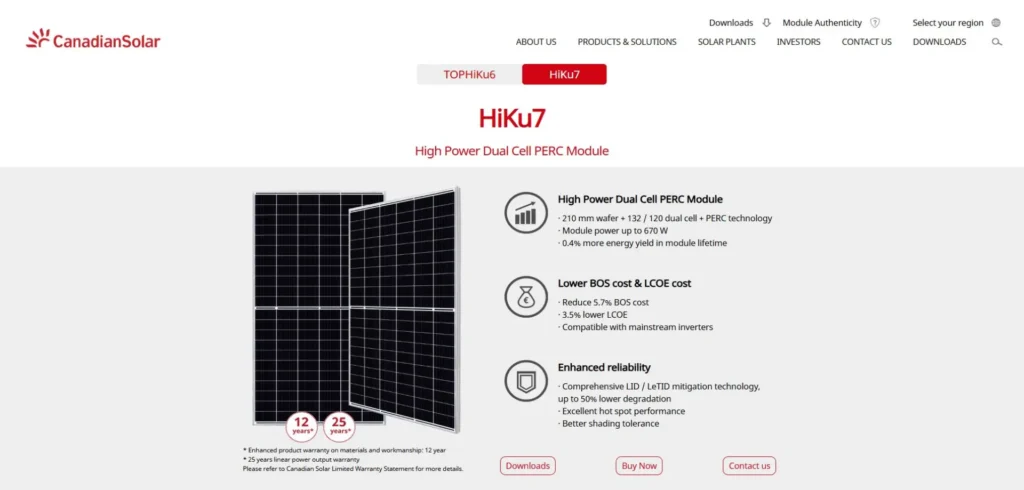
What it is: JA’s flagship n-type TOPCon module that pushes the 700 W mark without needing oversize frames, so it fits standard commercial racking.
Best for: Businesses that want almost-HJT performance on a mainstream budget—large roof-mounts on factories or distribution hubs.
Pros: Consistent “Top Performer” results; footprint still manageable for 2-row portrait layouts.
Cons: Global demand can push UK stock into allocation periods.
Typical cost: £850 – £1,050 per kW installed.
5. JA Solar DeepBlue 4.0 X (~700 W)
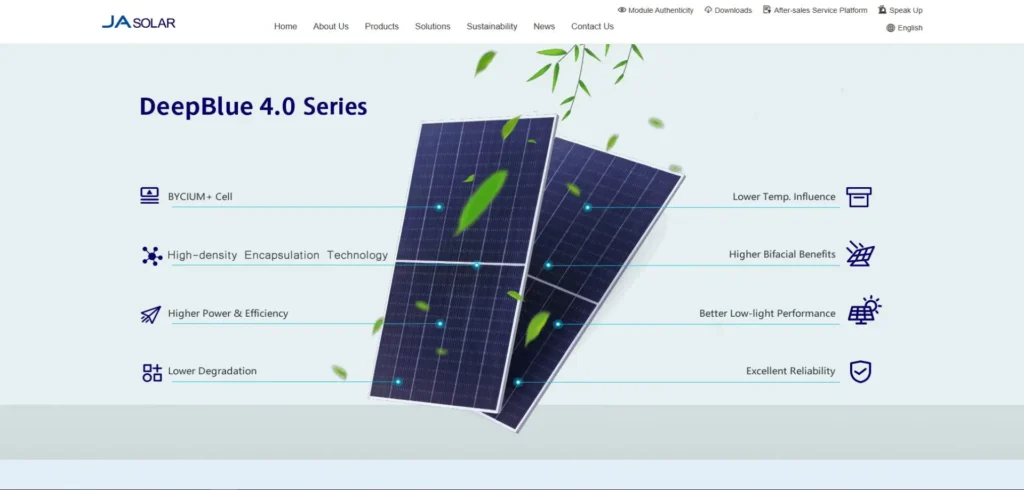
What it is: JA’s flagship n-type TOPCon module that pushes the 700 W mark without needing oversize frames, so it fits standard commercial racking.
Best for: Businesses that want almost-HJT performance on a mainstream budget—large roof-mounts on factories or distribution hubs.
Pros: Consistent “Top Performer” results; footprint still manageable for 2-row portrait layouts.
Cons: Global demand can push UK stock into allocation periods.
Typical cost: £850 – £1,050 per kW installed.
6. Risen Hyper-ion Pro (700-730 W, HJT)
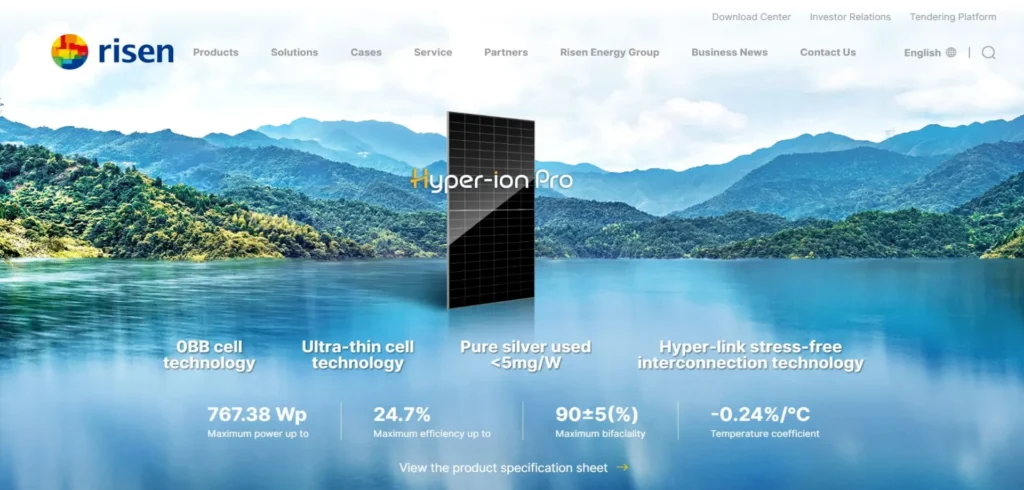
What it is: A heterojunction (HJT) panel with ultra-thin wafers and under-0.3 % annual degradation—meaning more lifetime energy.
Best for: Roofs with tight ESG goals and long asset-life expectations (tech campuses, blue-chip HQs).
Pros: Market-leading wattage; premium 30-year warranty with > 90 % output retained; great hot-weather performance.
Cons: Around a 10 % price premium and slightly longer lead-times.
Typical cost: £1,050 – £1,300 per kW installed.
7. First Solar Series 7 TR1 (505-540 W, Thin-film)
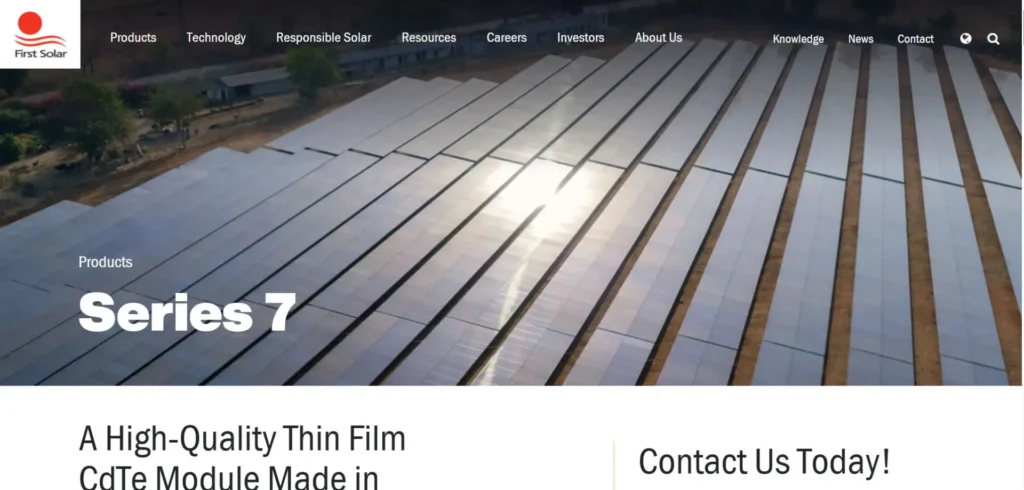
What it is: A cadmium-telluride thin-film module that runs cooler and keeps producing in shade and high temperatures.
Best for: Sites with tricky roof angles, partial shading, or strict low-carbon-supply-chain policies—e.g., food-bev brands, ESG-driven PLCs.
Pros: Excellent hot-weather yield; the lowest embodied-carbon footprint of any major panel; U.S./EU supply chains.
Cons: Larger physical size and needs specialised clamps; wattage lower than the 600 + W silicon pack.
Typical cost: £700 – £900 per kW installed.
Why this list?
We ranked dozens of current-generation panels on six owner-focused factors:
- Power per panel – fewer panels, less roof/land used.
- Cost per kWh saved – not just the sticker price.
- Proven reliability – independent lab testing (PVEL) and field data.
- Warranty strength – length and end-of-life output promise.
- UK availability right now – no “coming-soon” models.
- Sustainability extras – low-carbon manufacturing or recycling plans.
The seven models below came out on top and give a good mix of high-power silicon, bleeding-edge tech, and one thin-film wildcard.
The Bottom Line
Commercial solar isn’t one-size-fits-all, and making the right choice today can pay off for decades. Whether you’re after top-tier performance, unbeatable warranties, or budget-friendly power density, there’s a panel (and a plan) that fits.
Perfect Sense Energy is here to help you find it. From consultation through to installation, we provide the support and expertise your business needs to go solar with confidence.
Get in touch with our team today and discover how solar can start saving your business money from day one.
FAQs
1. Does higher wattage mean higher efficiency in solar panels?
No, higher wattage doesn’t always mean higher efficiency.
Wattage refers to total power output, while efficiency measures power per square metre. For example, a 700 W large-format panel produces more power but takes up more roof space than a smaller, high-efficiency panel.
2. Can high-wattage panels work with my existing inverter?
In most cases, yes — if your inverter was made after 2022.
Most modern commercial string inverters support the higher current and voltage of 600 W+ modules. However, always ask your EPC contractor to check the inverter’s voltage and current window for compatibility.
3. What’s the real-world payback time?
Businesses that invest in solar panel installation by Perfect Sense Energy see an average payback period of just 3-4 years.
4. Are thin-film solar panels suitable for the UK climate?
Yes, thin-film panels like First Solar’s CdTe are UK-weather ready.
They show <0.5% annual degradation and perform well in low-light winter conditions. However, they are larger and may require specialised racking or clamps.
5. Are smaller premium panels still worth considering?
Yes — especially for roofs with space, weight, or heritage constraints.
High-efficiency modules such as SunPower Maxeon deliver top-tier output in a compact size. For older buildings or tight roof spaces, these may outperform larger panels in overall fit and compliance.