
Have you ever wondered what keeps a solar panel securely placed on the roof? The truth is, it differs depending on the roof structure and the type of solar array you go for. One thing is certain, though. If the mounting system is not installed well, you risk not only the efficiency but also the safety of your solar photovoltaic (PV) system.
Let’s break down the different types of solar PV systems, the associated mounting systems for each one, and what components an engineer should use for the installation.
Types of Solar Panel Mounting Systems
For commercial solar panels, there are three primary types of solar panel mounting systems that you can choose, depending on the structure and setup of your buildings and facilities. These include:
1. Flat roof systems
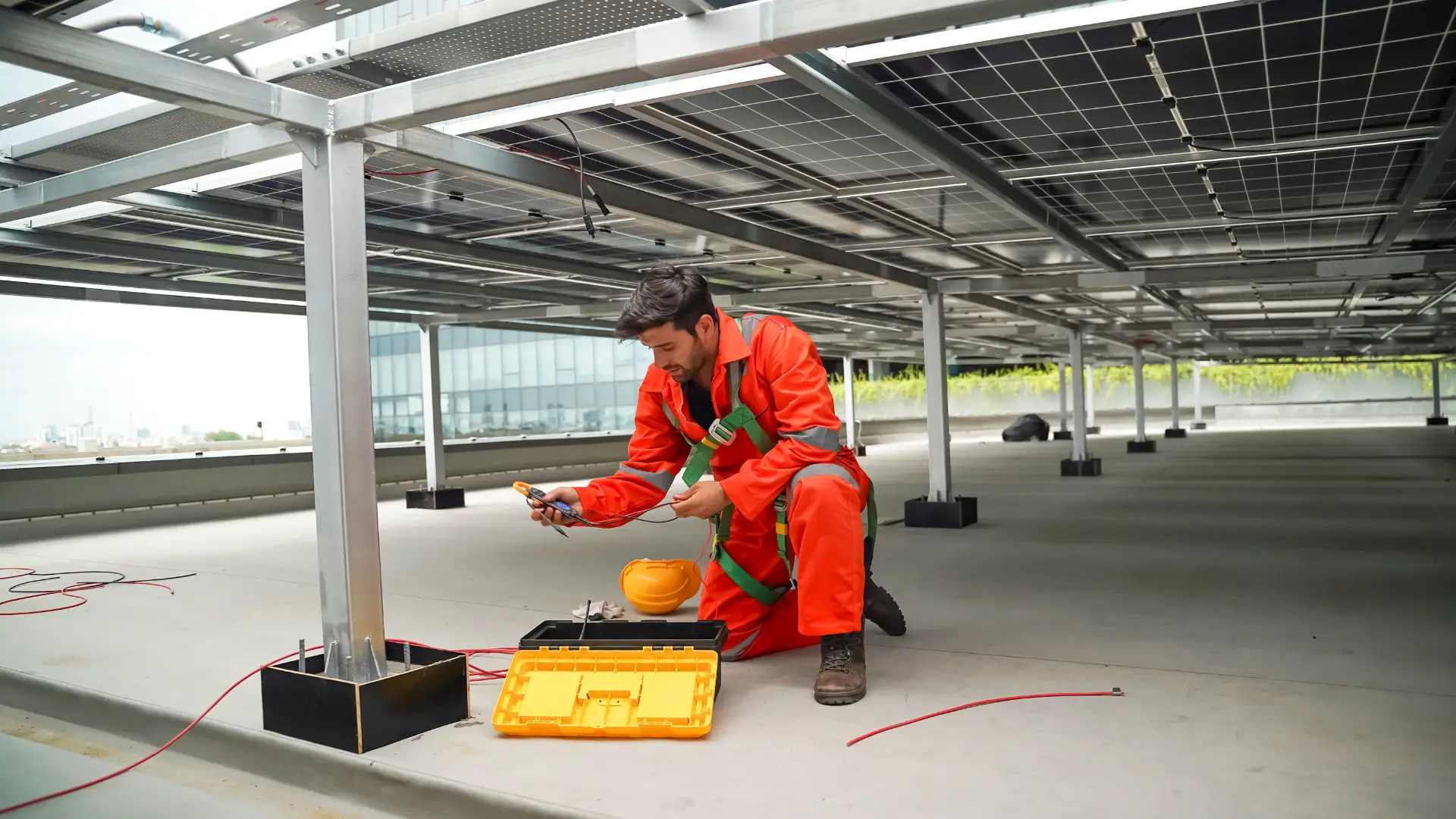
Flat roof mounting systems use supporting frames to position solar panels at an angle that supports efficient energy production. These are particularly popular for commercial warehousing and manufacturing, as they provide the opportunity to turn large swathes of unused roof space into a source of renewable electricity.
The two primary kinds of mounting systems that engineers use on flat roofs are:
- Ballasted mounting systems: Use weighted supports, such as concrete blocks, to secure the array without penetrating the roof covering.
- Mechanically fixed mounting systems: Attach the supporting framework to the building’s roof structure through weatherproofed fixings.
As they often cover a wide space, flat roof arrays can generate a lot of electricity. In one instance, Perfect Sense Energy installed a 201 kWp solar PV system on Searchlight Electric’s warehouse roof in Manchester. It delivers approximately 152,000 kWh of electricity every year, which delivered £18,500 in savings for the first year alone.
2. Pitched on-roof systems
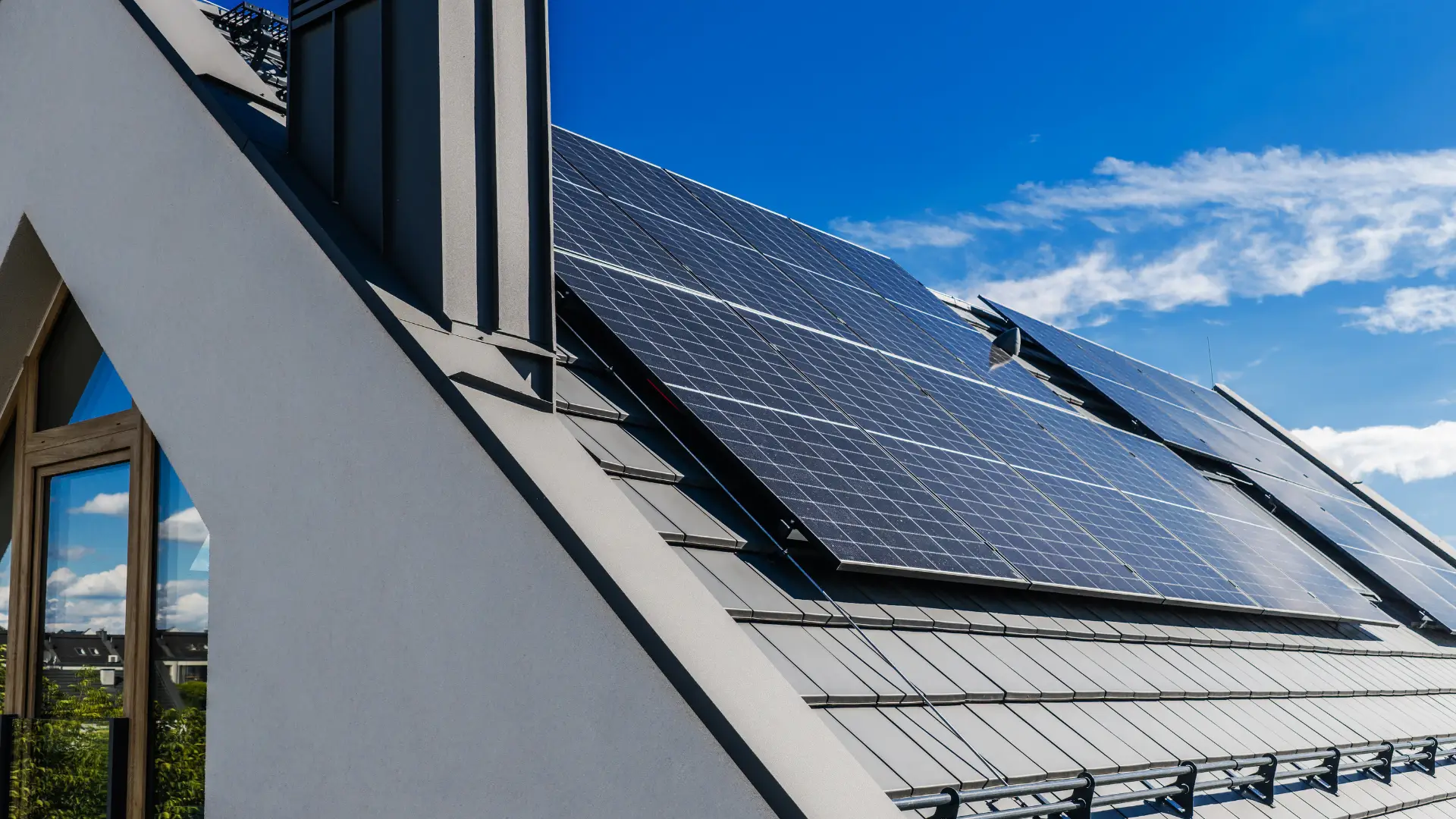
Pitched on-roof systems secure solar panels above an existing sloped roof, typically with mounting brackets, rails, and clamps. The optimum angle for energy generation is around 35-40 degrees in summer, which either follows the angle of the roof naturally or requires tilt-adjustable mounting.
The most suitable mounting solution here depends on the roofing materials. For example, tiled and slate roofs require specialist hooks or brackets, while metal roofs use clamps or mechanical fasteners. In each case, the mounting system must provide sturdy, long-term support and withstand changing weather conditions, particularly high winds.
For a successful commercial pitched roof installation example, let’s look at The Farm Burscough in Lancashire. Perfect Sense Energy fitted a 30.6 kWp solar PV system that was projected to generate 27,142 kWh of electricity annually, saving the business £3,488 in its first year.
3. In-roof systems
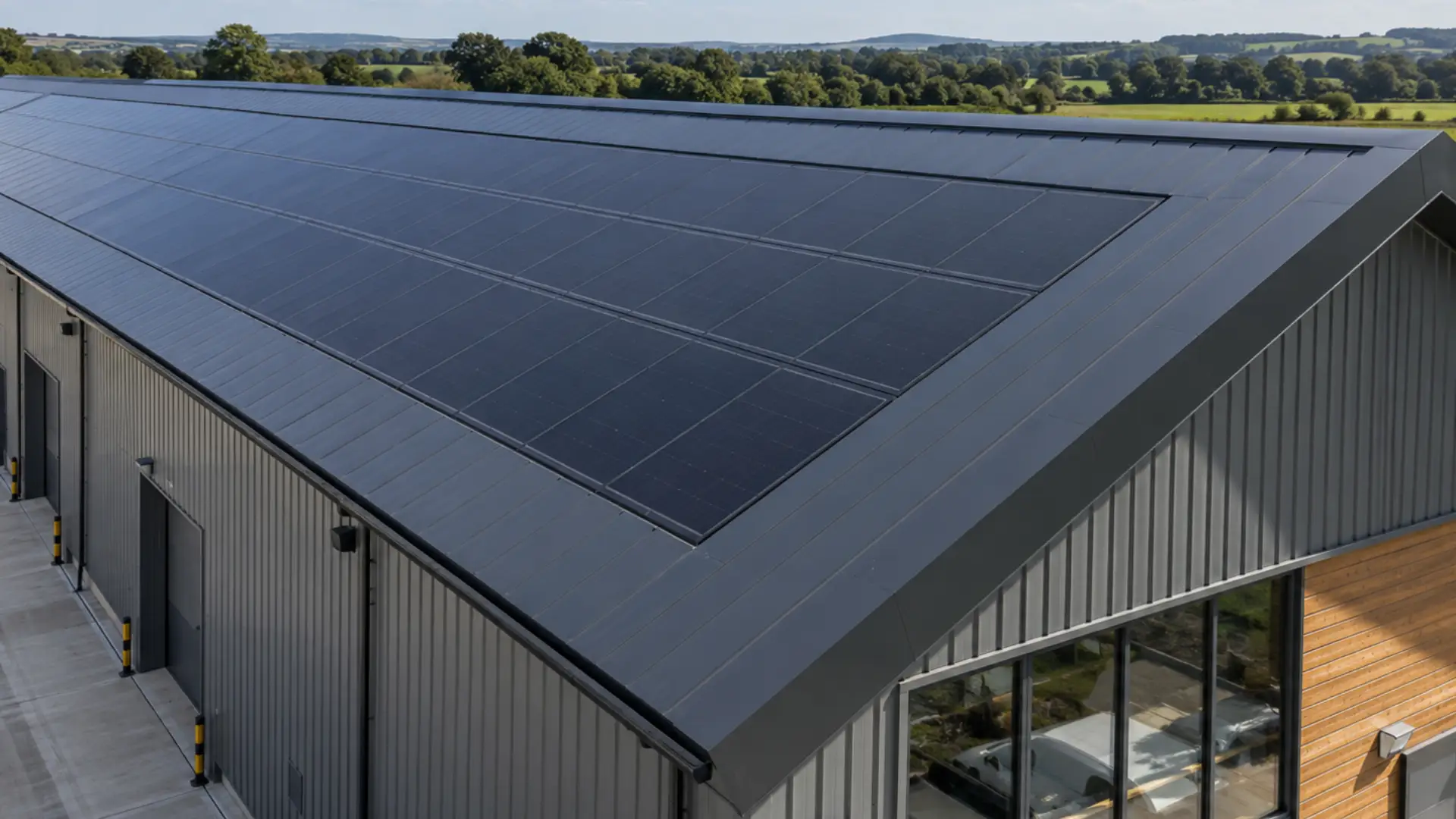
In-roof solar mounting solutions integrate solar panels directly into the roof covering, rather than positioning them above existing tiles or slate. This option is more complex to install but is a popular option, as it provides a polished aesthetic.
That being said, in-roof systems, as lovely as they look, could potentially be less energy efficient due to reduced airflow. Cambridge research has estimated that in-roof panels could generate approximately 3–4% less electricity annually than comparable above-roof panels, depending on their mounting configuration.
Bonus: Solar Car Ports
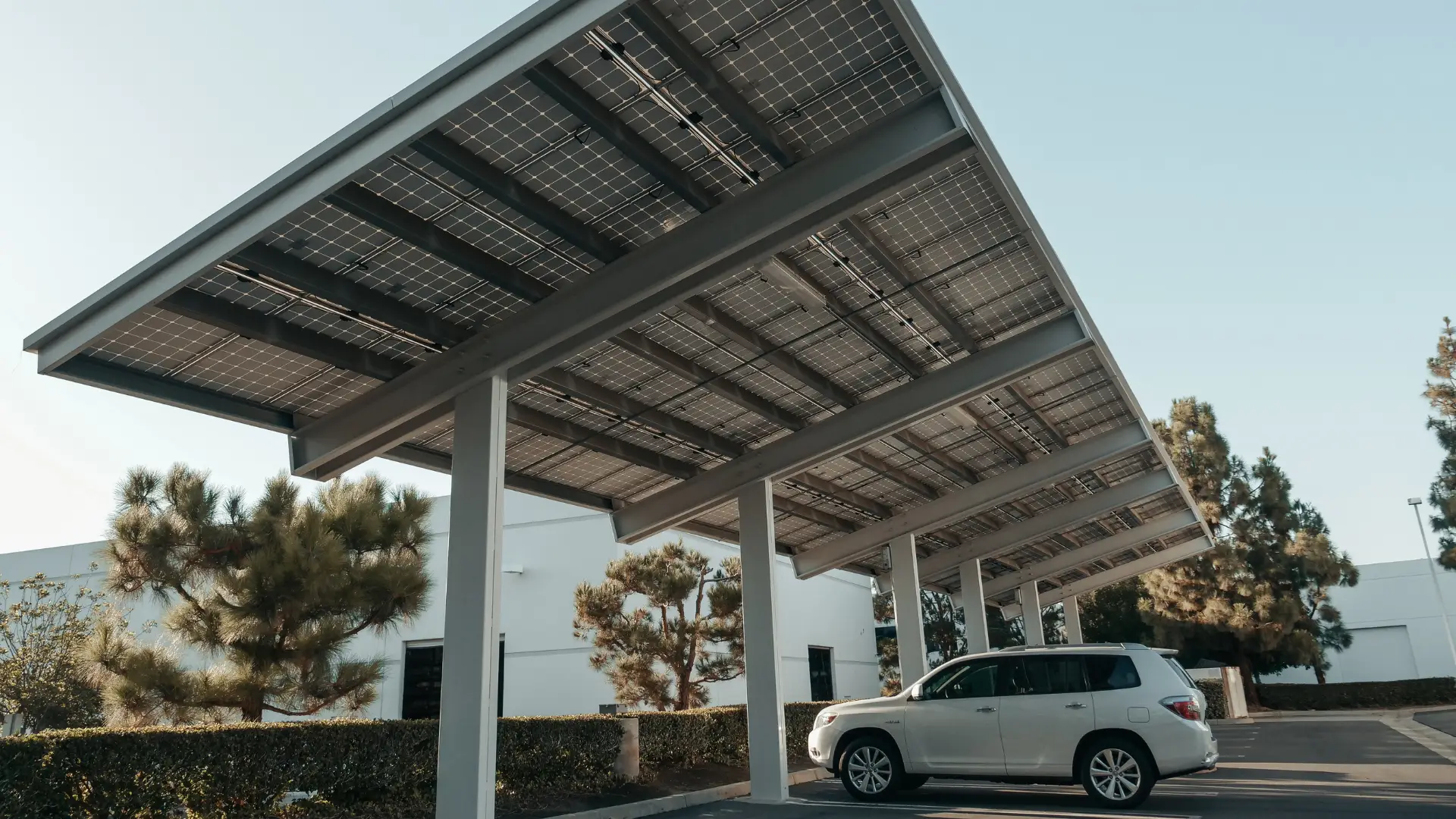
If you want to be fancy, you could even consider solar car ports as a creative option for solar energy generation. Solar carport mounting brackets are usually large and part of a sturdy steel or aluminium frame that is anchored to the ground to support solar panels above parking spaces. As well as generating renewable electricity, they provide shelter for parked vehicles and can be combined with electric vehicle (EV) charging points.
How to Choose the Right Solar Panel Mounting Solution
The right option will depend on a multitude of factors, from the building type through to local weather conditions. There is no need to let your head spin, though! Here is a step-by-step breakdown of the key considerations you should be aware of:
1. Measure roof load capacity
The structural integrity of the roof has a lot to answer for when an organisation installs heavy solar panels. After all, you don’t want to attempt to lighten the load of your energy bills, only to discover your roof requires an expensive repair!
Before installation, a structural engineer should assess your roof’s load-bearing capacity and account for the combined weight of the solar panels, mounting hardware, and any additional ballast. This helps determine whether your existing roof structure can safely support the installation or requires reinforcement.
2. Check roof compatibility
It almost goes without saying that not every solar mounting solution is suitable for every roof. Flat roofs may require ballasted systems to avoid penetrating waterproof membranes, while pitched roofs need specialist brackets suited to the existing tiles, slate, or metal covering. In-roof systems, meanwhile, must be carefully integrated into the roof structure to maintain weatherproofing.
Getting it wrong could even affect safety. When the 2025 UK Building Safety Regulator-commissioned research examined 11 roof fire experiments, they found that roofing materials and solar mounting configurations could influence how flames spread.
3. Consider wind uplift
You might associate wind more with wind turbines than solar panels, but in reality wind exposure is a key consideration here. For some solar installations, particularly on large and exposed commercial buildings, strong winds can create uplift forces that place pressure on the panels, mounting brackets, and roof fixings. An expert, secure installation will ensure that the solar panels are weighed down and angled appropriately to mitigate the danger.
4. Prioritise corrosion resistance
Modern solar panels can now last for 25+ years, so ideally the components that keep them in place need to offer similarly reliable, long-term support. Look for mounting systems manufactured from corrosion-resistant materials, such as anodised aluminium and suitable grades of stainless steel.
5. Find reliable installation services
Even durable mounting hardware will only perform well if the engineers install it correctly. According to GOV.UK, Building Research Establishment attributed 36% of 58 investigated solar PV-related fires to poor installation practices.
Although these findings concern PV installation more broadly, rather than mounting hardware specifically, they demonstrate why proper installation matters.
A reliable commercial solar installer should assess your roof structure, select compatible mounting components, and ensure the installation follows the manufacturer’s specifications and relevant safety standards.
Trust Perfect Sense Energy for Solar Panel Mounting Installation
Unsure which solar PV mounting system is right for your organisation? Perfect Sense Energy is here to help. Our experienced team can design a bespoke solar PV system, including the most suitable mounting solution for your roof structure, to maximise energy generation and your return on investment.
From assessing roof compatibility to ensuring your installation meets relevant building regulations and safety requirements, we’ll help you make the most of your available roof space without compromising on safety.
Get in touch today for your no-cost desktop solar assessment.