Driving down a typical UK street, it is now common to see solar panels affixed to pitched roofs – both residential and commercial. Less visible, though, are the thousands of flat-roofed warehouses, car dealerships, and supermarkets across the country that also benefit from solar energy.
Many viable flat roofs are being wasted, however, with the UK Warehousing Association reporting that an extra 15GW of power could be added to the UK’s energy infrastructure through warehouse rooftops alone.
If you have flat roof space available that is going unused, it’s time to take advantage of its untapped potential. Here is your 101 on how solar panels work on a flat space, their unique advantages, use cases to inspire you, and how to get them on your roof as soon as you can.
What Are Flat Roof Solar Panels?
Flat roof solar installations are designed specifically for buildings with little or no roof pitch. Instead of being fixed directly to a sloped roof structure, solar photovoltaic (PV) panels on flat roofs are usually mounted on specialist solar mounting systems that hold the panels at a suitable tilt angle to capture sunshine energy. Some key components of these specialist solar systems include the following:
| Component | Definition |
|---|---|
| Solar panels | The core components of the system, solar PV panels, capture sunlight and convert it into direct current electricity. |
| Mounting system | The framework that holds the panels securely in place at the correct tilt angle for the flat roof installation. |
| Ballast | Added weight, often in the form of concrete blocks or paving slabs, used to secure the mounting system without penetrating the roof surface. |
| Inverter | The device that converts the direct current electricity generated by the solar panels into alternating current electricity that can be used by the building. |
| Cabling | The wiring that connects the panels to the inverter and the inverter to the building’s electrical system. |
| Monitoring system | A system that tracks solar energy generation and helps identify faults, performance drops, or maintenance issues. |
| Roof protection | Protective matting or pads placed beneath the mounting system to help protect the roof covering and maintain roof integrity. |
| Access equipment | Features such as walkways, isolation switches, and edge protection that support safe inspection, maintenance, and operation. |
Advantages of Flat Roof Systems
From sustainability to cost savings, solar panels of any kind are a win. Flat roof solar panels, though? They take it to the next level, combining solar technology with the optimal setup. Take a look at some of the advantages.
Optimal sun exposure
On pitched roofs, the angle and direction of solar panels are usually limited by the existing roof structure. If the roof does not face the right way, or if the pitch is too steep or too shallow, the system may not achieve the best possible sunlight capture. Flat roof solar systems, on the other hand, offer flexibility for adjustments throughout the year. For example, the sun’s position in the sky means that a steeper angle in winter results in better output.
Better use of existing space
Every inch counts in real estate, and flat roof solar systems make use of roof space that would otherwise sit empty. A related benefit? Unlike large ground-mounted solar farms, panels on flat roofs do not require open land to be repurposed. This can help mitigate some common solar concerns associated with land use, visual impact, and disruption to local communities.
Easier maintenance
No need to set up clunky scaffolding to clean and maintain flat roof panels! The easy access of flat roof solar panels makes it simple for solar engineers to clean and maintain your panels. This is particularly important for large-scale systems where the sheer number of panels demands efficient, unobstructed access to minimise downtime.
Challenges of Flat Roof Solar Panels
Despite the considerable advantages, it would be negligent to ignore some of the challenges associated with flat rooftop solar panel systems. With the right planning and support, however, there is nothing to say that these can’t be overcome.
Additional structural load
Solar panels will lighten your energy load, but they still come at a cost in weight. A ballasted flat roof system, for instance, can add 30-60 kg/m², in addition to each approximately 25 kg solar panel. This means you will need to make roof calculations before considering installation and potentially implement structural changes to ensure safety compliance.
Risk of high winds
Unlike their wind turbine sustainable energy counterpart, solar panels and wind are not always the best combination. This is due to the reality that flat roof solar systems are often more exposed to wind uplift than pitched-roof installations, particularly on taller buildings and open sites.
Drainage considerations
Flat roofs already pose drainage challenges, especially given the UK’s tendency towards wet weather! Add solar panels into the mix, and things get even more complicated. Not only can water puddle and dirt accumulate on the solar panels themselves, but the setup could interrupt existing rooftop drainage solutions. A good solar design should account for the existing roof covering, outlets, gutters, and natural water flow before panels are installed.
Flat Roof Solar Panel Case Study
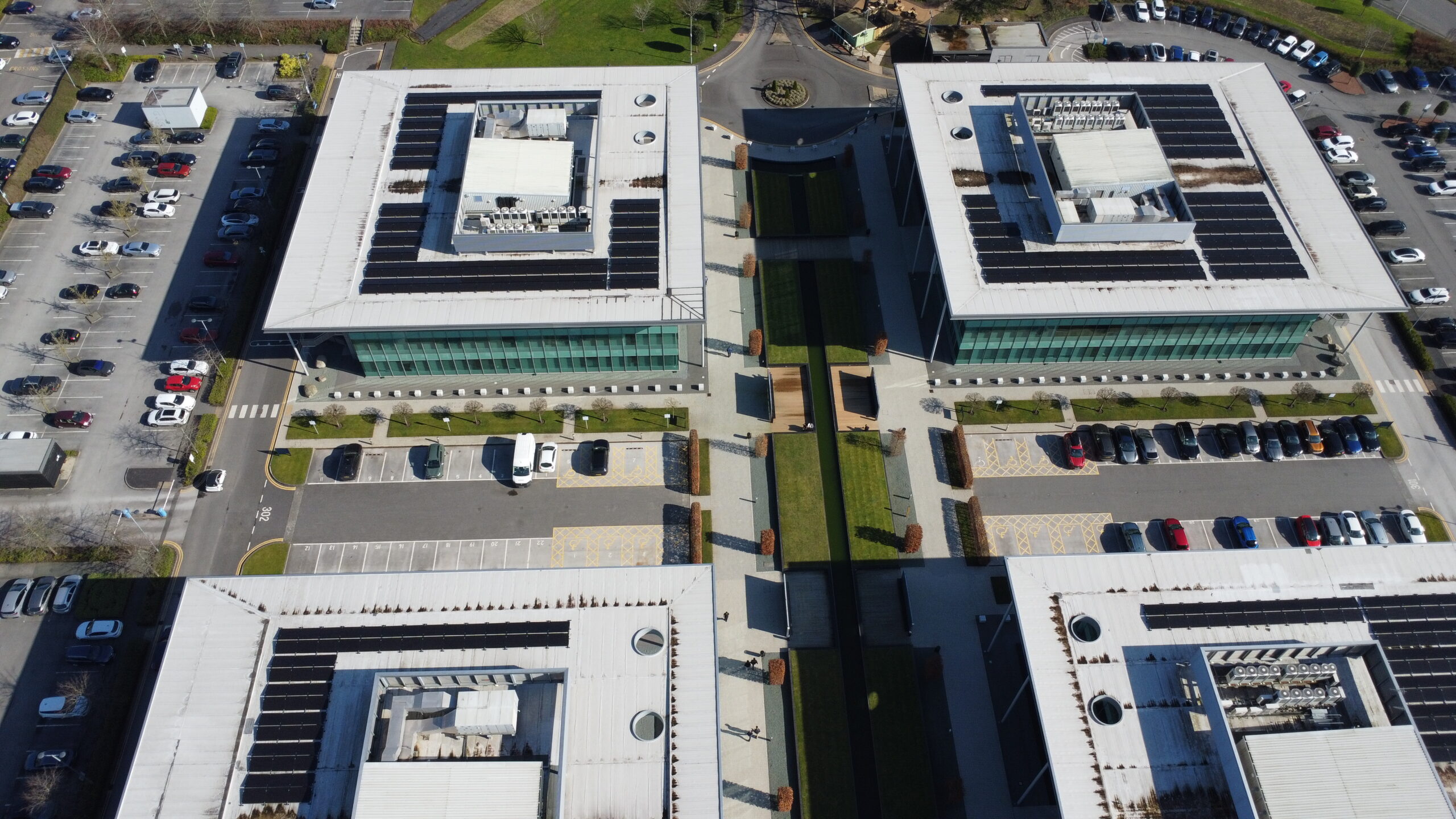
To make it easier to picture what flat roof solar panels could look like on your premises, we have provided a use case example of a successful business park based in Warrington.
Birchwood Park
Birchwood Park is the UK’s largest out-of-town enterprise zone, home to more than 165 companies and 6,000 employees. Crucially, it is also home to highly usable flat roof space. In a bid to be more eco-friendly and supercharge businesses with affordable energy, Birchwood Park decided to engage Perfect Sense Energy to install flat roof solar panels.
Across the five rooftop systems totalling 439.2 kWp, Birchwood Park is expected to generate approximately 360,194 kWh of clean electricity each year, delivering over £70,000 in first-year electricity savings. Importantly, those savings exceed the annual rental payments, meaning the project is forecast to be cash-positive from Year 1.
Get Professional Solar Panels on Your Flat Roof Space
There’s no doubt about it: getting solar panels installed on your unused roof spaces is one of the best ways to take advantage of your real estate. Given some of the challenges associated with flat roof solar panels, however, you want to be sure you are engaging a reputable supplier and installer for your project. That’s where Perfect Sense Energy comes in.
As an expert solar panel installation company with 15+ years of experience, flat roof solar panels are our bread and butter. In fact, we have installed and maintained solar panels across over 300 large-scale industrial sites for businesses. It has been fantastic to be part of their journey to more affordable and sustainable energy!
Get in touch today for a free consultation and see how we can transform your roof space.