
Running a business means juggling a lot — energy bills shouldn’t be one more headache. The good news? Saving energy doesn’t have to be complicated or expensive. From small everyday changes to smart upgrades that pay off in the long run, there are loads of ways to cut down on waste and lower your bills.
We’ve rounded up 10 practical tips to help you use less energy, save money, and run a greener, more efficient workplace.
1. Install Solar Panels
What it is:
Photovoltaic (PV) panels convert sunlight into electricity, reducing reliance on grid power and lowering long-term energy costs.
Why it matters:
Generates clean, renewable power on-site. Businesses can also earn income by exporting excess electricity to the grid through the Smart Export Guarantee (SEG).
How businesses can adopt it:
Commission a solar feasibility assessment. Look into finance options or local authority green grants to offset installation costs.
Best for:
Warehouses, factories, schools, and large office buildings with ample roof space.
Estimated savings:
Can reduce electricity bills by 30–50%, depending on usage and system size.
2. Install Smart Heating Controls
What it is:
Smart thermostats and zoning controls automatically regulate temperature based on time of day, occupancy, and weather conditions.
Why it matters:
Heating and cooling often operate when spaces are unoccupied. Smart controls reduce waste and ensure systems run only when needed.
How businesses can adopt it:
Install standalone smart thermostats or integrate them with an existing building management system (BMS). Some energy suppliers offer discounts or installation support.
Best for:
Offices, GP surgeries, schools, and public buildings.
Estimated savings:
Up to 12% on heating bills with optimised control.
3. Improve Building Insulation
What it is:
Enhancing insulation in roofs, walls, and floors to prevent heat loss and maintain a stable internal temperature.
Why it matters:
Many UK commercial buildings suffer from poor thermal efficiency, leading to high heating costs and uncomfortable workspaces.
How businesses can adopt it:
Hire an accredited assessor to identify insulation gaps. Consider pairing upgrades with ventilation improvements for better air quality.
Best for:
Older buildings, community spaces, and units with high heating demands.
Estimated savings:
Between £500–£1,500 per year, depending on building size and usage.
4. Upgrade to Energy-Efficient Equipment
What it is:
Replacing outdated appliances and machinery with A-rated or Energy Star-certified alternatives.
Why it matters:
Old equipment often runs inefficiently, wasting electricity and increasing the need for maintenance or cooling.
How businesses can adopt it:
When replacing any asset—printers, fridges, computers—choose the most efficient model available. Check with manufacturers or suppliers for potential rebates or trade-in schemes.
Best for:
Catering businesses, offices, warehouses, and studios.
Estimated savings:
Varies by equipment but up to 20–30% reduction in energy use per unit.
5. Switch to LED Lighting
What it is:
Replacing traditional incandescent, halogen, or fluorescent bulbs with light-emitting diode (LED) lighting to significantly cut electricity usage.
Why it matters:
Lighting can contribute up to 40% of a building’s electricity consumption. LEDs use around 75% less energy and last up to 25 times longer, reducing both energy costs and maintenance needs.
How businesses can adopt it:
Begin with a lighting audit to identify opportunities. Many councils and Local Enterprise Partnerships (LEPs) offer retrofit grants or subsidised schemes aimed at low-carbon lighting upgrades.
Best for:
Retail outlets, office spaces, warehouses, hospitality venues.
Estimated savings:
Up to £2,000 annually for a medium-sized office building.
6. Conduct an Energy Audit
What it is:
A professional review of your premises’ energy usage to identify inefficiencies and prioritise improvements.
Why it matters:
Energy audits provide a roadmap for smarter energy use and often uncover hidden savings opportunities.
How businesses can adopt it:
Hire an independent assessor or use an accredited service recommended by your local council or energy supplier.
Best for:
All business types, especially those with complex energy systems or high utility costs.
Estimated savings:
Typically identifies 10–30% in potential energy reductions.
7. Use Motion Sensors and Timers
What it is:
Automating lighting and equipment so that systems power down when not in use—especially during nights, weekends, or unoccupied periods.
Why it matters:
Manual switches often get forgotten. Automated controls reduce waste and improve longevity of devices.
How businesses can adopt it:
Install passive infrared (PIR) motion sensors in meeting rooms, toilets, and storage areas. Timers can manage outdoor signage, heating, or air conditioning.
Best for:
Shops, office buildings, education centres.
Estimated savings:
Can cut lighting energy use by 30–50% in infrequently used spaces.
8. Switch to a Green Energy Supplier
What it is:
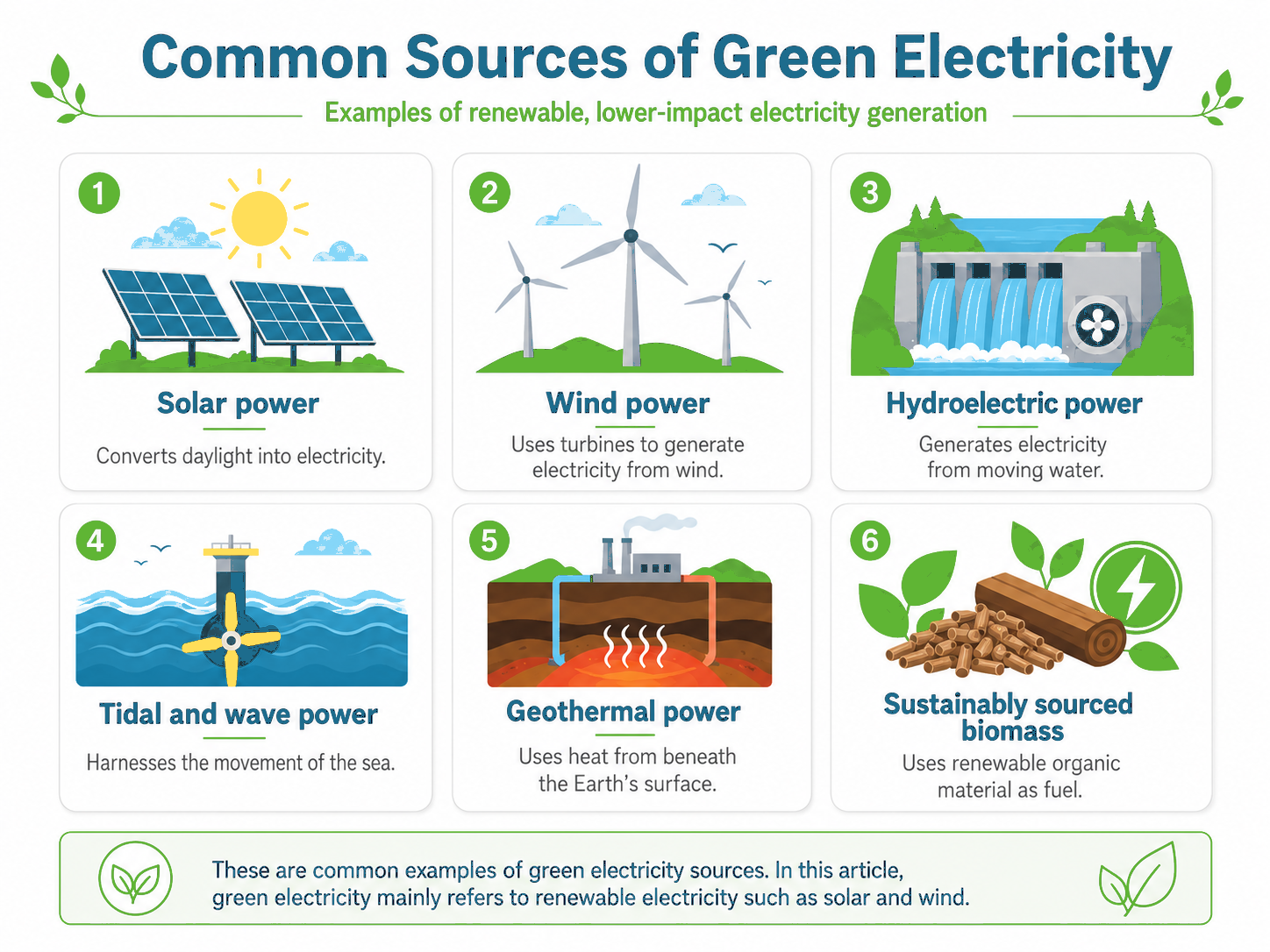
Choosing an electricity provider that sources power from 100% renewable sources such as wind, solar, or hydro.
Why it matters:
It supports the broader transition to low-carbon energy and often comes with no increase—or even a decrease—in pricing.
How businesses can adopt it:
Compare suppliers through platforms like Uswitch or GoCompare for green business tariffs. Some also provide bundled energy-efficiency advice.
Best for:
All business types, especially those with ESG or net-zero targets.
Estimated savings:
Not always financial, but contributes to carbon reduction and CSR reporting.
9. Encourage Energy-Conscious Staff Behaviour
What it is:
Training staff to adopt energy-saving habits such as shutting down equipment, reducing heating use, or reporting energy waste.
Why it matters:
Behavioural changes alone can yield energy savings of up to 10%, especially in SME environments.
How businesses can adopt it:
Develop internal campaigns, appoint energy champions, and include energy in onboarding or operations checklists.
Best for:
All business types, particularly service-based or office-heavy organisations.
Estimated savings:
5–10% of annual consumption, depending on engagement.
10. Install Energy Monitoring Tools
What it is:
Using software and sensors to track real-time energy usage across your premises and identify abnormal patterns or wastage.
Why it matters:
Data-driven insights help with decision-making, preventative maintenance, and future upgrades.
How businesses can adopt it:
Select cloud-based platforms or smart meters that integrate with your building systems. Some are free through energy suppliers or subsidised via local grants.
Best for:
Multi-site operations, schools, factories, and high-usage commercial spaces.
Estimated savings:
Around 15% reduction when monitoring leads to active efficiency changes.
What Informed Our Choices
Here’s how we picked these 10 energy-saving tips for businesses:
- It had to actually save energy.
Each item on the list genuinely helps reduce how much energy a business uses — whether it’s through cutting waste, improving efficiency, or switching to renewables. - It had to be practical.
No complex solutions that only big corporations can afford. Everything here is something most businesses — especially small to medium ones — can realistically consider. - It had to be cost-effective.
We focused on measures that either don’t cost much to put in place, pay for themselves over time, or come with help from grants, government schemes or free advice. - It had to apply to all sorts of businesses.
From shops and cafés to offices and warehouses, we looked for ideas that can work across a range of industries and building types. - It had to be easy to understand.
We skipped the technical waffle and focused on what each solution does, why it’s worth doing, and how to get started.
The Bottom Line
Saving energy isn’t just about lowering bills — it’s about future-proofing your business, doing your bit for the environment, and making smart decisions that benefit everyone. Whether you start with lighting, heating, or simply changing staff habits, every step counts.
If you’d like tailored advice, a full energy audit, or help making upgrades, Perfect Sense Energy is here to help.
Book a free consultation and take the first step towards a more efficient future.
FAQs
What is the most effective way for a business to save energy?
The most effective way for a business to save energy is by upgrading to LED lighting. LEDs use up to 75% less electricity than traditional bulbs and last significantly longer, making them a quick and affordable win for reducing energy bills.
How can small businesses reduce energy costs quickly?
Small businesses can reduce energy costs quickly by installing motion sensors, using smart thermostats, switching to LED lighting, and encouraging staff to turn off equipment when not in use. These low-cost steps can cut energy use by up to 20%.
Are there government grants for business energy efficiency in the UK?
Yes, UK businesses may qualify for energy efficiency support through local councils, LEPs, and schemes like the Smart Export Guarantee (SEG). Some areas also offer grants for LED lighting, insulation, and solar panels.
How can an energy audit help a business save money?
An energy audit helps a business identify where energy is being wasted and what improvements will deliver the best savings. Audits often uncover opportunities to cut usage by 10–30%, making them a smart first step toward reducing bills.
Can switching energy suppliers really make a difference?
Yes, switching to a green energy supplier can reduce a business’s carbon footprint without increasing costs. Many renewable tariffs are price-competitive, and some suppliers offer additional tools to track and reduce energy usage.