Are you considering installing solar panels on your property? One of the most common questions people have is whether or not they need planning permission. The good news is that in many cases, you may not need to go through the planning permission process at all!
The majority of the time, planning permission is not required for solar panel installations on commercial and residential properties. However, there are some exceptions to this rule. Any property or land that is located in a conservation area, a national park, or an area of outstanding natural beauty means you’ll need to obtain planning permission before installing solar panels.
Appreciating Solar Panel Installations
Solar panels are a great addition to any property. Not only do they provide a clean and renewable source of energy, but they can also help to reduce your energy bills and carbon footprint.
Solar panels have come a long way in recent years, with advancements in technology making them more efficient and cost-effective than ever before. They are also a lot sleeker and good-looking, with options for black panels or even panels that blend in with your roof.
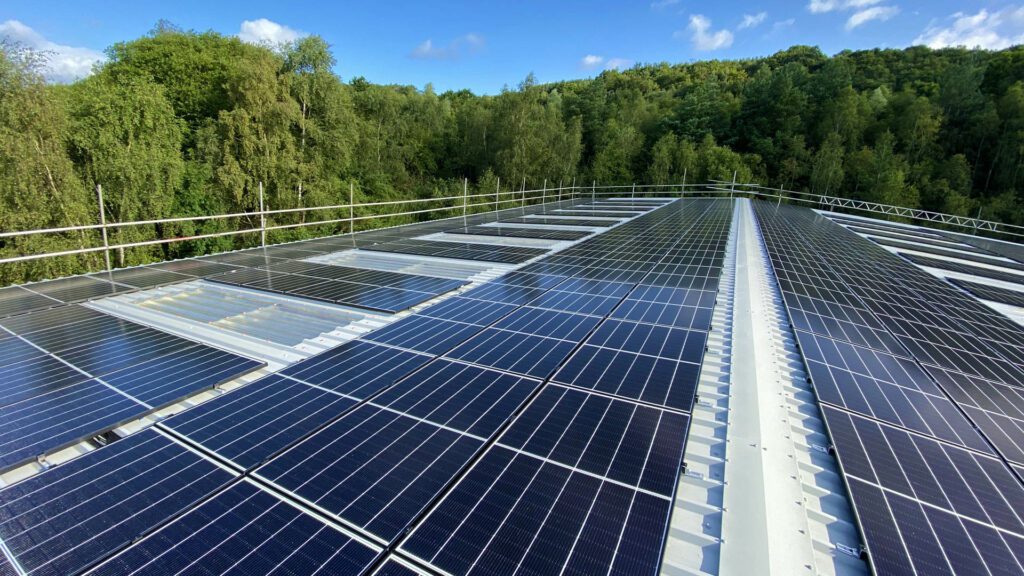
Here’s something to keep in mind when thinking about installation: In most cases, you won’t need planning permission as long as the panels don’t protrude more than 200mm from the roof slope, are not higher than the highest part of the roof, and are not installed on a listed building or in a conservation area. If you are a business leasing a property, you’ll need to have a chat with the landlord or owner of the property first.
In England, Scotland, and Wales, you can install solar panels on your home or business property without planning permission as long as they meet the criteria mentioned above.
Here’s a useful list to refer to:
- The panels are not installed on a listed building or within a conservation area.
- The panels do not protrude more than 20 cm from the roof.
- The panels are not installed on the front of the property if it faces a highway.
- The panels do not exceed the highest part of the roof (excluding the chimney).
- The panels are not installed on a flat roof if they exceed a certain height.
If your solar panel plans meet these criteria, you can get them installed without the need for planning permission. Although, it’s always worth double-checking with your local council just to be sure (if you’ve watched Clarkson’s Farm, you’ll know they can throw curve balls at us).
If you’re in Northern Ireland, the rules around planning permission for solar panels are slightly different. In most cases, you will need to apply for planning permission before installing solar panels on your property and long before you buy them. But, there are some exceptions – if the panels are installed on a rear or side roof slope and do not exceed a certain height, you’re good.


Exploring Different Types of Solar Panels
When choosing solar panels for your home or business, there are a few different types to consider. Each type has its own unique features and benefits, and you might not know which is the one for you. Here are some different types to give you some insight:
Monocrystalline panels are made from a single crystal of silicon. They are known for their high efficiency and sleek black appearance. They are the most expensive type of solar panel, but they also have the longest lifespan.
Polycrystalline panels are made from multiple crystals of silicon. They are less efficient than monocrystalline panels, but they are also less expensive. They have a blueish appearance and are a good option for those on a budget.
Thin-film panels are made from a thin layer of semiconductor material. They are less efficient than crystalline panels, but they are also less expensive. They are flexible and can be used in a variety of applications, such as on curved surfaces.
Bifacial panels are designed to absorb light from both sides, which increases their efficiency. They can be made from either monocrystalline or polycrystalline cells. They are a good option for those with limited roof space.
Building-integrated panels are designed to blend in with the roof or façade of a building. They can be made from any type of solar cell. They are a good option for those who want a more aesthetically pleasing solar installation.
The type of solar panel you choose will depend on your budget, energy needs, and aesthetic preferences. It’s important to do your research and choose a reputable installer to ensure that your solar installation is safe and effective.
What can Affect Planning Permission?
If you’ve been reading this and thought “ah, I think my property needs planning permission,” then have a read through the factors below to know what might impact your application:
The location of your property is one of the most important factors that can affect planning permission for solar panels. If your property is located in a conservation area or an area of outstanding natural beauty, you may need planning permission for solar panels. Similarly, if your property is located in a listed building or a national park, you may also need planning permission.
The size of the solar panels you want to install can also affect planning permission. In general, smaller solar panels are less likely to require planning permission than larger ones. If you want to install large solar panels, you may need to seek planning permission from your local council.
Historical or Listed Buildings
If your property is a historical or listed building, you may need to seek planning permission before installing solar panels. This is because the installation of solar panels can affect the appearance of the building and may not be in keeping with its historical or architectural significance.
To summarise, the location of your property, the size of the solar panels, and whether your property is a historical or listed building are all factors that can affect planning permission for solar panels. It’s always best to check with your local council before installing solar panels to ensure that you comply with planning regulations.
Applying for Planning Permission
If you do need planning permission for solar panels, here are some of the things you’ll need:
Pre-Application Advice
Before submitting a planning application for solar panels, it is advisable to seek pre-application advice from your local planning authority. This can help you determine whether your proposed installation is likely to be approved and identify any potential issues that may need to be addressed.
During the pre-application process, you’ll typically be required to provide details of the proposed installation, including its size, location, and design. The planning authority will then assess your proposal and provide feedback on any issues that need to be addressed before a formal planning application can be submitted.


Submission Process
Once you have received pre-application advice and addressed any issues raised, you can submit a formal planning application to your local planning authority. The application will typically include detailed plans and specifications for the proposed installation, as well as information on its potential impact on the local environment and community.
The planning authority will then consider your application and make a decision on whether to grant planning permission. This process can take several weeks or even months, depending on the complexity of the proposal and the workload of the planning authority.
It is important to note that failure to obtain planning permission for a solar panel installation can result in enforcement action by the local planning authority, including the removal of the panels. So, it’s essential to follow the correct planning procedures to ensure that your installation is legal and compliant with local planning regulations.
At Perfect Sense Energy, our solar specialists are committed to providing top-tier service and support, ensuring our solutions help you achieve your energy goals. Get in touch on 01942 367 599 to discuss your commercial solar panel needs.